Chronicle Editor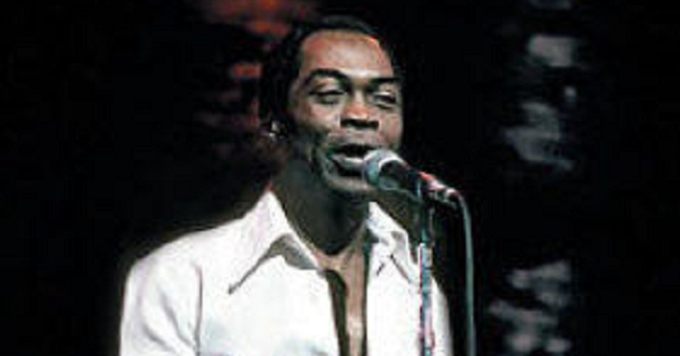
Richard R Mahomva
A few days ago, I was talking to some writer about the crisis of nationalism. Such conversations are usually associated as pan-African type of protestant rhetoric.
Pan-African intellectual proponents have been problematised for being polemic and as Sabelo Ndlovu-Gatsheni once lodged it, our writing is polemic because the conditions fuelling our anger seem not to be changing. We continue to be witnesses of the never-ending unfolding of Africa’s submission to global subjugation.
In his song, “Stimela”, Hugh Masekela elaborates how our people built the dream of Rhodes — the father of exploitation and plunder. Today, the conditions to this kind of exploitation of our people seems to have not changed. Our education system is only producing labourers servicing the imperialist pillaging agenda.
Through his music, Hugh was a defiant builder of confidence in Africa and African ideas.
The same can be attributed to the legendary Fela Anikulapo Kuti whose music openly condemned Africa’s subjection to Western political and economic principles. Literary, Ngugi is another character whose fight through performance and written art has revealed the extent to which the role of cultural consciousness is essential in defining the direction that Africa must take.
Our fascination with the conventional Western wisdom greatly explains our desperation for liberating the classroom. What is the role of our social-scientists and economists? What part are they playing in generating knowledge which will make Africa self-dependent?
Africa’s many years of celebrated independence is mainly characterised by poor public welfare, outdated industrial infrastructure and obsolete scientific innovations. Automatically, the continent has comfortably assumed the status of being a protégé of nations still asserting their place in the global scheme of things.
The debt to date
The continent’s external debt has continued to immeasurably accumulate. In the past decade alone, African countries have paid their debt three times over yet they are three times as indebted as ten years ago. Africa the world’s poorest region pays the richest countries $15 billion every year in debt servicing.
Clearly, Africa continues to be a subject of the West. This is the subjection which validates the need for the continent to maintain the status of being an extractive zone for the West. Does this mean that our development is premised on dependence and giving away our soils for extraction to build economies of other continents?
Our investment in debt servicing highly exceeds what the continent gets in aid and new loans. Africa spends four times more on debt interest payments than on education and health care alone.
In some countries access to education and health is elitist than it is a general condition of public welfare.
In 2013, Africa’s debt to the World Bank increased to $542 billion, an increase of 28% from 2012. Four years down the line Africa still has to grapple with this debt crisis. This preoccupation with debt servicing shall continue to be a feature of the continent’s logic for subjection to the West.
We are at the height of a sophisticated paradigm of imperial domination. Africa’s confined limit to partnership with the West through the Britton Institutes and the World Trade Organisation (WTO) has continued to be a model of suppression for the continent. The policies enforced on poor African countries through these organisations have remanded Africa to continued dependency on western economies for mere subsistence, by curtailing actualisation or self-reliance to the continent’s economic problems. Is our development largely dependent on this model of stretching our begging bowls to the so-called “First World”?
Demanding true definitions of development
The continent’s development predicament originates from a history of European colonisation and the resultant effect of institutionalising colonialism to normalcy at a time when independence must be more pronounced than ever. Any attempt to de-historicise or pay no attention to the background of the African development predicament can only result in misleading and decontextualised analyses.
Africa’s experience of colonialism was not merely an episode, but it was a process which safeguarded the systemic, systematic and well-orchestrated exploitation of the African continent and its people by Europeans.
The Eurocentric perspective of development meant opening up the African continent for untold economic exploitation and the permanent settlement of Europeans through force on the occupied land.
“Development meant the dispossession of Africans, forcing them off the land and transforming them into peasants, workers and domestic servants for European masters. Development meant the rearrangement of African agrarian systems to make sure they produce the cash crops needed in Europe and America.” (Ndlovu-Gatsheni 2012).
This nature of development is established through dominating and taking from others, thus impoverishing them to the establishment and empowerment of Europeans.
Plaatjie (2013:124) supports this view by stating that while the mantra of the 15th century was to civilise and to enlighten the “soul-less” subalterns of the globe and to rescue them from their barbarity, which from a European perspective was seen as development, at the same time the worst form of barbaric acts were being committed to the colonised, and this is the darker side of this notion of development.
There is no amount of “moving on” which can erase that reality and expel the long lasting impact of the continent’s colonial devaluation. The legacy of colonialism in the post-independence era ushered a mammoth task to the newly established African governments to restore the humanity of its peoples which had been eroded through colonialism. Sadly, the post-colonial state missed the mandatory liberation facet of decapitating institutional colonial clouts in all sovereignty transition processes in the continent.
In reality, development is not controlled by the general African populace.
The African masses and their governments are subjects of programmed Western development processes and yardsticks. This clearly reflects that African countries’ respective decrees of sovereignty are borrowed concealments.
They are misnamed political-economy autonomies which only translate to normalised post-colonial under-development frameworks guided by Western prejudice and development parameters. Therefore, what does engagement with their institutions carry the relevant aspirations we have for our dear continent?
It is clear that the notion of development is entrapped within the imperialist project that seeks to pursue the perpetuity of colonialism of the non-Europeans, Africans in particular.
The tragedy of this model of development resides in its inability to historically account for the immorality of European colonisation and abuse of others in the attainment of their development status.
The need for an African spectacle
The seemingly insurmountable challenges in Africa naturally call for philosophical and ideological re-examining. Is Africa correctly positioned ideologically? Whose spectacles are being used to view the African world? Are people in Africa using the correct lens for “seeing” or they are using borrowed glasses and minds to view the world? Who is at the centre of the African world view? Is it Africa or Europe?
How relevant are the development models Africa is using to achieve economic growth? Certainly, there is need to push Africa to the centre of its world view and revisit everything from an African perspective.
The relevant philosophy among several ideological orientations such as Eurocentrism and others that should help Africa to come out of this economic clutter is one which recognises Africa’s potential to assert her place in the global space as a sovereign continent. Africa needs a philosophical paradigm that is generally opposed to all theories that “dislocate” Africans and place them at the periphery of human thought and experience.
Beyond the conventionally set parameters of power and being there is need to re-locate the African person as an agent in human history in an effort to eliminate the illusion of the fringes created by Europe.
For the past 500 years, Africans have been taken off their cultural, economic, religious, political and social terms and have existed primarily on the periphery of Europe (Asante, 1998). As a result, the need to relocate the African person as subject thus destroying the notion of being objects in the Western framework of prejudice is essential. Africa must awaken to her potential and glory.
Africa cannot continue to be a beggar and Africa is not a mall nor is it a tuck-shop of global supremacy. Mayibuye!



 derick.khumalo