admin
admin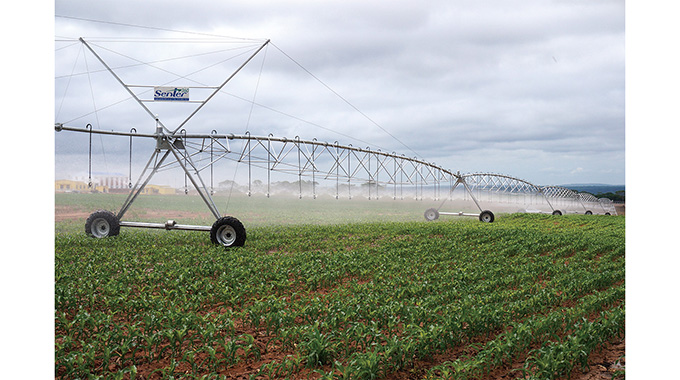
The Herald, March 12, 1980
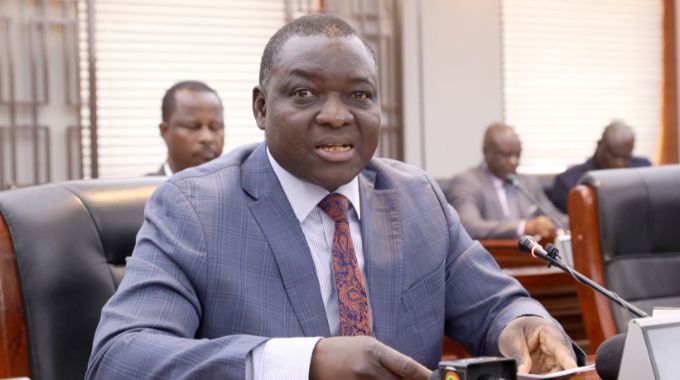
HIGH priority will be given to agricultural development by the new Government and the Tribal Trust Land Development Corporation Tilcor, is ready to meet that challenge, says the newly appointed general manager, Mr Robbie Mupawose.
In an interview in Salisbury yesterday, Mr Mupawose, the first African to hold the post, said once the incoming Government had defined its agricultural policy, “We will be able to modify or adapt our own to theirs, providing we get backing”.
Tilcor already operates estates, which are basically State-run farms as well as peasant farming settlement schemes.
We have been operating these for some time, but they are not ideal. The units are too small for sufficient crop rotation which results in a poor economic return for the people, making them subsistence farmers and this is not satisfactory,” Mr Mupawose said.
On the question of collective farming as had been introduced in Tanzania and other African countries following a socialist policy, he said this would require investigation, “but we do not see it as an obstruction to agricultural development”.
Born in Mhondoro and educated at Goromonzi Secondary School, Mr Mupawose (44) obtained his BSc degree in Lesotho and his Master’s degree in agronomy at the University of California. He spent a year at the University of Maryland.
LESSONS FOR TODAY
The new Government’s policy on agriculture in 1980 was to ensure that the black farmers that had been disadvantaged by colonialism got back their land. The full land reform programme was operationalised in 2000, and for that, Zimbabwe was illegally sanctioned by the United States of America, the European Union and their allies.
The Zimbabwe Government also wanted an equitable distribution of land between black subsistence farmers and white farmers who had traditionally enjoyed superior economic status in terms of land ownership.
From the onset of Independence, Government realised that the empowerment of smallholder farmers was key to food security. To date, farmers are still getting Government support through agricultural input schemes and the secondment of agronomists, breeders, soil scientists, agricultural economists and others, to make them realise that agriculture is big business.
Since Independence, Government has expanded the number of colleges that offer agricultural education. Some of the graduates have branched into farming.
The 2020-2021 summer cropping season is one of the best since 1980. It has also seen a number of young farmers and women taking up farming as a business.



 Online Reporter