admin
admin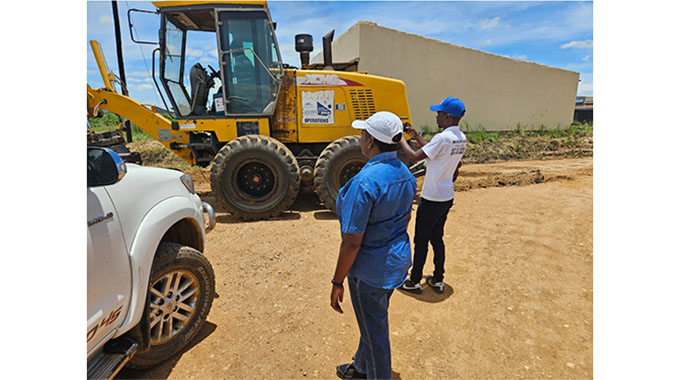
Simbarashe Mudzivo Features Correspondent
While Government’s banning of nine mining companies that were causing serious environmental degradation along Mazowe River has been hailed as a positive step, it has also triggered yet another challenge.It has opened floodgates for local gold panners who have moved in to fill the vacuum left by the companies.
Gold panning, for many people living along the river, is the only means of making some real money. And the extensive damage caused to the river comes last on the list of people who see panning as a way of survival.
The Environmental Management Agency (EMA) suspended operations by the companies after considering the nature of environmental degradation that the companies had caused to the river ecosystem.
Some of the companies had operated without environmental impact assessments (EIAs), while those with the documents did not comply with the requirements.
This resulted in a serious destruction of the ecosystem. Before the coming of these companies, mainly Chinese-owned, the local communities got water, fish and reeds from the river for their own livelihoods.
Uzumba-Maramba-Pfungwe district is a naturally dry region and Mazowe River has become the messiah for local communities, with many farmers abandoning farming for gold panning when it became clear that the metal was in relative abundance in the area.
And, when big companies came to do alluvial gold mining, there was a serious conflict over natural resources with the locals. Villagers in the Muyangamira area of Pfungwe say the miners came and made money, leaving the locals without any means of earning a livelihood.
Their resources were exploited by outsiders with nothing trickling to their villages. Many say they were left impoverished with no meaningful development having taken place in their communities.
“They looted our resources and never gave us a cent, not even jobs for our children,” says Mr Daniel Bhobho of Muyangamira Village, as he sits by a fire with his two wives and nine children, close to a shaft along the Mazowe River.
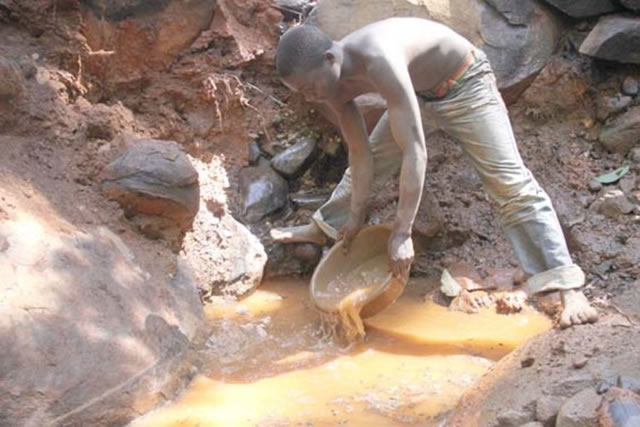
“When the companies left, we also felt strongly that we had to return to the river to pan for gold for our own survival. Yes, we are damaging the river but I have children to send to school, to feed and look after. We have no choice except to survive here along the Mazowe River.”
The family has spent two weeks camping along Mazowe River, panning and hoping to make that lucky strike that every miner dreams of.
They are not the only ones here. Several families are involved in alluvial gold panning along the river, which stretches into Mozambique.
Before the arrival of the mining companies, the families could pan more than two points of gold daily, enough to sustain a rural life. But things have changed. Today, there is not much they are getting from the river, which has been over-exploited by the mining companies.
Amounts of gold they get have dwindled, every day diminishing hopes of that lucky strike.
“Goridhe hamusisina murukova. Tavakusevenzera one point zuva rose inoita US$2,50 (There is not much gold left in the river. We are working to get one point worth US$2,50 the whole day),” says Bhobho, as he holds the ore he has found.
Life here is not easy. The daily routine starts around 4am and ends at sunset. As if this is not enough, illegal vendors are also milking these panners of their little hard-earned cash, selling a 5kg bag of mealie-meal at US$2,50.
Although the locals appreciate the banning of mining companies by the government, the dwindling alluvial gold amounts is now a nightmare for them.
“Tinotenda Hurumende kuti yakavatandanisa nokuti vagari vomuno tanga tisisina pokuchera. Vakasiya vapaza nzvimbo dzokuchera zvino tavakushupika (We thank Government for chasing out the mining companies because they had pushed us out. They destroyed this place and now we are suffering),” laments Bhobho.
Erratic rains mean farming is not viable in most places here, and families have appealed to Government for food assistance.
Prostitution is on the rise as people try to make ends meet.
Environmental authorities are not happy either.
EMA’s Mr Astas Mabwe says: “The companies are gone and the sites were rehabilitated but they did not meet the required standards by EMA.
“The river was badly damaged as the miners were using excavators and other sophisticated machines, hence it will take time to recover. As the rains approach, they will re-deposit the sand and silt the river.”
Rehabilitation will help the river recover and serve the communities with clean water and other needs. UMP district environmental officer Mr Tendai Mutami says though the companies were fined US$5 000 each and ordered to rehabilitate the area, it would take time for the river to naturally recover.
“Although rivers have a tendency to hold back the sand, if disturbed it would take about five years to naturally recover,” he says.
Mr Mutami says if the operations had continued, there was a possibility of a silted Mazowe River.
“The area is generally dry, with no boreholes, at least locals can now use water from the river as it begins to gradually recover,” he says.
EMA cannot fully monitor the rehabilitation because of its limited resources.
But of interest is Government’s recognition of gold panners in the 2014 National Budget proposals made in December 2013.
To curb gold losses to the minerals black market, gold panning has effectively been decriminalised.
This will see more panners going back to the rivers. Yes, it means more environmental damage. But for many fold, there is no choice and they have to look down to the Mazowe River for their survival.
Feedback: [email protected]



 Online Reporter