Sundaymail Editor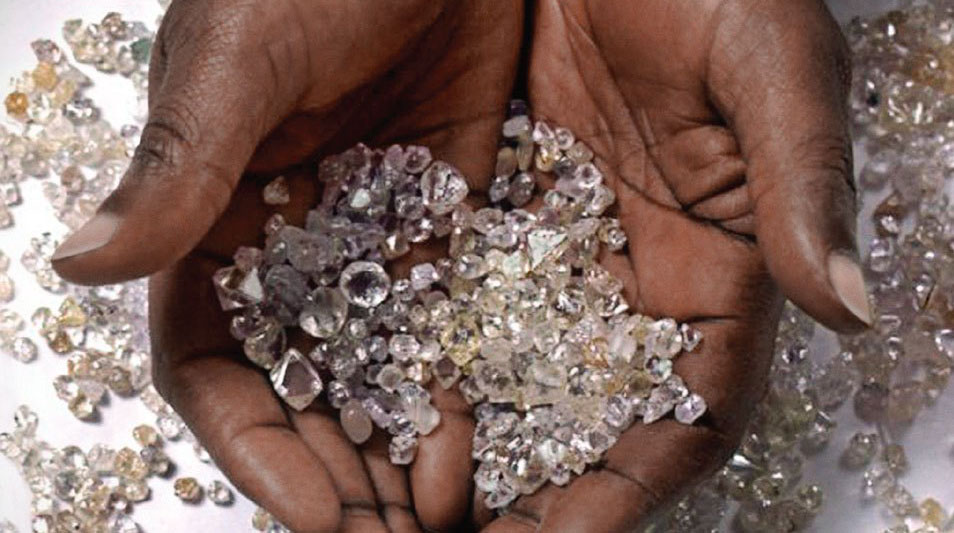
Vision 2030
Allen Choruma
The objective of Vision 2030, to create an upper middle-income economy by 2030, cannot be attained if Zimbabwe does not create an environment conducive for attracting domestic investment.
Zimbabwe’s economy cannot rise if Zimbabweans are not united and share a common vision as one nation.
Zimbabwe can only be built into a great nation as envisioned under Vision 2030 if all Zimbabweans sing from the same hymn and focus on things that unite us as a people for the good of our country.
Zimbabwe’s economic recovery is not a mission impossible — it is a mission possible.
Open for Business
Government has opened up the economy and declared unequivocally that “Zimbabwe is Open for Business”.
Open for business does not mean business as usual. Open for business calls for dramatic attitude change, starting from Government itself and then followed by its people.
We need a shift from “the business as usual” approach to creating an environment conducive for attracting investment, supported by unwavering political will to bring about political and socio-economic transformation.
Open for business means Zimbabwe has to create an environment conducive for attracting investments, both local and foreign.
Foreign Aid
By now, it should be crystal clear that the “Zimbabwe we want” will not be created by extending begging bowls for aid to our traditional Western multilateral development partners and other donors.
Foreign investment and aid should be used to augment, instead of being the primary source, for funding our economic development programmes.
Currently, EU and US sanctions block Zimbabwe’s access to international development finance provided by Bretton Woods establishments — the International Monetary Fund (IMF), World Bank (WB) and other multilateral development institutions such as Organisation for Economic Cooperation and Development’s (OECD) Development Assistance Committee (DAC) countries.
Look inwards
Zimbabweans should look inwards and come up with home-grown disruptive innovative solutions that leverage on what the country already has — its people, human capital, land and natural resources — and use that as a foundation to spur growth and prosperity.
Home-grown innovative solutions can be used to develop our country instead of continuous reliance on prescriptions from others, which may not be in the best interests of Zimbabwe.
Bretton Woods institutions — the World Bank (WB) and International Monetary Fund (IMF) — have often come up with development assistance and financial packages that are not tailored to suit our development needs.
The WB and IMF-authored structural adjustment programmes have created economic disasters in Africa, inflicting a lot of pain and suffering to ordinary people.
WB and IMF-prescribed Economic Structural Adjustment Programme (ESAP), which was adopted in Zimbabwe in the early 1990s, created mammoth economic problems for the country.
In an article published by a local daily, David van Wyk from the South African Benchmark Foundation, said: “In following World Bank and IMF advice, the country became rapidly de-industrialised and unemployment grew apace “, causing untold suffering to ordinary Zimbabweans.
It has been reported that an IMF team recently jetted into the country for the first review of the Staff Monitored Programme (SMP), which is an informal arrangement between Government and IMF to monitor the implementation of key economic programmes in the country.
Zimbabwe, however, needs to be wary of some of the policy prescriptions.
Our traditional Western development partners time and again have expressed interest to support Zimbabwe achieve its economic development plans and debt arrears clearance roadmap, but have not a commitment to extend new credit lines or offer debt relief; thus, keeping us in a perpetual debt trap.
Zimbabwe still remains saddled with a huge foreign debt around US$8,1billion.
What the above exposes is that as a nation, while we cannot divorce ourselves from the global financial architecture, we cannot at the same time continue to knock on the doors of traditional Western development partners when each time we do so the doors are not opened.
It is high time we look inwards, mobilise our own people at home and in the Diaspora and their global networks, and create a conducive investment environment for our people to take a lead in the development of their own country.
Countries like China, Singapore and United Arab Emirates are what they are now because they leveraged on their own people and at their own resource endowment to spur their development. Development partners and foreign direct investment can only come in to support our development programmes and on win-win terms.
Bretton Woods institutions and foreign investors should not be allowed to dictate terms to us.
We have the resources, high on demand globally, and we should call the shots, not the other way around. It won’t cut it.
Innovation
Aid, donors and freebies cannot help us achieve Vision 2030.
A peaceful and prosperous Zimbabwe can only be built primarily by our own people and resources.
Innovation and hard work can change the face of Zimbabwe and bring about change in a relatively short period of time and even in the most extraordinary difficult situations. Innovation will allow us to leverage on our abundant natural and people resources and use them to our advantage in developing an inclusive economic system that benefits all Zimbabweans and does not leave others behind.
Zimbabwe’s abundant land, natural and mineral resources, which we boast of, have not changed our economic situation drastically because we have not been innovative enough to make these resources work to our benefit.
Instead, we have perpetuated colonial economic systems that kept us in the extractive stage and export of low-value primary products, prone to price volatility on global markets, while factories and industries and jobs were created in Europe and the US.
This model worked well for resource-poor European countries, which built factories, created jobs in their homes and then produced finished products which were resold back to Africa at higher prices.
The Zimbabwe we want, under Vision 2030, can only be created if we think afresh and come up with innovative ideas, plans and models that disrupt these inherited predatory colonial economic models.
Our mineral resources are on high demand globally, but because we have not radically disrupted the colonial way of extracting resources, through value addition, the paradox is these resources have not improved the livelihood of our people.
The Zimbabwe we want can only be built by Zimbabweans through innovation, entrepreneurship, discipline, hard work, national cohesion and a selfless and dedicated visionary leadership.
Allen Choruma can be contacted on e-mail: [email protected]



 Online Reporter