Chronicle Editor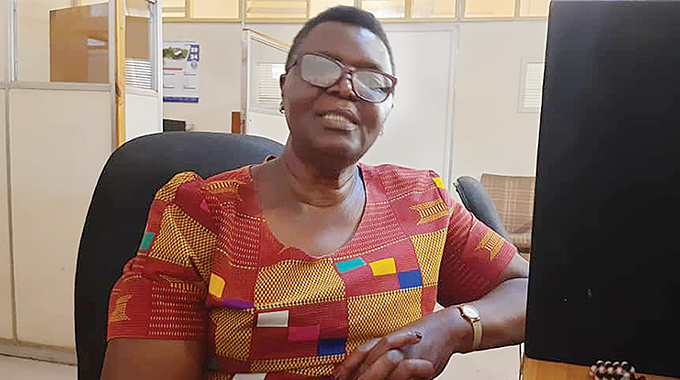
Robin Muchetu, Senior Reporter
TWENTY years after being diagnosed with breast cancer, Mrs Esnath Manyau (67), has continued to live a fairly normal lifestyle, continuing with work, daily chores and a blossom social life unlike the death sentence people associate cancer with.
Losing her right breast did not take away her womanhood, femininity or self-esteem as she chose life after getting the devastating news that she indeed had breast cancer.
To add to her trauma then, just one month after the mastectomy, the surgical removal of a breast, her husband died. He had been her pillar of strength during the difficult time and was suddenly taken away. She however, had to soldier on despite the setback.
Mrs Manyau shared her journey.
“Usually, women do not want to disclose their age, but I am proud of my age, because God gave me time to survive after going through breast cancer. You get to a point where you think you will not make it but the Lord is there for you. I used to work in the accounts department in one big organisation for 32 years. During the course of my work, I discovered I had a problem with my breast. In 2004, one was getting bigger than the other. I went to the doctor and we argued a lot about it as he said there was nothing wrong with me,” said Mrs Manyau.
Normally, she said, people seldom argue with doctors but she persisted because she felt that her breast was changing. Pressed with a need for confirmation of what she was seeing on her breasts, she consulted her husband to check if she was not overreacting.
“I asked him to give me a good look and see if my breasts were the same. I had told him about the doctor’s visits. Initially, he saw nothing but later he saw that my breast was getting bigger than the other, and it had turned harder than the other one.
“I was referred to another doctor for a second opinion. Then, my breast would excrete a creamy substance. Mind you, I had my last child who was 10 years old then, so it could not be residue milk from breastfeeding,” she said.
Mrs Manyau said she was taken for tests and it was discovered she had cancer but the family would not allow any surgery.
“The specialist asked me why I had taken so much time to seek help and come when the disease was advanced. I explained that I had seen the change that was not taken seriously. At that time, I was not in pain unlike before. I then underwent a biopsy to see what was going on. I was cut open and the incision was not sewn neatly because the doctor informed me that what she had seen was not good and they had to remove the breast. It was full of pus inside and I was on stage three of cancer,” said Mrs Manyau.
She was advised to remove the breast and her family would have none of it as they felt she could win without surgery. But she went ahead and had a mastectomy in secret.
“Our African culture has a lot of protocol, the aunties, in-laws, uncles and so on all needed to be told of my condition. To them, a person could not lose a body part and still survive so they were all against it.
“They suggested other options for treatment. I opted to remove it; I even told the doctor that we had agreed as a family yet I had agreed with no one but myself because I knew it needed to go. I took the chance and went under the knife. There was an uproar from the family. My husband was disappointed, he did not know I had done it, but we then made peace with that fact,” she said.
After the operation, Mrs Manyau said that was the beginning of a horrific time in her life as the medications took a toll on her body as they tried to mop up the remaining cancer cells. The cancer had spread vastly in her body so chemotherapy was a blow to her system, together with the cost of medication.
“Back then in 2004, the operation was pegged at US$4 500 and it was an unimaginable figure to raise as the medical aid had been exhausted. Our relatives did their best to raise the money. A couple of my friends, relatives, colleagues and strangers pooled funds for me and we raised it,” she said.

And then the side effects of chemotherapy kicked in.
“I lost all hair on my body. I had black hands, a black tongue, my eyes changed, even my gums and teeth changed because in the process, the chemotherapy also attacks the normal cells as it destroys the cancerous ones. I had to be counselled on the side effects. My nails turned black hence I paint them a lot to hide that residue from treatment. I would throw up a lot too.
“After I had healed, the ladies at the pharmacy I collected my medication from told me that they debated every month if I would show up because I was extremely ill. Everyone assumed I would die from the cancer,” she said.
After six months of chemotherapy, she started on radiotherapy and then, there were no radiation therapy machines in Bulawayo. She had to travel to Harare for the service, which meant more resources had to be pooled together again. However, she sailed through and got treated.
At the end of October 2004, Mrs Manyau returned home after months of treatment and her life changed for the worst.
“On 20 November, a month after I had been home, my husband just dropped dead. You lose yourself; it was a huge blow. I had to be strong at that point,” she said.
When she started feeling stronger, some four years on, Mrs Manyau said she felt duty bound to be an advocate for breast cancer where she preached the word to men and women in a bid to raise awareness on the disease and what it does to the body.
She also assists to dispel myths about the disease being medical and not an evil spell.
Mrs Manyau chuckled at a memory of how a prosthetic breast that she wears once fell out of her bra when she was in a supermarket.
“I thought the security guard was going to arrest me for theft because I swiftly picked it up and shoved it into my bra. It really looked like I had stolen something. It was during those difficult times; it was as if I took a tablet of soap. I shared it with my colleagues at the office and we laughed so hard,” she said, laughing.
Mrs Manyau said now that women make up a huge chunk of the workforce, they need to be trained about breast cancer in the workplace too as they spend a lot of their time there.
According to cancer and health experts in Zimbabwe, a majority of women with breast cancer report late to health institutions due to various reasons such as beliefs that it is witchcraft, fear, shortage of funds for treatment and many others.
In July, the United Bulawayo Hospitals (UBH) held a breast cancer symposium that was conceived to mitigate the rising scourge of breast cancer in the country as breast cancer comes second to cervical cancer in terms of cancer deaths among Zimbabwean women.
The symposium equipped frontline healthcare workers with appropriate skills to diagnose and appropriately treat or refer patients with breast cancer symptoms.–@NyembeziMu


 Online Reporter