Tendai Gukutikwa
Post Reporter
FOR many couples, an HIV-positive diagnosis can trigger fear, uncertainty and, in some cases, the end of a relationship.
For Pastor Wellington Chikumbire, however, the moment his then-girlfriend disclosed her HIV status became the foundation of a marriage built on trust, honesty and informed choices.
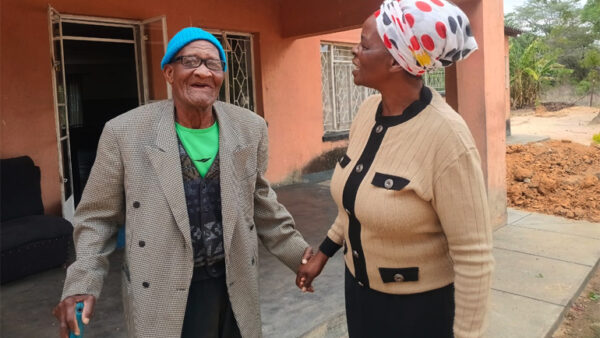
Now 70, Pastor Chikumbire, whose name has been changed to protect his family’s privacy, recalls the life-changing conversation that took place shortly before their wedding.
Having lost his first wife in 2013, he found love again three years later. As the relationship grew serious, the couple agreed to undergo HIV testing together at a New Start Centre.
But before they entered the testing room, his girlfriend revealed that she was living with HIV.
“I was surprised, but I loved her. We had already decided that we wanted to be together, so her status did not change how I felt about her,” he said.
For many people, such a revelation could have signalled the end of a budding romance. For the couple, it strengthened their commitment to one another.
They decided to marry.
At the same time, they agreed that love should never come at the expense of their health. Together, they embraced HIV prevention measures and committed themselves to making informed decisions about their future.
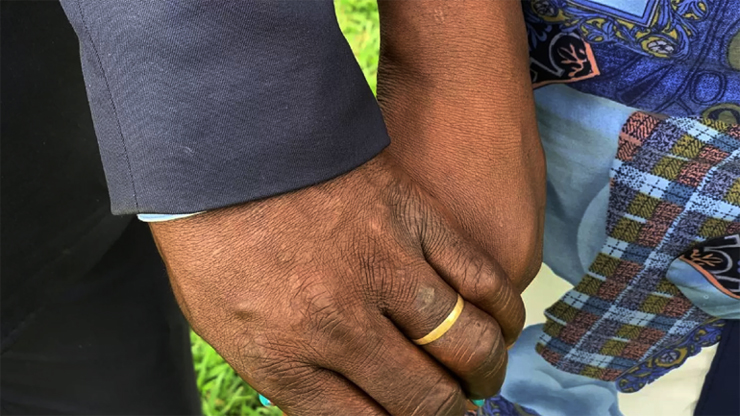
Today, years into their marriage, Pastor Chikumbire remains HIV-negative, while his wife continues to live positively with HIV. Medically, they are known as a serodiscordant couple, meaning one partner is HIV-positive while the other is HIV-negative.
To them, however, they are simply husband and wife.
“I did not see her as someone who was HIV-positive. I saw her as the woman I loved and wanted to marry. An HIV diagnosis does not have to end intimacy, marriage or companionship,” he said.
Despite the progress made in HIV treatment and prevention, Pastor Chikumbire believes society still struggles to understand serodiscordant relationships.
“One of the difficult things is that people do not easily accept a serodiscordant couple. They may think the HIV-negative partner is being forced to remain in the relationship or that something must be wrong with the marriage,” he said.
He added that, for many couples, the greatest challenge is not the virus itself, but the stigma often associated with it.
“Some people fear being judged more than they fear HIV.”
To shield his wife from potential discrimination, he has chosen not to disclose her HIV status publicly, including within the Pentecostal church that he leads.
“This is not because I am ashamed of her. Her HIV status is private information. There are things that belong to the two of us. I have never exposed my wife’s status because people can be judgmental,” he said.
Instead of focusing on public opinion, the couple have centred their lives around prevention, regular testing and adherence to treatment.
His wife is on antiretroviral therapy (ART), while he has used pre-exposure prophylaxis (PrEP), medication taken by HIV-negative individuals to reduce the risk of infection.
His journey with PrEP began in 2017 following a personal health scare.
After being hospitalised with diabetes, a condition that runs in his family, his wife became concerned that he may have contracted HIV. The couple immediately decided to get tested.
The result came back negative.
“That result gave me relief, but it also made me think more seriously about protecting my HIV-negative status,” he recalled.
Shortly afterwards, he enrolled on oral PrEP and incorporated it into his HIV prevention strategy.
For years, he took a daily tablet. However, like many long-term medication users, he found that maintaining a daily routine could become challenging over time.
More recently, he switched to Lenacapavir, a long-acting HIV prevention injection administered twice a year.
“With tablets, you need to remember every day. Sometimes that becomes difficult. I find the injections much easier because I only need them twice a year,” he said.
The experience has also shaped how he addresses HIV-related issues in church.
“As a pastor, I encourage people to know their HIV status without fear. What is important is testing. Whatever the result, couples should not fight or blame each other. They should sit down and plan their next step,” he said.
That next step, he explained, could involve initiating ART for the HIV-positive partner or considering PrEP for the HIV-negative partner.
For Pastor Chikumbire, HIV prevention is not about blame or suspicion. It is about knowledge, communication and mutual protection.
“If a partner tests positive, that does not mean the relationship has to end. You have to discuss how best to protect each other,” he said.
His message comes at a time when Zimbabwe’s HIV response is evolving rapidly, offering people more prevention choices than ever before.
Even so, harmful stereotypes persist. Many still associate HIV with promiscuity, infidelity or moral failure, while others wrongly assume that people living with HIV cannot enjoy healthy and fulfilling relationships.
Pastor Chikumbire believes such attitudes discourage individuals from getting tested or seeking prevention services.
“An HIV diagnosis does not remove a person’s right to love, dignity, companionship or family life. Likewise, being HIV-negative does not mean someone must abandon the person they love,” he said.
He is particularly concerned by men’s reluctance to seek HIV prevention services.
“I hope my experience encourages more men to reconsider their attitudes towards prevention and testing,” he said.
Within his church, discussions around HIV are approached carefully, balancing faith teachings with practical health information.
“We encourage abstinence and purity among young people, but we also know they need accurate information. That is why we invite health experts to discuss HIV prevention and safe sexual practices,” he said.
For Pastor Chikumbire, silence remains one of the greatest obstacles in the fight against HIV.
“Sometimes an uncomfortable conversation can save a life.”
While his story is deeply personal, it reflects a broader shift occurring within Zimbabwe’s HIV prevention landscape, where innovative approaches are giving people greater control over their health. As newer long-acting prevention options become increasingly available, Pastor Chikumbire hopes more couples will realise that an HIV diagnosis does not have to define a relationship.
Instead, he believes, love can thrive when it is accompanied by honesty, knowledge and a shared commitment to protecting one another.
Love defied HIV: Pastor’s inspiring marriage journey