Lovemore Kadzura
Post Reporter
FOR many elderly people, old age is a season of family gatherings, laughter from grandchildren and the comfort of familiar faces.
It is a time when decades of sacrifice are repaid through love, care and companionship.
For eight residents at Makoni Old People’s Home, however, reality tells a different story.
Far from the villages where they were born and the countries they once called home, these senior citizens are spending their twilight years in quiet isolation. Five of them are migrants from Malawi and Mozambique who crossed into Zimbabwe decades ago in search of work and better opportunities. Today, they have no relatives visiting them, no family celebrations to look forward to, and no certainty that loved ones even know where they are.
The passage of time has turned cherished memories into their closest companions. The voices of children have faded into distant echoes, while stories of villages left behind live only in their minds. Day after day, they watch the gates of the home, hoping familiar faces might appear, only to be met by silence.
Yet amid the heartbreak of separation and abandonment, Makoni Old People’s Home has become a sanctuary. Here, they have found, not only shelter and care, but a sense of belonging among fellow residents who share similar journeys of loss, resilience and survival.
Their stories offer a sobering glimpse into the realities facing some elderly migrants, while underscoring the critical role institutions such as Makoni Old People’s Home play in preserving the dignity of society’s most vulnerable citizens.
Although they have no relatives who visit them, the elderly inmates have accepted their fate, and are even grateful for the care and companionship they receive at the institution.
For them, the home has become more than just shelter. It has provided a sense of belonging at a stage of life when loneliness can be particularly difficult to bear. Despite the absence of family visits, the elderly inmates are comfortable at the home.
One of them is Sekuru Absent Ndalawe (91), who left Malawi for greener pastures in Zimbabwe, when it was still Rhodesia.
Then at the age of 35, he never believed that one day, after working in the mining sector, he will find himself confined to an old people’s home under the care of well-wishers together with strangers with the same fate.
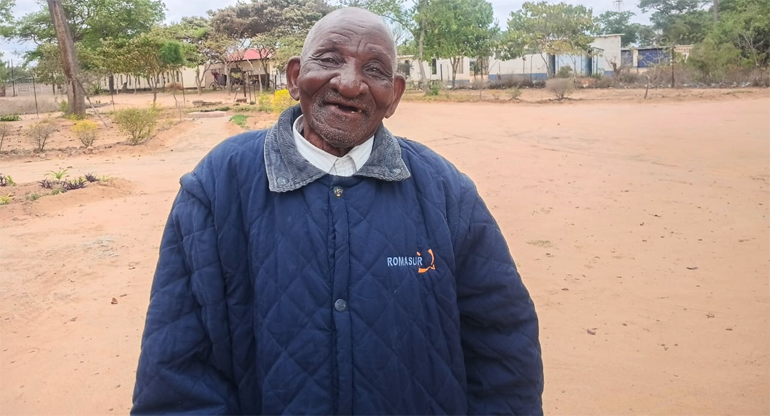
“I was born on June 2, 1935 in Malawi. I came to Zimbabwe on March 3, 1964. I got job at Alaska Mine, and later moved to Inyati Mine in Headlands, where I worked just for two months.
“I moved to Penhalonga in 1972. I then left Penhalonga for Rusape, where I was self-employed repairing watches.
“On June 15, 2022, I was brought here. This has been my home since then. When I moved from Malawi to Rhodesia, I had a wife and child. I bore four more children here, who all passed away. I am left with three grandchildren only, who only visited me twice, since my admission here. The other one I do not know where he is.
“My stay here is very comfortable, being taken care of by the home. I am asthmatic, but still coping very well while staying here,” said Sekuru Ndalawe.
He jokingly said his first name, Absent, miraculously saved him from trouble because he would be ‘absent’ when colleagues indulge in mischief.
Sekuru James Mahwindo (94), of Mozambican origin, said when life became unbearable for him when his wife passed on, he voluntarily moved into the home.
“I came here in 2022. I was working at Buddley in Headlands as a security guard at a farm. I discovered that I was old, and my wife had passed on in 2018. I could not look after myself, so I decided to come to this facility which houses elderly people.
“I am staying well here. We are getting all the good food, and clothes are being washed. My room is being well cleaned and smart,” he said.
Their resilience masks a painful reality that some elderly people can reach the end of their lives without the required support of the families they once knew.
Their predicament also highlights the important role played by institutions like Makoni Old People’s Home in providing care and dignity to vulnerable senior citizens.
However, keeping the home running remains a huge challenge.
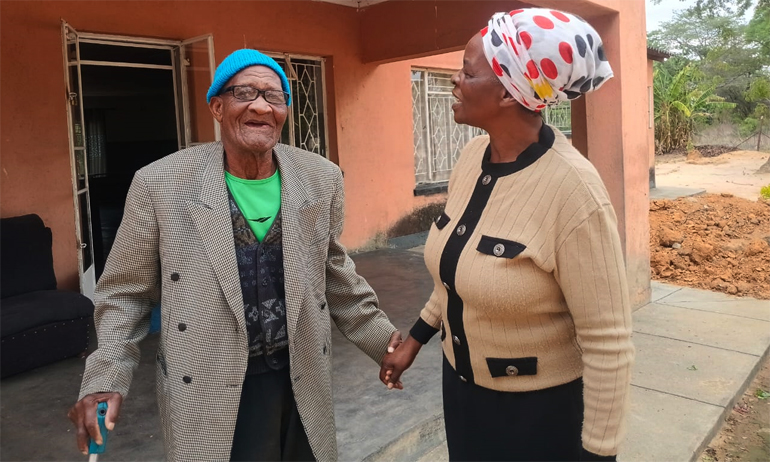
Mrs Rutendo Tawandirwa, a board member at the institution, appealed to well-wishers to support them with food, toiletries, salaries for volunteer employees, and medications among other essentials.
Mrs Tawandirwa said some of the inmates have special medical conditions such as blindness, mental health and fits, which require extra care.
She said the inmates, despite some having no traceable relatives, still get regular visitors, especially from churches and other well-wishers.
“These inmates say they came from Malawi and Mozambique long back to work mainly on farms and mines. Some do not have any relatives or children who visit them.
‘‘Some tell us that their children went away with their mothers. The oldest person here is 97-years-old, and has been here for 10 years. They do not have relatives or friends who visit them. They end up lonely here as they are just confined on this area.
“We encourage people to visit them and spend time here. These inmates are moving libraries as they have lot of information and history to share. They mainly suffer from old age-related illnesses. They have difficulties on mobility and also eating. The home is run by a volunteer administrator, two care givers and a general hand. The home survives entirely on donations from well-wishers, especially locals and corporates. Our employees do not get salaries from the home.
“When they get sick, they receive treatment at Rusape General Hospital for free, but are required to buy the medication. In the event of death, they are buried at the local cemetery,” said Mrs Tawandirwa.
In statement to mark the International Day for Older Persons, the United Nations noted that the world is experiencing an older persons’ population and there is need to include them in economic activities.
“Humanity is living longer than ever. Global life expectancy has risen has risen steadily for over seven decades, yet the gap between life expectancy and healthy reached 9.6 years in 2019, reflecting the growing burden of no communicable diseases.
‘‘Longer lives are drawing greater attention to how health, social and economic conditions and human rights are experienced across the life course. Longevity intersects with health systems, labour markets, social protection, and education, housing and fiscal sustainability in ways that cannot be addressed in isolation.
‘‘Where years are lived in good health and supported by inclusive labour markets and effective social protection, longer lives can generate a longevity dividend,” noted the UN.