Chronicle Editor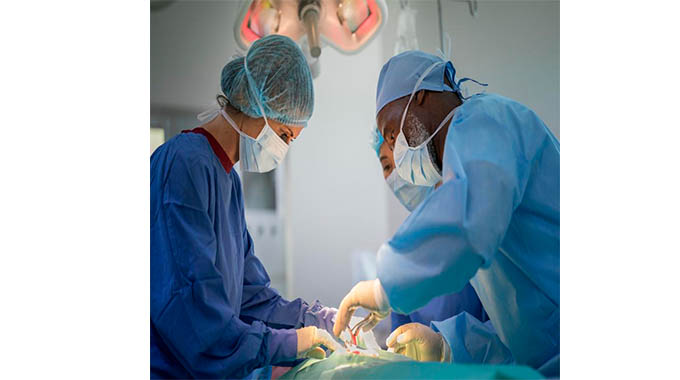
Thandeka Moyo-Ndlovu, Health Reporter
DEMAND for cancer surgery will increase by 52 percent by 2040, with under resourced, low-income countries like Zimbabwe shouldering the greatest burden, a modeling study suggests.
Zimbabwe is yet to conduct a localised research on cancer to establish its prevalence as the country relies on global estimates.
This is because most of the cancer research that is used to guide current national cancer response in Zimbabwe are foreign studies, says the Cancer Association of Zimbabwe.
Cancer is slowly overtaking known killer diseases in Zimbabwe and the most common in women being cervical and breast while most men suffer from prostate cancer.
Medical experts say more than 60 percent of people diagnosed with cancer are on stage three meaning there is not much that can be done to save their lives from the non-communicable disease.
Cancer can be treated by various methods and the most common in Zimbabwe are surgery, chemotherapy and radiography.
In surgery, a procedure done to remove a diseased organ or tissue and in addition to determine the extent (stage) of the cancer and whether it has spread to other parts of the body.
Staging is a major determinant of prognosis and for the need for treatment.
Those who go through chemotherapy receive drugs which have the ability to destroy cancer cells. Like radiotherapy, chemotherapy has the potential to harm healthy tissue but healthy tissues usually repair themselves after chemotherapy.
Radiotherapy is the use of radioactive rays to kill cancer cells and or shrink the growth and that can be given externally or internally.
The effects of radiotherapy are localised and confined to the region being treated while the goal of radiotherapy is to destroy the cancer cells in the area being treated or targeted and making it impossible for these cells to continue growing and dividing.
The CAZ says it is therefore crucial for the nation to have local researches which are likely to be more applicable to the local scenario.
In a report published last week, Lancet Oncology researchers say studies carried in 83 low income countries show that cancer prevalence and its associated mortality is increasing.
“Global demand for cancer surgery will increase by 52 percent by 2040, with under resourced, low-income countries shouldering the greatest burden, a modeling study suggests. A second study shows that outcomes from cancer surgery are much worse in lower-income countries, with a fourfold increase in the risk of dying after surgery for gastric or colorectal cancer,” read the report.
“Together, the studies highlight an urgent need to bolster resources and capacity to help meet demand in poorer countries.
“Policy makers worldwide must balance investments in the early detection and treatment of cancer with the simultaneous improvement in safe perioperative care. Without these investments, mortality gains in cancer control will not be fully realised.”
Recent statistics show that more than 60 percent of patients are being attended to at Mpilo Central Hospital Cancer Unit and other public health institutions have stage three and four cancers.
At this stage, the cancer would have advanced so much that it is virtually incurable.
Stage three and four cancers require palliative treatment which is only meant to treat symptoms or ease pain until the patient dies.−@thamamoe.



 Online Reporter