Online Reporter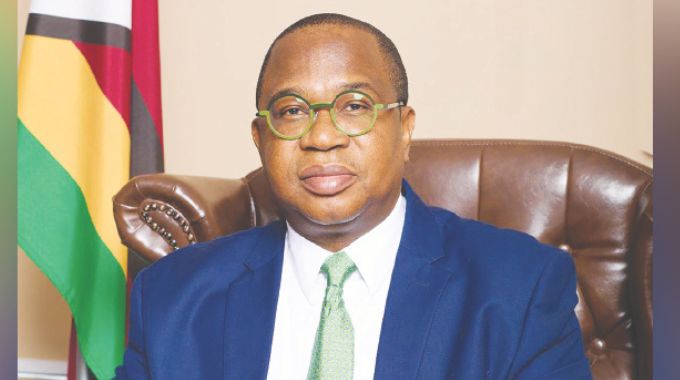
Debra Matabvu [email protected]
ZIMBABWEANS could soon gain access to cheaper loans and longer repayment periods as the Government has started moving towards taking advantage of the recent sharp decline in inflation, a Cabinet Minister has said.
In an interview with our Harare Bureau, Finance, Economic Development and Investment Promotion Minister Professor Mthuli Ncube said the fall of inflation to a historic 2,9 percent was creating conditions for interest rates to come down further and for banks to offer more long-term financing.
He said the Government was now working on a 15-year yield curve — a benchmark that would help banks and investors determine the cost of borrowing money over longer periods.
The move could make it easier for businesses to finance factories, machinery and other expansion projects, while farmers and other productive sectors could gain access to loans that can be repaid over longer periods.
“It means now our interest rates can come down sustainably,” Prof Ncube said.
“We can reduce the cost of capital over time going forward and increase lending to the private sector, to citizens and just in promoting investment in general.
“This is not a small issue.”
Zimbabwe’s benchmark policy rate currently stands at 30 percent after the Reserve Bank of Zimbabwe reduced it from 35 percent in June, although commercial lending rates remain significantly higher, at around 43,95 to 46,54 percent.
This gap means businesses are yet to fully benefit from the country’s dramatic decline in inflation.
Prof Ncube, however, said the greater predictability of current inflation trends would allow financial institutions to price long-term loans with more confidence, reducing the risk that unexpected inflation would erode the value of repayments over the life of a loan.
“It also means that now companies can borrow long-term. Because once inflation is low and predictable going forward, you can borrow long-term,” he said.
“Banks don’t worry about whether they lose money or not in terms of pricing because they can price along a proper yield curve.”
Prof Ncube said authorities were now accelerating work on a yield curve extending to 15 years, which would provide a benchmark for pricing longer-term borrowing and investment.
A yield curve essentially shows the cost of money over different periods, allowing lenders and investors to determine how much interest should be charged for borrowing over, for example, one year, five years, 10 years or 15 years.
A functioning long-term yield curve is important because major investments often take years to generate returns.
Factories, mines, power projects, irrigation schemes, housing developments and large agricultural projects, therefore, require financing that can be repaid over longer periods rather than expensive short-term loans that have to be repeatedly refinanced.
Experts argue that cheaper loans are important to an economy because they make it easier for businesses and households to borrow, invest and expand.
When the cost of borrowing falls, companies can afford to buy machinery, build factories, increase production and hire more workers.
Developed economies use relatively cheap and longer-term credit to finance projects that take years to pay for themselves, including roads, power stations, housing, manufacturing plants and other infrastructure.
Affordable long-term financing allows businesses and governments to spread the cost of major investments over many years instead of facing heavy repayments in the short-term.
Prof Ncube said he had instructed officials in the Ministry’s Public Debt Department to accelerate work on developing the 15-year yield curve.
“I was just speaking to our staff from the Debt Department to say we must speed up the development of this yield curve that goes into 15 years going forward,” he said.
“And they are working on that.”
The push comes against the backdrop of a dramatic turnaround in Zimbabwe’s inflation environment.
The country experienced extreme price instability in recent years, with inflation soaring as currency instability undermined business planning and made it difficult for lenders to accurately price long-term loans.
Inflation remained exceptionally high in 2023 and 2024 before beginning to moderate as Government and the Reserve Bank implemented tighter fiscal and monetary policies and worked to stabilise the currency.
By July 2026, year-on-year inflation had fallen to 2,9 percent, marking a major shift from the triple-digit inflation environment that had previously dominated economic activity.
Experts say low and predictable inflation gives companies greater certainty when calculating future costs, revenues and repayments, while allowing financial institutions to assess the risk of lending over longer periods.
With commercial lending rates still around the mid-40 percent range, businesses face a substantially higher cost of borrowing than the headline inflation rate.
The Government’s latest push is taking place alongside efforts to improve Zimbabwe’s international investment profile.
Last month, the World Bank removed Zimbabwe from its classification of fragile countries, a development Government believes will improve perceptions of the country among international investors and potentially reduce the risk premium attached to investment.
Prof Ncube said the improved country-risk profile, combined with macroeconomic stability, was already strengthening Zimbabwe’s investment proposition.
“This means a lot for Zimbabwe in the sense that now investors can confidently see Zimbabwe in a different light — a country that is free of fragility, institutional fragility,” he said.
The Government is seeking to attract both foreign direct investment and portfolio investment into productive sectors and the country’s capital markets.
“We are attracting very good investment going forward, both foreign direct investment as well as investment into our capital market — Zimbabwe Stock Exchange, Victoria Falls Stock Exchange. It is showing in the levels of performance of those two stock exchanges,” Prof Ncube said.