


 admin
admin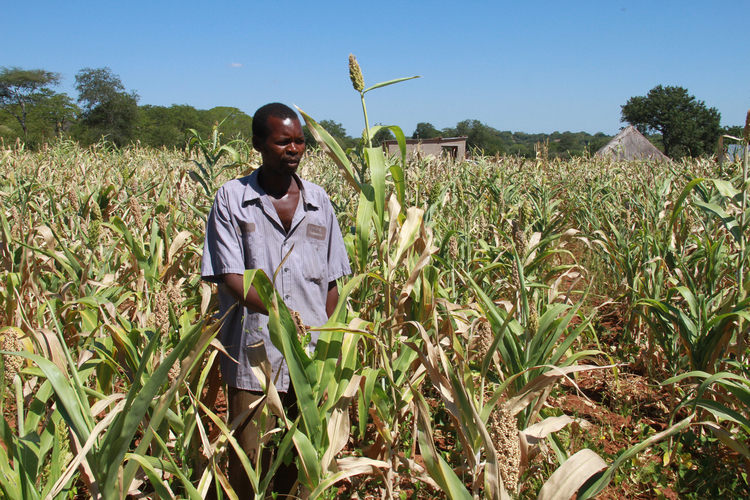
Harmony Agere and Tinashe Farawo
The southern half of Zimbabwe might already be in the grips of its most severe drought in over a decade as crops in the Lowveld have been written off, while a massive shortage of grazing land is evident after the region last received normal rains in January 2015.

A tour of Masvingo, Matabeleland North and Matabeleland South by The Sunday Mail Extra last week established that people and livestock were already in need of assistance as key crops such as maize, sorghum and millet have wilted.
Major rivers such as the Bubi and Mwenezi are already drying out and high temperatures – sometimes exceeding 40 degrees Celsius – have become the norm.
While the provinces are traditionally dry areas, villagers and provincial leaders agree that the situation this year could be as bad as that of 1992 when drought crippled the country.
In Zaka, Chiredzi, Mwenezi, Gwanda, Esigodini, Bulawayo, and Umguza right up to Hwange districts, villagers are already panicking as even the hardy small grains do not look promising.
A provincial Agritex officer in Matabeleland South said they had written off most of the food crops in the province, with the exception of those in some irrigation schemes.
“The situation is bad as you can see for yourself . . . The finer details of the assessment report I cannot provide to you now because I have not been cleared to talk to you.”
Matabeleland South Minister of State for Provincial Affairs Abednico Ncube said the situation was critical and the province needed food assistance.
“The situation here is very bad because we last received normal rainfall at the beginning of January,” he said. “People did plough at the beginning of the season but most of the crops wilted in their early stages because there has not been enough rainfall and the heat is too much.”
Minister Ncube said low productivity on irrigation schemes had compounded the situation.
“The province is already in need of food assistance and to those who still have some food left, they may not go beyond June,” he said. “We have a number of irrigation schemes in the province and if they were running properly then the situation could have been better. The schemes cannot function properly because there is no funding.”
Indications are that as many as half of the cattle in Matabeleland South need supplementary feeding as grazing pastures and herbage disappear.
Matabeleland South chief livestock specialist Simangaliphi Ngwabi said the most affected areas were Beitbridge, Gwanda and Mangwe.
“Out of the 636 441 cattle in the province, 364 000 cattle are at risk, which means about half of the cattle will require survival feed or whatever intervention people may come up with,” she said.
Masvingo Minister of State for Provincial Affairs Shuvai Mahofa said the situation was worst in Mwenezi and Chiredzi districts.
“The province is already in drought. Mwenezi and Chiredzi are the most affected areas and people are already in need of food. A survey carried out by Agritex established that 90 percent of the crop (maize) has wilted,” she said. “So we appeal to Government to consider us first in terms of food aid because the situation can deteriorate to a very bad level by April.”
Communal farmer Mr Jabson Mariko of Chinyamuzinda Village under Chief Tshovani in Chiredzi said of all the crops he had planted, only groundnuts did well while maize and sorghum failed before maturity.
“There is nothing for us, all the crops have failed except for the groundnuts. I am looking after a family of seven and I will have to sell cattle to buy food for both my family and for livestock,” he said. “We last received rainfall in February and it’s just bad because water for drinking and grazing lands for livestock is already a problem.”
Small-scale farmer Mr Philip Mutendereki of Mwenezi said all of the crops he ploughed on his 25-hectare crop had not done well while he fears the worst for his 25 head of cattle.
“It’s true that here we do not usually receive good rains, but this year the situation is just too bad and I have not witnessed this in the many years that I have stayed here,” he said.
“There is no food for both people and animals while the rivers have already dried up. I am afraid we could be facing the 1992 kind of drought.”
Zimbabwe Commercial Farmers’ Union president Wonder Chabikwa said more emphasis should be placed on irrigation schemes.
“At the moment we do not have figures, but the reports that we are getting from our officers in those provinces show that the situation is pretty bad,” he said.
“Maize, which is the most affected crop, wilted in its early stages while small grains have done fairly better, but not many people planted small grains.
“Maybe having witnessed consistent records of drought in these regions, efforts should be concentrated on irrigation schemes.”
It is now hoped that Mashonaland East, West and Central will have enough of a maize harvest to minimise food imports.
Government had targeted more than two million tonnes of maize this season, but Agriculture, Mechanisation and Irrigation Development Minister Dr Joseph Made has already written off about 300 000 tonnes due to drought.



 Bongani Ndlovu
 Online Reporter