Online Reporter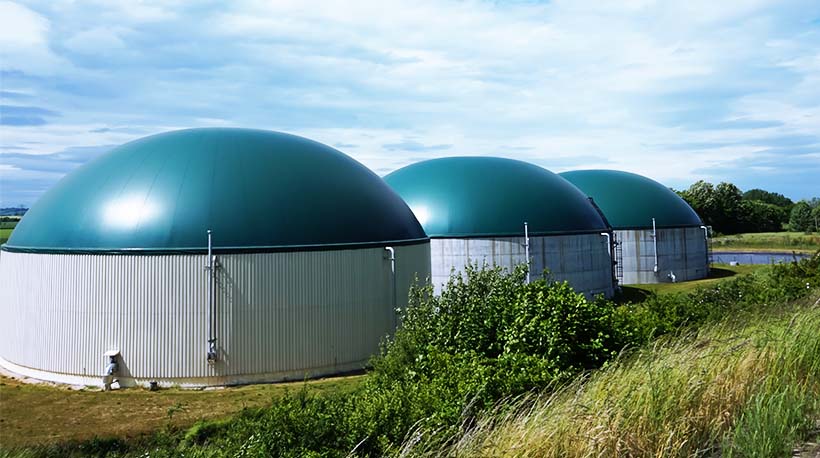
Rutendo Nyeve [email protected]
THE nation is cementing its position in Africa’s clean energy revolution, with a Government-backed strategy centred on liquefied petroleum gas (LPG), biogas technology, and an ambitious rural electrification drive.
Under the Second Republic’s vision to achieve universal access to clean energy by 2030, the nation is making significant progress in reducing reliance on traditional biomass.
This shift is not only preserving the environment but also fundamentally improving livelihoods, particularly in rural communities where access to modern energy has historically been a challenge.
Speaking at a post Cabinet briefing on Tuesday, the Minister of Energy and Power Development, July Moyo, detailed the country’s comprehensive energy compact.
He said the transition from firewood and raw electricity consumption to cleaner alternatives is a key priority.
While the use of LPG is becoming increasingly common in urban households, easing pressure on the national grid, the Government is ensuring this clean cooking option reaches remote areas.
Through entities like Petrotrade, LPG is being distributed countrywide, offering a safer and more efficient alternative to wood and charcoal.
Simultaneously, biogas is being championed as a game-changer for the agricultural sector.
Minister Moyo revealed that the Rural Electrification Agency (REA), via the Rural Electrification Fund, is actively financing the installation of biogas digesters.
These systems convert livestock waste into a versatile energy source for cooking, lighting, and even small-scale industrial use.
“We are encouraging farmers to see biogas as a path to energy independence. I have visited farms that are completely off-grid, using biogas not just for lighting, but for welding. This is an area we are actively supporting,” said Minister Moyo.
Furthermore, Minister Moyo said the Government is on a drive to electrify every primary and secondary school and every clinic in the nation.
Minister Moyo announced that the country is on the cusp of achieving this milestone.
“Currently, 82 percent of rural secondary schools and over 70 percent of primary schools are now connected to power, with urban schools already fully covered. 94 percent of clinics across the country are now electrified, with the target of 100 percent expected by year-end.
“Think of all the teachers and nurses in rural areas. We are taking them out of the burden of searching for firewood. By transitioning to clean energy, we are giving them a quality of life on par with their urban counterparts,” he said.
As the nation solidifies its leadership in sustainable energy, it is set to host the SADC Sustainable Energy Week next week in Victoria Falls.
The event will draw high-level energy ministers and delegates from across the region, positioning the country at the forefront of the continent’s renewable energy dialogue.
The forum will serve as a platform for Zimbabwe to share its success story and foster regional cooperation on the path to universal energy access.