admin
admin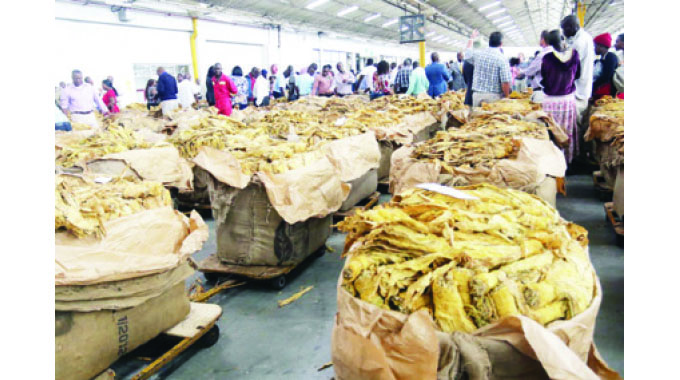
Obert Chifamba-Agri-Insight
FROM just 100 registered tobacco growers in 1904 to more than 121 000 for the 2021/22 cropping season!
Such was the colossal leap in the number of farmers committed to producing the golden leaf following the liberation of the land from the stranglehold of the few white commercial farmers who were some of the commercial producers of the crop during the colonial period.
Of course, the attainment of independence in 1980 saw indigenous farmers starting to grow the crop too and until 1991 the number of tobacco growers was hovering between 1 000 and 2 000, while the hectarage under tobacco production from all farmer categories also increased from about 38 000ha in 1981 to 125 000ha in 2021.
These monumental changes were all possible, thanks to the achievement of independence in 1980 that saw native Zimbabweans moving to occupy spaces once privatised and doing activities that used to be a preserve of their erstwhile coloniser.
Agriculture has since time immemorial been one of the occupations on which the majority of Zimbabweans was surviving, yet they did it on very unproductive pieces of land while their white counterparts had all the productive and arable land to themselves.
This was to change with the attainment of independence in 1980, which culminated in the inception of the land reform programme in 2000.
The land redistribution programme saw hundreds of thousands of Zimbabweans getting resettled and immediately starting to try out high-value cash crops like tobacco.
Meanwhile, in exactly six days from today, Zimbabweans will be celebrating the 42nd anniversary of the country’s independence from colonial rule.
It is the day that marked the transition from colonial domination to self-rule, which enabled all Zimbabweans to be masters of their destinies.
As the nation celebrates this important day, it is crucial for every Zimbabwean to remember that independence did not just come with political freedom, but also set the stage for economic emancipation after years of playing second fiddle to those that owned the means of production.
The country’s economy is agro-based, hence the need to ensure that Zimbabweans plying their trade on the land through farming, also spare a moment to appreciate how political independence also threw a lifeline to their business ambitions.
A crop like tobacco, for instance, has obviously changed the socio-economic reality of millions of Zimbabweans along its value chain.
It is crucial to appreciate that it is not the farmers alone that are benefiting from the earnings generated from the sale of the crop.
There are transport operators, food suppliers and tobacco processors to name just a few from the long list, that benefit from the production of tobacco every year.
Tobacco growers are in fact contributing a lot to the national gross domestic product (GDP), as they earn millions of foreign currency for the country every year.
Buyers that descend on the country every marketing season have to bring in funds from off-shore accounts and inject the fresh money into the economy every year, which tobacco growers will get as payments.
Tobacco farmers always make sure everyone gets a bite of the cherry, as they use their earnings to achieve a lot of things that may not necessarily be linked to the crop.
This means that a lot of other people benefit indirectly from their toil in the fields.
Above all, the economy will always emerge as the biggest beneficiary as the functioning of all these different sectors feeds into its well-being.
Tobacco farming has created vast employment opportunities for thousands, if not millions of people, which makes it a very important component of the country’s agro-based economy.
As people celebrate Independence Day, they should remember to do so peacefully and spend wisely so that they can still hire labour to help pick, cure, grade and even transport their tobacco to the floors after the festivities.
This important day will come once this year and we wait for the next one next year, but the crop that is being reaped from the fields will need to be cured, graded, packed and sent to the floors so farmers should avoid spending to the point of chewing into the budget for preparing their crop for the market.
This marketing season looks bright in terms of the prices, thanks to the decreased volumes of the crop globally after prominent producers like Brazil and India failed to produce to their best because of drought and other natural challenges.
This created a mismatch between supply and demand, with the tobacco producing countries struggling to meet the global demand, which will inevitably result in the appreciation of the value of the depressed quantities of the golden leaf that will be produced and marketed this year.
Here at home, the highest price fetched on the opening day of the 2022 marketing season was US$4,96 per kilogramme compared to the US$4,01 per kilogramme recorded last year.
The lowest price was US$0,80 per kilogramme compared to US$0,60 last season, while the average price was US$2,58 per kilogramme versus US$1,58 per kilogramme last year.
All indications are that the season may be very fruitful considering that most of the tobacco sold on the first day is usually not the farmers’ best leaves, but primings that are always harvested and processed ahead of the bulk of the produce.
Essentially, this should also mean that the tobacco that will be delivered to the floors as the season progresses should logically fetch better prices, as it would be the best quality.
It will also make a lot of sense if the Tobacco Industry and Marketing Board (TIMB) does all it can to ensure that there are no buyers that collude to erect price ceilings like what has been happening in recent seasons when one price would dominate the entire season.
Price ceilings always leave growers poorer, as their highest quality produce will go for a song yet in all fairness it should fetch higher prices compared to the early deliveries that are usually made up of the first leaves to be picked.
After all is said and done, this year’s main independence celebrations will be held out of Harare, the first time this has happened since 1980.
This will give Zimbabweans who had never been to Bulawayo the opportunity to visit the country’s second biggest city and get to appreciate why the event has been moved to it this time around.
Happy Independence celebrations!



 Online Reporter