Online Reporter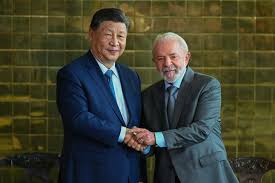
Brazil’s Luiz Inacio Lula da Silva decried the use of tariffs as a tool of “blackmail” while China’s Xi Jinping said trade wars were disrupting the global economy during a Brics summit that took place against the backdrop of Donald Trump’s targeting of the bloc’s members. Neither Lula nor Xi specifically mentioned Trump or the US during Monday remarks at a virtual gathering of Brics countries, the group of emerging market nations formed by Brazil, Russia, India, China and later South Africa that has since expanded to include other countries.
But the Brazilian leader convened the meeting to discuss US trade practices that have included the imposition of 50 percent tariffs on many of his nation’s goods and similar levies against India, and both he and Xi urged Brics members to stand united in defence of a multilateral system they said is under threat.
“Tariff blackmail is being normalised as an instrument to seize markets and interfere in domestic affairs,” Lula said during the summit, according to written remarks released by Brazil’s government. “Our countries have become victims of unjustified and illegal trade practices.”
Xi, meanwhile, said that “trade wars and tariff wars waged by some countries severely disrupt the world economy and undermine international trade rules,” according to state-run Xinhua News Agency. “Countries cannot thrive without an international environment of open cooperation, and no country can afford to retreat to self-imposed isolation.”
Like Lula and Xi, he called on Brics to “play a critical role in strengthening the multilateral system.” — Bloomberg