Chronicle Editor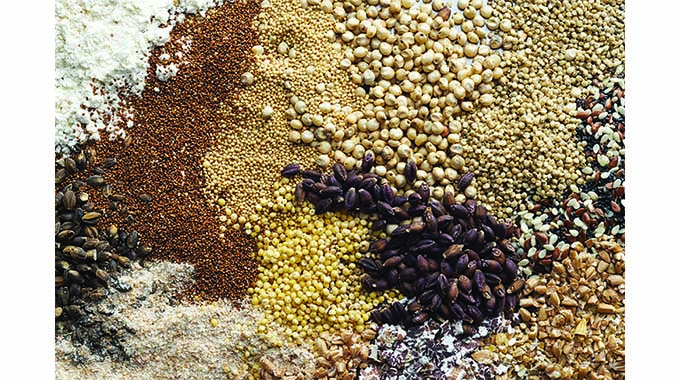
Nqobile Tshili, Chronicle Reporter
MR Rodger Mudimba (42) from Binga in Matabeleland North is alive to realities of living in semi-arid regions which are characterised by poor rainfall patterns which often lead to drought.
The third year, Lupane State University (LSU) employee-cum-crop-science-student is determined to transform his community in Binga through knowledge.
He is part of an elite group of five students at the university that is involved in research projects together with some lecturers in coming up with traditional grains that can produce good yields for rural communities in different regions across the country.
The group is also examining ways of value addition to small grains to enrich communities.
They have set up research plots in Lupane, Filabusi, Matobo and Masvingo- areas known to face frequent droughts.
Mr Mudimba studies rapoko/uphoko and said coming from a rural, dry district, he has seen how his community has over the years struggled to produce a good yield after planting maize.
He believes his research would transform his community and others living in similar conditions.
“So, I believe as a result of this research we will be able to educate my community on the advantages of traditional grains. We need to inform our people to consider planting tradition grains especially in the face of climate change. I’m also an employee in the Faculty of Agriculture Science so I also assist other students especially when it comes to practical lessons. So, through knowledge we will build communities,” said Mr Mudimba.
LSU is on a mission to promote the consumption of the products extracted from traditional grains such as sorghum, sweet sorghum and millet.
The university has produced a juice extracted from imfe or sweet sorghum and wants to commercialise the product.
It is also weighing options of making sugar from imfe.
A Chronicle news crew on Thursday visited LSU farm at Lupane Campus where officials explained some ground breaking research that the university is conducting.
LSU projects and technical officer in Faculty of Agricultural Sciences Mr Boat Sibanda said the university has a vision of transforming the perception on traditional grains, previously termed small grains.
Government abandoned the term small grains saying the term was used to belittle the country’s indigenous grains yet exotic cereals such as rice or wheat are not called the same, although there are small as well.
“As an agriculture university our mandate is to develop graduates who are industrious, graduates who are able to meet the conditions of evolving agriculture in various aspects. In particular, our focus is to improve traditional grains and create a product portfolio diversity. The traditional limits for traditional grains is for cooking isitshwala but we have realised that there are a number of products that can be produced using these traditional grains. We can add value to some of these projects,” said Mr Sibanda.
“We can use imfe (ipwa) to produce sorghum syrup and sorghum juice. These products are not available in the market. Through innovation we can go a long way in substituting and even replacing certain juices as well as create competition for the existing juices”.
The news crew was shown some of the products made from imfe including the juice and syrup.
Mr Sibanda said apart from value adding products made out of traditional grain, they are researching on improving yield from traditional grains.
The university is studying the most suitable traditional grain for the area saying there is little access to the seeds on the market.
“The purpose of doing this is to identify a specific genotype that we could improve and create seed for farmers to use and promote the grain. In other words, we are increasing what we call the sorghum portfolio diversity within the country that can actually benefit smallholder farmers. We are looking for stakeholders who could partner us and improve this objective of increasing and promoting the traditional grains,” said Mr Sibanda.
“People are dependent on maize and we have in a way forgotten the traditional grains. Yet traditional grains are easy to produce and have more protein than maize which is highly susceptible to drought and other vagaries of the climate while the sorghum is hardy.”
He said it was time communities limited their heavy consumption of maize-meal products for more traditional grains and the university is keen on assisting the nation in realising the value of the traditional seeds.
LSU director of communications and marketing Mr Zwelithini Dlamini said in researching on traditional grains, the university is fulfilling its role as a knowledge centre.
“Our people should appreciate that there is more to these crops than what we have traditionally been aware of. So that’s the thrust of that project and as LSU we are mandated to growing crops that adapt to semi-arid regions with little rainfalls. Our vision is to assist farmers realise yields which are good enough to sustain them and produce surplus for the market,” said Mr Dlamini.
He said value addition is inevitable if the country is to fully develop taking advantage of its immense resources.
“This is the idea of industrial revolution and in our case, we have already secured land for an industrial hub where students will have to do research which is inclined towards value addition. We are hoping that farmers would realise more when they start adding value to crops. For example, it became a very big surprise to some farmers when they learnt that they could actually extract juice, syrup and sugar out of imfe,” he said.
“We feel our people will begin to realise more out of their works, out of their sweat. It still applies even to other none crops just like the timber issue and other resources that our country is blessed with. We are not realising the true value of these resources because we are selling these resources as raw as they are. Yet if we value-add we will benefit more in terms of getting processed food for ourselves and selling by-products to the market, thereby growing the economy in the communities.” — @nqotshili



 Online Reporter