

 admin
admin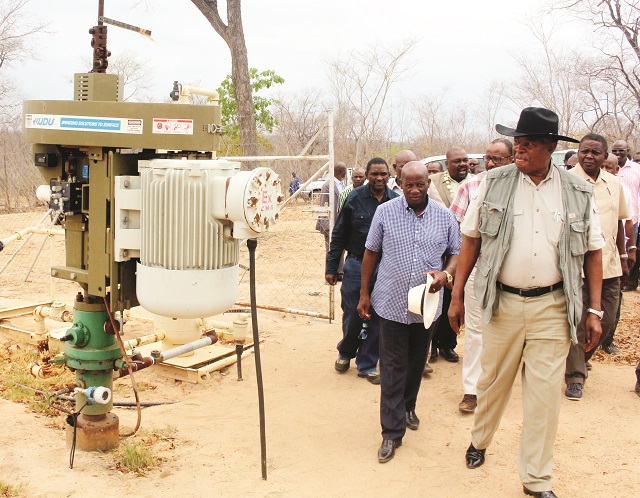

Prosper Ndlovu
THE discovery of coal-bed methane gas reserves in Matabeleland North’s Lupane District a few years ago was received with optimism in view of the resource’s potential contribution to the economy.
In an era where oil and gas are the driving engine of the global economy, Zimbabwe stands to benefit immensely from exploitation of gas, which accounts for around 23 per cent of the global commercial energy mix, according to the Organisation of Petroleum Exporting Countries (OPEC).
Globally there is a gradual shift from coal to gas generated electricity as a source of commercial energy most favoured by environmentalists. This is driven by climate change concerns arising from the relatively high carbon dioxide (CO2) emissions from thermal power stations.
The International Energy Agency observes that since 2000 all regions of the world shifted from coal to gas fired power stations, with Africa registering a three percent increase in gas supply by 2010.
The appetite for gas consumption is also growing in Zimbabwe with the Zimbabwe Energy Regulatory Authority (Zera) reporting this week the country as having experienced a significant rise in household consumption of liquefied petroleum gas (LPG) in the past three years.
Many people view gas as a cheaper alternative heating energy compared to grid electricity. LPG usage rose by 182 percent in 2012 from 6,6 million kilogrammes to 18,6 million kilogrammes in the nine months to September this year, data from the regulator shows. It said LPG is a cleaner form of energy mainly for heating and cooking compared to kerosene and wood fuel. Experts say the use of LPG contributes to a reduction in the use of wood fuel and lessens pressures on the national electricity grid. Many companies are also using gas for various industrial processes.
Through exploitation of coal-bed methane gas, analysts say Zimbabwe could turn from a net importer of fertilisers to a net exporter. Coal bed methane is used to produce hydrogen, which in turn is used in the manufacture of ammonia for fertiliser. Fertiliser maker, Sable Chemicals, has also hinted on plans to transform its production processes to using gas as opposed to high cost electricity.
Ironically, Zimbabwe still imports the product mainly from South Africa, years after discovering its own reserves. Imports contribute to the widening trade deficit estimated at $3 billion annually.
Although the Government granted the exploration of gas a National Project Status in 2007, it did not take off until 2014.
To date, no concrete steps have been put to guarantee quick benefits to the economy. Lupane Gas, a unit of the Industrial Development Corporation (IDC) that has been doing some exploration work on one of the resource sites has failed to raise the $12 million required to prove whether the resource is commercially viable or not. Hwange Colliery Company Limited has also failed so far to grab the opportunity to diversify its operations by exploiting gas in its Lubimbi coal concessions. Another company, China Africa Sunlight Energy has, since 2014 when it launched its $2.1 billion project, failed to bring tangible results. The firm had proposed to invest in gas wells for power generation as well as setting up a 600MW thermal power plant.
So far Discovery Resources is the only company that has made progress at its concessions in Siwale area in Mzola, Lupane. After successful exploration work in the last two years, the firm has started producing gas, which engineers say is ready for commercial exploitation. Vice President Phelekezela Mphoko visited the site last Friday where he was briefed about progress on the plant.
However, key shareholder Mr Thabani Lloyd Hove told the VP and his delegation that the gas they were producing could only be used for industrial purposes as it needed to be purified further to be suitable for domestic use. He stressed the need to develop a value chain approach and relevant infrastructure, which requires more investment and partnership.
Besides gas for electricity generation, Mr Hove said more investment opportunities lie in downstream industries such as production of a variety of chemicals, fertiliser production and gas to liquids producing diesel, specialist lubricants and waxes. The country does not have this model for investment at present.
With estimates indicating that Zimbabwe has 40 trillion cubic feet of potentially recoverable gas in the Lupane-Lubimbi area, probably the largest in Southern Africa, a successful exploitation of the resource could place Zimbabwe in the league of this billion-dollar industry in the region and abroad. This requires a quick response in aligning the gas infrastructure, which is non-existent at the moment, with that of electricity. VP Mphoko has said gas production was a low hanging fruit that could transform the country’s economy. He pledged to engage the relevant ministries to come up with a relevant legislation to support the new industry and investment along the value chain.
Matabeleland North Provincial Minister of State Cain Mathema said the power utility, Zesa, should be roped in to partner gas companies as it would be the primary beneficiary of power generation. He said the project required a multi-sectoral approach that provides for the involvement of the local community for it to yield adequate and sustainable results. Mines and Mining Development Deputy Minister Fred Moyo said the Special Economic Zones model, whose law has since been passed by President Mugabe, provides the framework for developing robust value chain industry for gas.
Obtaining quick gains from this resource would not come easily outside robust lobbying, creation of an enabling legislation and partnership with potential investors. This is crucial given that Zimbabwe is not the only country with these reserves. A 2016 baseline study on Sadc energy sector shows that the entire region is endowed with significant deposits of coal and associated methane gas, crude oil, shale gas and natural gas.
About 15 African states are already involved in natural gas production with major players being Algeria, Nigeria, Libya, Mozambique, Tanzania and Equatorial Guinea.
South Africa, Angola, Morocco, Tunisia and Ivory Coast are some of the notable producers. Last year Egypt also discovered its huge natural gas reserves off its coast – the largest find in the Mediterranean Sea, media reports said.
Delays in operationalising the exploitation of these reserves deprives the country of opportunity to diversify its energy mix, reducing the cost of energy and improving its accessibility to consumers as well as reducing carbon emissions, which are blamed for causing global warming and climate change. In view of competition for investment and markets, Zimbabwe needs to move with speed in addressing highlighted barriers.
More investment should be directed to robust exploration work to increase the size of proven reserves, developing the necessary human skill and the establishing the requisite infrastructure such as pipelines, storage and refining facilities to enhance capacity and safe extraction of the resource.
On these, the country is heavily found wanting.


 Online Reporter