Online Reporter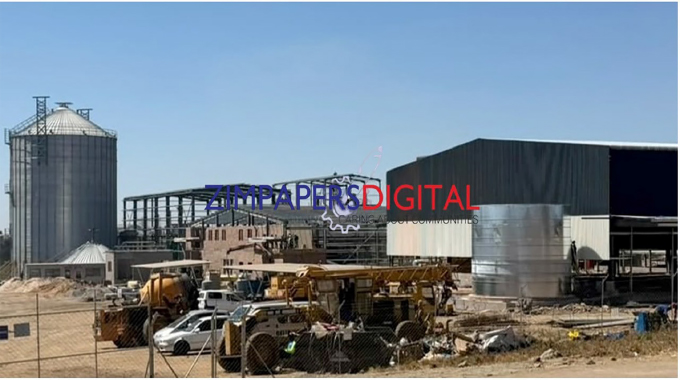
Prosper Ndlovu, [email protected]
FOR nearly three decades, Bulawayo became synonymous with Zimbabwe’s painful de-industrialisation — factories closed or scaled down, production capacity declined and an industrial city that once powered the national economy, struggled to preserve its manufacturing identity.
Today, that narrative is changing.
A new economic proposition is emerging around the city – Bulawayo as a modern manufacturing and export hub, using its surviving industrial base, engineering skills, infrastructure and strategic location to transform raw materials into high-value products for Zimbabwe, SADC and the wider African market.
The opportunity is being driven by a convergence of factors — renewed Government support, investor interest, the resilience of established manufacturers, large-scale steel production at Manhize, proposed Special Economic Zone incentives and access to regional and continental markets through SADC and the African Continental Free Trade Area (AfCFTA).
At the heart of this emerging industrial story is a proposed steel corridor linking the giant Manhize steel plant near Mvuma, Bulawayo and Kwekwe, creating a value chain stretching from iron ore and primary steel production to downstream manufacturing and exports.
For Bulawayo, this could provide the industrial bridge between its historic manufacturing strengths and a new generation of value addition.
Dinson Iron and Steel Company (DISCO), a subsidiary of Tsingshan Holding Group of China, is spearheading large-scale iron and steel production at Manhize. Its emergence creates an opportunity for Bulawayo to leverage its established factories, engineering companies, foundries, skills base and logistics infrastructure to convert primary steel into higher-value products.
Speaking at the recent Bulawayo Investment Indaba, DISCO project manager Mr Wilfred Motsi, representing chief executive officer Mr Benson Xu, described Bulawayo as a critical component of the company’s vision for the steel corridor.
“We are saying, Bulawayo is not the missing link, it is the critical link for us,” he said. The significance lies in what happens after the steel is produced.
Instead of exporting primary products, Zimbabwe can increasingly manufacture galvanised products, roofing materials, trailers, furniture, construction components, mining equipment and other finished and semi-finished goods.
Bulawayo already has much of the industrial ecosystem required for this transformation. Its factories, engineering firms, foundries, workshops and small and medium enterprises provide an industrial foundation that newer manufacturing centres would have to build from scratch. Its road and rail networks also provide access to South Africa and other SADC markets.
Mr Motsi said Bulawayo could become a gateway to a SADC market of about 300 million consumers, with “Made in Bulawayo” products reaching Johannesburg, Lusaka, Gaborone and beyond.
The proposition is strengthened by Government’s decision to designate Bulawayo under the Integrated Provincial Special Economic Zones (SEZs) framework. The SEZ status is expected to provide substantial tax, financial and logistical incentives to attract domestic and international investment and accelerate industrial revival.
For investors, this could create a more enabling environment for industrial parks focused on steel value addition and beneficiation, while giving new impetus to the redevelopment and modernisation of existing factories.
There is already evidence that Bulawayo’s industrial base can absorb capital. Official reports indicate that companies in the city took 33 percent of approved funding under the Government’s Industrial Development Fund, which is aimed at revitalising the manufacturing sector.
The experience of Treger Products, established in 1911 and headquartered in Bulawayo, further demonstrates the resilience embedded in the city’s industrial base.
The company operates six divisions producing more than 400 product lines and supports about 2 800 jobs nationally. Marketing Director Ms Sithokozile Ndlovu last week revealed that Government policies and support from various ministries, the Confederation of Zimbabwe Industries (CZI), the National Competitiveness Commission, local authorities and regulatory bodies had helped the company survive the past two decades.
Treger has responded to the pressures facing industry through investment and innovation. Faced with high energy costs, it introduced automated press lines and more efficient machinery, shifted some operations to gas and is rolling out solar power.
The giant company has also established a plastics recycling plant that buys waste from local communities and informal collectors, converting thousands of tonnes of plastic waste into water pipes, sheeting and other products.
The Treger Group has said it wants to move from about 60 percent capacity to full production, with increased local steel production potentially helping meet its annual requirement of about 10 000 tonnes. This illustrates the multiplier effect of the emerging Manhize-Bulawayo connection.
The success of DISCO should, therefore, not be measured only by tonnes of steel produced. Its deeper economic significance will be determined by how much of that steel is transformed into higher-value products by Zimbabwean manufacturers.
Every additional stage of production creates opportunities for employment, technology transfer, engineering services, SMEs and exports. But there is another hurdle – investment does not automatically follow opportunity. This is where the Zimbabwe Investment and Development Agency (Zida) has introduced an important reality check.
According to Zida chief executive officer, Mr Tafadzwa Chinamo, Bulawayo needs to urgently identify projects aligned to its competitive advantages, prepare them to bankable standards, package clear risk and return profiles, market them to global investors and accelerate coordinated implementation.
The message is straightforward: the city must move from opportunities to projects, projects to deals and deals to transformation. Bulawayo’s competitive advantages are substantial. This is a city that boasts existing industrial estates and factories, logistics networks, road, rail and air connectivity, skilled engineers and technicians, and institutions such as the National University of Science and Technology (Nust), Zimbabwe School of Mines (ZSM) and Bulawayo Polytechnic.
“Bulawayo’s legacy as a centre for manufacturing, engineering, textiles and food processing remains a valid asset for national competitiveness,” Bulawayo Permanent Secretary for Provincial Affairs and Devolution, Mr Paul Nyoni, told delegates during the National Competitiveness Commission (NCC) Summit in the city.
“While the city suffered a significant downturn over the years, there are now positive signs of recovery everywhere you look. Bulawayo retains its industrial capacity, skilled human resources, appropriate infrastructure and a strong entrepreneurial culture.”
The city also has exhibition facilities through the Zimbabwe International Conference and Exhibition Smart City (ZICES), renewable-energy potential and an established tourism and MICE platform.
Zida has identified potential investment pipelines across manufacturing, energy, mining beneficiation, logistics, municipal infrastructure, tourism and MICE, technology and innovation, and agro-processing.
The challenge now is to convert these opportunities into bankable propositions supported by feasibility studies, market assessments, financial models, environmental compliance, risk mitigation plans and clear revenue streams.
That is a critical distinction in the new Bulawayo narrative. The city does not simply need investors to come. It needs to prepare projects investors can fund.
Financing can come through public-private partnerships, joint ventures, private equity, venture capital and blended finance, while pension funds, infrastructure funds, development finance institutions, commercial banks, diaspora investors and other sources can provide capital.
This is where Bulawayo’s industrial revival can move beyond individual projects towards an integrated production ecosystem. Manhize supplies primary steel while Bulawayo adds value.
Kwekwe contributes complementary industrial capacity and SMEs provide components and services. Technical institutions supply skills while SEZs attract investment. Roads and railways move finished goods to markets across SADC and AfCFTA . That is how industrialisation becomes a value chain rather than a collection of isolated projects.
The Second Republic’s industrialisation, value-addition and beneficiation thrust under Vision 2030 and National Development Strategy 2 seeks to shift the economy towards greater domestic production and higher-value exports.
This means Bulawayo can become one of the places where that ambition is physically realised. Its revival also aligns with Africa Agenda 2063, particularly the objectives of industrialisation, regional integration, intra-African trade and stronger African value chains. The AfCFTA gives this strategy an even wider horizon. A competitive product manufactured in Bulawayo does not have to stop at the Zimbabwean border or even within SADC. It can enter markets across Africa, allowing manufacturers to build scale, diversify export destinations and participate in continental value chains.
This makes the “Made in Bulawayo” proposition bigger than the revival of one city. It is about positioning Zimbabwe within a regional production system in which raw materials are processed locally, manufacturers produce competitively, SMEs feed into supply chains and finished goods move into markets across Africa.
The city’s industrial future, therefore, should not be judged simply by how many factories reopen. The more important questions are what those factories produce, how competitive those products are, how much value is retained locally and how far those products travel.
For a city that has for years witnessed factory closures and industrial decline, the emerging ambition represents a profound shift. Bulawayo is moving from a city looking back at what it lost to one looking outward at markets it can serve.
That is more than a slogan but a potential new economic identity for a city seeking to reclaim its industrial crown — this time through value addition, innovation, investment and regional integration.