Online Reporter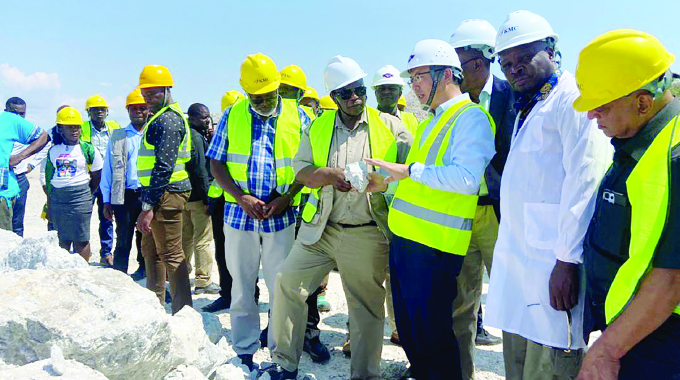
Rutendo Nyeve and Fairness Moyana, Zimpapers Reporter
VICE PRESIDENT Constantino Chiwenga yesterday underscored the urgent need to accelerate domestic mineral beneficiation, calling it the “non-negotiable” next phase for Zimbabwe’s economic development. The Vice President emphasised that the recent surge in lithium discoveries and investments must be supported by robust local value addition, not the continued export of raw ore or spodumene.
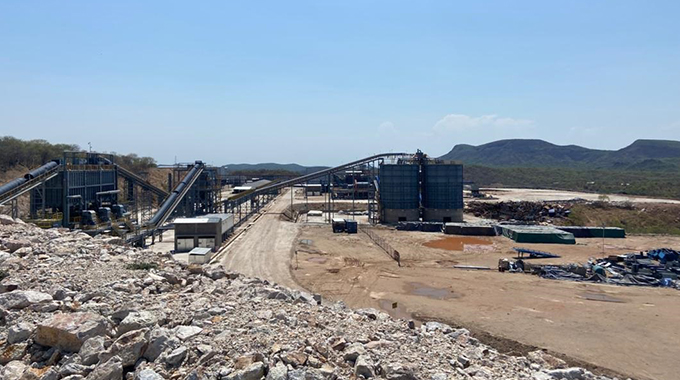
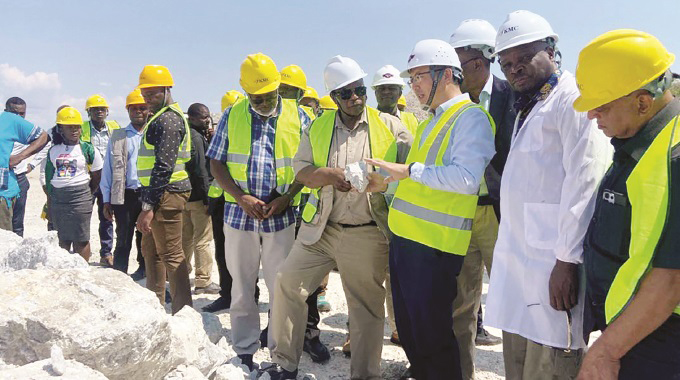
His remarks, made following a tour of the Kamativi Mining Company in Matabeleland North, reinforce the Government’s firm deadline for miners to cease exporting raw lithium ore by January 2026 as part of a clear policy shift toward securing sustainable national economic gains.
Kamativi, once renowned for tin mining under Kamativi Tin Mines, was shut down in 1994, resulting in significant job losses and a sharp decline in the local community. The area remained largely dormant for nearly three decades.
“Cabinet has already indicated that we now want further beneficiation for the economy,” said Vice President Chiwenga.
He stressed that the Government’s vision is for Zimbabwe to become a central player in the region and within the newly established African Continental Free Trade Area.
Reflecting on the progress made, Vice President Chiwenga acknowledged the transformation of the mining sector under the Second Republic.
“I am excited by what has taken place since 1910. But more importantly, we have now discovered lithium, and the Government has done tremendously well in bringing life back to the mines,” he said.
However, he was unequivocal that the era of simply extracting and exporting raw materials must come to an end.
“We can no longer continue extracting and shipping, handing over our resources to others. As we have said, come January, we expect all companies involved in lithium to stop exporting and instead produce tangible products,” said VP Chiwenga.
He challenged miners to produce finished goods bearing the “Made in Zimbabwe” label, which would create more jobs and capture greater value from the country’s mineral wealth.
“If we are going to make electric vehicles, so be it. If we are going to make mobile phones, so be it. Let’s produce something that is an end product.
“The precious mineral we are extracting must be processed to create something that can proudly say ‘Made in Zimbabwe’, from the region we come from. That is our goal,” said VP Chiwenga.
He linked the industrialisation drive to the nation’s long-term legacy.
“We have generations that will follow us, and those generations must see that we built our country,” said VP Chiwenga.
He added that the Government will support companies committed to industrialisation, but those that continue exporting raw minerals will face penalties, including the potential loss of operating licences.
Major Chinese-owned operations such as Bikita Minerals and Prospect Lithium Zimbabwe are investing heavily in processing facilities to comply with the directive.
This shift could result in more skilled jobs, as manufacturing plants require engineers, technicians and industrial workers; higher export value, as manufactured goods fetch more than raw ore; and the growth of new industries, including battery assembly and electric mobility manufacturing.
VP Chiwenga was accompanied by the Minister of State for Matabeleland North Provincial Affairs and Devolution, Cde Richard Moyo; Deputy Minister of Industry and Commerce, Cde Raj Modi; Deputy Minister of Mines and Mining Development, Cde Caleb Makwiranzou; along with other senior Government officials, traditional leaders, Chiefs Nelukoba Dingani and Nekatambe.
Also present were KMC Vice Chairman Mr Onesimo Mazai Moyo, Director Mr Jun Zhang and Chief Operating Officer, Mr Turkey Liang.