admin
adminHE lies haplessly on the ground with the upper part of his body in his colleague’s arms, blood gushing profusely from his chest. He gasps for his last bouts of breath and like a wounded bull growls in the agony inflicted on him by the enemy’s bullet.
The comrade stutters to tell his colleague to unstrap his combat regalia, suggesting he had run his lap in the war and was calling it a day. He only manages to signal the request with his weak hands.
With the last dose of strength left in him, the comrade firmly clutches onto his colleague’s arm with one hand, as if his fading life depends on it. He writhes in excruciating pain, but as a fighter he endures and holds on, albeit not for long, but long enough to cough up a few lines.
His lines are a message he wants his colleague to send back home to his kinsfolk, whom he left as he went to the bush to “bring back the country”.
It is not a message of regret or despair, but one exuding an inherent spirit of resilience in the committed cadre. His lines are a blessed assurance to his kin that his demise would not be in vain.
Just as the comrade breathes his last, as the life in him slowly bids au revior, he coughs up his last line. “When you go home, tell them of us and say for your tomorrow we gave our today”.
The comrade’s painful death, one that was not futile, inevitably left an indelible mark and an ever fresh wound in the hearts of his kinsfolk, particularly his unborn child back home, with whom he had hoped to be merry with in a new free Zimbabwe.
These wounds yearn for an everlasting healing. Each year, in August, when the nation converges to commemorate Heroes Day, the comrade’s daughter who was not born yet when the war claimed her father, is often thrown into a paradox of emotions.
Call it emotional dissonance, if you please, because on one side she finds herself in celebratory mood, revelling in a fulfilling sense that her father was part of the selfless cadres whose altruistic gesture the nation rightfully honours every August of every year.
Yet on the other end of her emotional pendulum, she finds herself sinking in a hollow pit of fatherlessness. There sits a fresh wound that may not have been had she spent a few moments of her infancy in her father’s arms, toying with his tickling wire brush-like beard, like any child would.
The departed comrade’s daughter is not alone in this conflict of emotions. Her widowed mother, whose despair at her loss forced her into devout solitude, suffers a much worse predicament.
She finds solace in the savoured memories of the good times she shared with her dearly departed husband, yet the same memories also evoke heartache in her.
The departed comrade’s family is one of many such families, whose dearly loved relatives perished on a tour of duty to liberate the country from its erstwhile colonisers, and remain missed to this date.
Some of these families may be worse off, as they until now, do not know the details of the fate that befell their relatives and where their relatives’ remains were interred.
The message from the departed comrade, as he was breathing his last, is echoed by those who survived the brutal war. They tell the families of the departed comrades of the comrades’ heroics and remind them that the today they enjoy was because of the yesterday their loved ones gave.
In that assuring message, the families ought to find healing and closure.
Mafela Trust, a Bulawayo based Non-Government Organisation, echoes this message in its theme and endeavours to help many get over the wounds inflicted on them by the liberation war.
Since its inception in 1992, the organisation has lined up a number of programmes that aim to help families of comrades who died during the war overcome their loss.
Mafela Trust, in one of its programmes, has been working on identifying comrades and civilians who died during the liberation struggle whose remains’ whereabouts are not known.
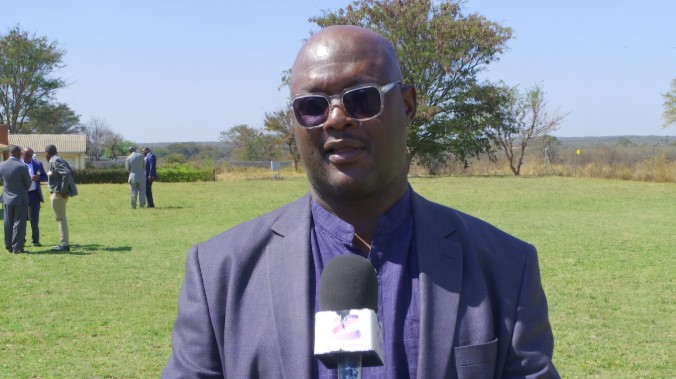
National Director of Mafela Trust Cde Zephaniah Nkomo, a veteran of the liberation struggle himself, told Sunday News last week that the programme is aimed at assisting families of those who “vanished” accept the death of their relatives and move on.
He said so far his organisation had identified more than 10 000 Zimbabweans, civilians and fighters, who died during the war in and outside the country and the whereabouts of their remains was not known to their relatives.
“We are working with the living war veterans who are assisting us in identifying these people and trace where their remains are buried. We are approached by families whose relatives know they went to the war and never came back. They tell us his real name and the last they heard of him, like the area he operated in and at times his nom-de-guerre.
“We then use these details and connect it to living fighters who might have fought alongside the said comrade and they will assist us, through interviews, in tracing, first what happened to him and then where his remains were buried,” said Cde Nkomo.
“The whole programme is centred on helping families of these people come to terms with the past. Some have requested that the remains of their relatives be exhumed and be reburied where they deem fit, and that is still work in progress.”
Cde Nkomo said in tracing the “war dead” whose remains’ whereabouts are not known, his organisation is also compiling registers of all the cadres who died during the war.
He said the registers will be used in compiling a roll of honour, which his organisation hopes will be displayed at all Heroes’ Acres across the country for inspection by members of the public and relatives of the departed comrades.
“The register will also help to boost and create more information about the war which will find its way to the Heroes Acre interpretative centres across the country. We are discussing this with the National Museum and Monuments, with whom we signed a Memorandum of Understanding, and the discussions are going on well.
“Our intention is to have a register turned into a roll of honour that will be displayed at all Heroes Acres for members of the public to inspect. Families of those who took part in the war can also inspect it and this will also help them to accept the fate that their relative met,” he said.
Cde Nkomo said among a host of their programmes, the latest is their effort to reunite children fathered in foreign countries by our liberation fighters, with their families here in Zimbabwe.
“So far we have been approached by 30 or so people from Zambia, Tanzania and other countries where our fighters trained. These people claim some of our fighters to be their fathers and we are using the little information that they have to try and reunite them with their fathers.
“This is still work in progress and we hope we will be able to link these people with their fathers,” he said.
Cde Nkomo said his organisation, was working on a second book containing all the data on the liberation struggle which has been gathered so far, through various means and from various sources.
He said the book will be published “soon” as a follow up to two other similar publication released in the early 90s.
Mafela Trust, is credited with coming up with the pilgrimages to Zambia to visit sites where Zimbabwe’s liberation war fighters camped and trained before being deployed to the war front.
Cde Nkomo said the pilgrimages’ initial objective was to take families of the liberation war fighters to the sites where their loved ones trained and some were bombed and killed by the enemy.
“The idea behind this was again to help people overcome the past. Our aim was to mobilise resources to help these families to travel to Zambia and tour these various sites, but due to lack of resources the thrust of the programme has changed. We have since handed over the programme to Maqhawe because we have so much on our table,” he said.
Mafela which works with several arms of Government, records and documents episodes of Zimbabwe’s liberation struggle, focuses on the role played by Zapu and Zipra in the liberation of the country.
In carrying out its mandate the NGO endeavours to preserve the country’s heritage and in the same effort heal the wounds of the liberation struggle.
Cde Nkomo said his organisation hopes to expand its work beyond the operations of Zapu and Zipra but also profile the work that was done by Zanu and Zanla during the war.
Mafela Trust, like many organisations in the country, has not been spared the harsh economic conditions and Cde Nkomo feels with more resources his organisation could do more work in researching about and documenting the liberation struggle.
The name Mafela is not an ordinary one, but whose meaning embodies a spirit, a sacrifice that inspired and guided those who fought for the liberation of this country. When loosely translated, Mafela means to die for.



 Online Reporter