Chronicle Editor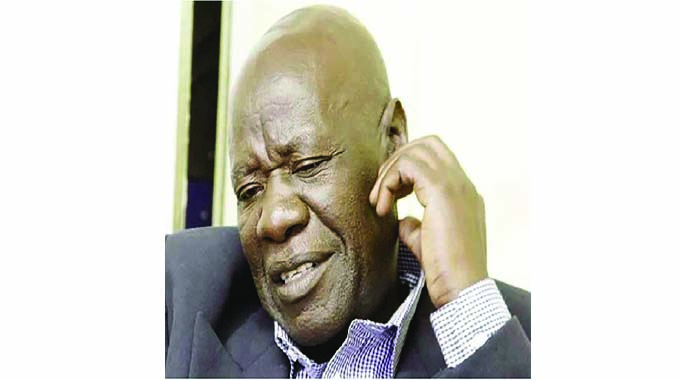
Lt-Col (Retired) Stanford Moyo
I first met Cde Sandlana Mafutha (Cde Sydney Saul Dube), who died in Bulawayo recently, in mid-1975 when he arrived at the Nampundwe Refugee Camp in Zambia with a group of some men from South Africa.
We stayed at that camp for about seven months before we went for real training. By that time, we were less than a hundred and that allowed us to know each other at personal level. I should say we had not shaken off civilian life as we could ask each other where one came from, that is rural home and so on.
Our initial military training was at Mwembeshi in the Group of 800. We were later on moved to Tanzania to join Zanla to form the Zimbabwe People’s Army (ZIPA). The noble idea to have one liberation force unfortunately suffered a still birth.
We moved together with Mafutha to Morogoro also in Tanzania. We trained at Morogoro until later in 1976. After training we were divided into different groups, some went for further training in the Soviet Union while others were taken to Somalia. Somalia, yes Somalia. Others like myself were deployed to the front through Zambia.
Before our deployment to our operational regions, we were all grouped on the northern side of Kariba Dam. I was deployed in the same section with Cde Mafutha. From that base 11 of us were taken to our operational area and on arrival, the Chief of Operations, Cde Enoch Tshangane (now late Jevan Maseko) gave us orders to cross into Rhodesia within three days and we did that.
That is how our operations in Lupane started.
The orders from Tshangane were that we should look and find two comrades whose whereabouts were unknown after being attacked while trying to cross the Zambezi River from the Rhodesian side where they had been sent on a mission. Those two were Cdes Assaf Ndinda and Mbokodo. Assaf and his small unit had managed to raid a crew from the Roads Department which they found working on a road, killed two Rhodesian soldiers and force-marched the Roads Department workers all the way to Zambia.
They were attacked while they had finished transporting those workers across the river, the other two comrades managed to cross into Zambia during that attack and move with the “new recruits”.
Tshangane had also instructed us to hit some installations such as bridges and lay ambushes along the highways as part of announcing our operations and shake the Rhodesians.
Besides Mafutha and myself in that group of 11 we had comrades like Stanley Ndlovu, Ngwalongwalo, Ramnyanyiwa, Lot, Esrom, Mthakathi, Captain, Driver and Jimmy. Two more were added that is Dwala and Majority, who in terms of experience were senior to us.
Between January and September 1977, all “terrorists’ activities within the area that is east of Gwayi River, confluence with the Zambezi River and west of the mouth of Mlibizi in Binga, areas north of Shangani in Lupane up to Nkayi, Cde Mafutha was directly involved.
Therefore, our first mission as ordered by Tshangane was successfully carried out when we destroyed a bridge along River Lobande on the Wankie (Hwange)-Binga Road. As a section of 13 men, the other six went to destroy another bridge on the same river on the Binga-Kamativi Road.
Myself with others took care of the first mentioned bridge. I am the one who set the explosives with Mafutha and Ngwalongwalo close covering me while on the western side of the river Cdes Ramnyanyiwa and Lot also gave cover and on the east there were Cdes Mthakathi, Ezrom and Coward.
When I went down under the bridge, the comrades on the western side warned of approaching vehicles, Mafutha quickly ordered all not to open fire. The vehicle went past and the occupants did not see anything. It was a Mazda pick up with four men (soldiers) at the back and it was being driven by a white man.
Within 10 minutes I had set my bombs and reported ready to switch them on. Mafutha communicated to everyone to take cover. After lighting the explosives I ran for dear life to a ditch where Mafutha was in. That was immediately followed by lighting and a heavy explosion. We got out of our positions and went to inspect the damage and we were all happy. We left for our GP with the other six.
Other missions I carried out with Mafutha as an immediate follow-up were ambushes in Binga and Lupane as well as the raid on Tinde Mine. We had an ambush along the Lubimbi-Manyanda Road, the next two towards Siwale Camp to Jotsholo Road.
In all those missions Mafutha exhibited unquestionable bravery and commitment to the struggle to free our country from colonial bondage. The other quality which one could not take away from him was his inborn leadership skills and authority.
So, within a few weeks we had successfully followed the orders given in Zambia, also managed to locate Assaf and Nduku whom we found armed with a grenade and a knobkerrie, yes a knobkerrie as their weapons had been washed away while fighting the heavy current of the water at the same time dodging the enemy bullets on that night.
Coming back to Mafutha, even in the presence of other commanders, villagers, the party leadership and guerillas found themselves seeking his opinion. He saw things from a distance which others could not see. He had fore-sight and sound judgment.
From September 1977 to March 1978 when the number of guerillas had been boosted, we were meeting once a month as I had a section operating in the eastern part of Lupane and Nkayi, north of Shangani River, and south of the same river in areas surrounding Nkayi District offices. My change in deployment meant that we would meet once a month with Mafutha. Those were monthly gathering points (GPs). This took us about seven months that is September 1977 to March 1978.
By the end of March, I separated with Mafutha for about eight to nine months as I had gone to Zambia for re-supplies and those were the days of the Easter Holidays. I returned in December 1978 and continued working with Mafutha for about six months before I left for my previous area of deployment. Besides working with Mafutha there was also Cde Ntonga Mazinyo Ensimbi, original surname being Nkomo.
We worked together during the period when a group of locals that is in Lupane who had been conscripted into the Ian Smith army surrendered to us. That is the group of 47 men and another of 107 men. With the good rapport with the civilian forces, they joined the liberation forces without a single shot being fired.
While it was easy to attack those youngsters who had been forced to join the enemy ranks, Mafutha offered counsel and said if we killed those people, there was a likelihood of losing the support of the peasants as they could not fathom seeing dead bodies of their children. Some of those boys were as young as 15.
Mafutha first spoke to Zapu local chairman, Msipa and other local leaders and moves were made to approach the boys at the same being warned that if they remained on the Ian Smith side they would be food for the AK-47, so the best was to surrender. As they say the rest is history as those people voluntarily came to join us. In fact, Mafutha in the company of five others faced those people and ordered them to lay down their weapons, military radios and so. Later on, we sent them to the rear.
Then in June 1979 I separated from Mafutha and I was to meet him on 6 January 1980 at Assembly Point Mike (St Paul’s) in Lupane. I arrived at St Paul’s with other comrades and found that the guerillas were being grouped into battalions. I was put into the JZ Battalion while Mafutha was in Pamhodzi. The other battalions were GD and Chinamano which had comrades who had operated in Gokwe and Zhombe.
Pamhodzi is a Zambian word which means let us work together.
I later learnt from Mafutha that during the period we separated that is between mid-1979 and January 1980, he had gone to Zambia to clear his name to the Zipra High Command as he was accused of refusing to take orders from the rear. Among the guerillas who travelled with him were comrades like Volunteer (Andrew Ndlovu). He told me that he had met Lookout Masuku, our commander of the Zipra forces. Masuku cleared him of all allegations that Mafutha did not want to take orders from the High Command and that he had created a parallel command structure at the front.
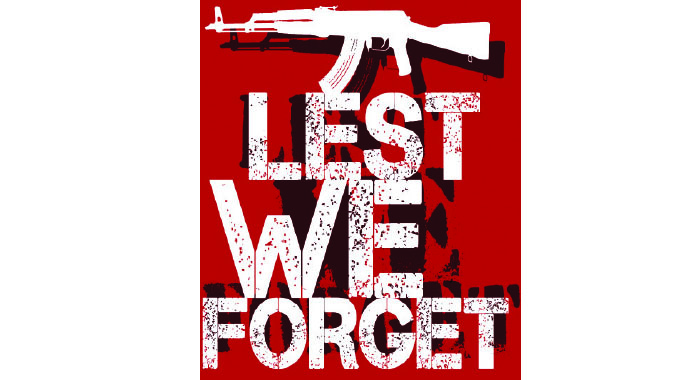
In fact, Mafutha had come up with a regional emblem, an initiative of his. Like Andrew Ndlovu wrote last week, it was a disciplinary code for guerillas. Like I said above, villagers sought counsel from Mafutha on many issues.
That emblem was formulated after the peasants had started complaining about the behaviour of some comrades, their grievances being that some comrades were demanding meat as part of their meals, proposing love to their daughters in the presence of parents and holding kangaroo courts where some villagers were sentenced to death after being found guilty of practicing witchcraft.
On his meeting with the High Command, Lookout Masuku had told Mafutha to return to his operational area and continue working like before. However, that was cut short by the events as the war came to an end. In fact, when Mafutha returned to the front from Zambia it was just before comrades were ordered to go the Assembly Points.
The word Pamhodzi was very relevant and meant something, regarding the context we were in. There was the use of the words like renegades. Such words were common with quarters at the rear in Zambia and after the ceasefire when we got to the Assembly Points. Renegades referred to people who were said to be anti-command. On the ground there was nothing like being anti-command, that was an idle talk.
Those who knew Zipra operations well and were part of them, should be reminded that the route for the comrades going to the south of the country was through Lupane and west of Binga. Forces going for operations in the eastern part of Matabeleland North and Midlands used the same corridor. Having many incursions jolted the Rhodesians and influenced their deployment patterns.
This route that had Mafutha witnessed a lot of fighting as the Rhodesians tried to close the corridor and stop Zipra troops from going inland. But through bravery from comrades like Mafutha, the Rhodesians failed to break the spirits of the comrades, that is why deployed comrades continued to pass through that corridor.
Continuous fighting meant depletion of ammunition to those covering the route and those who were proceeding south. The resultant continuous fighting affected those who were going south for deployment and at times some abandoned orders from the rear as it was not practical to do so.
That caused friction between those at the rear and comrades in operational areas. It’s a fact commanders were unable to give re-supplies to the fighting forces.
Fighters were then forced to take action that would enable them to survive. So, none, that is commanders at the rear and forces on the ground were wrong. It’s a fact that our army was under-resourced as we men at the front relied on handouts from the peasants. So, there was no issue here. Just unfounded talk.
Lt-Col (Retired) Moyo operated under the name Cde Lloyd Zvananewako or Mabhikwa


 Online Reporter