Online Reporter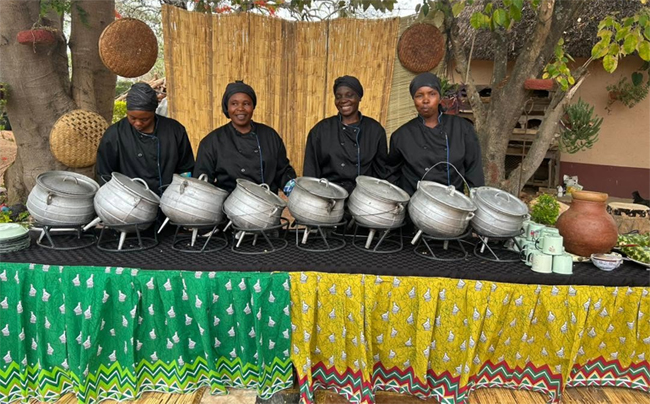
Lloyd Makonya
Correspondent
TODAY (Friday) and tomorrow, all roads lead to the usually serene Mukoto Village in Buhera’s Ward 31 where the aroma of freshly prepared traditional dishes mingles with the excitement of academic discourse, cultural performances and rural innovation as hundreds of delegates converge for an event that is rapidly redefining Zimbabwe’s tourism landscape.
The ordinarily tranquil Mukoto Village has become the country’s latest symbol of how women, agriculture, culture and tourism can work together to create sustainable rural economies. The occasion is the 2026 Agrotourism4SHE Research Conference, where the First Lady, Dr Auxillia Mnangagwa, who is expected to officiate tomorrow, returns to the community where she launched the inaugural programme in May last year.
As patron for Tourism in Zimbabwe, Dr Mnangagwa has consistently championed gastronomy tourism, indigenous cuisine, cultural preservation and heritage-based community development, arguing that Zimbabwe’s traditional foods, customs and knowledge systems are valuable tourism assets capable of generating livelihoods while preserving national identity.
Her vision is increasingly finding practical expression in Mukoto Village. What began as a community initiative has evolved into one of Zimbabwe’s most promising women-led rural tourism models, attracting researchers, universities, policymakers, tourism practitioners and development partners from across the country.
At the heart of the initiative is Mrs Christina Taranhike, affectionately known as Mai Chimuti, whose passion for community transformation, together with her husband, Dr Daud Taranhike, gave birth to the Integral Kumusha concept, a model that integrates agriculture, indigenous knowledge, entrepreneurship, culture and tourism into one sustainable rural development ecosystem.
Rather than viewing rural communities merely as agricultural producers, the initiative positions villages as tourism destinations where visitors experience authentic Zimbabwean culture through traditional cuisine, farming practices, storytelling, indigenous knowledge systems and cultural performances.
Speaking ahead of tomorrow’s official opening, Mrs Christina Taranhike, said Agrotourism4SHE demonstrates that rural women are capable of becoming leaders in tourism development while uplifting entire communities.
“Our vision is to empower women using resources that already exist within our communities. Through agriculture, indigenous foods, culture and tourism, women are creating businesses, preserving our heritage and improving household incomes. Every visitor who comes to Mukoto directly contributes to the local economy because the community provides the food, the experiences and the hospitality.”
Unlike conventional conferences where supplies are procured from urban centres, organisers deliberately sourced much of the food for this year’s conference from women within the local community.
The approach ensures that conference expenditure circulates within Buhera, creating direct economic opportunities for farmers, poultry producers, food processors and small-scale entrepreneurs.
Mai Chimuti, winner of the 2025 Agrotourism4SHE competition, is also leading several community agricultural projects that include poultry production, indigenous crop cultivation and value addition, providing practical examples of women-led rural enterprises. Conference organising committee member Dr Godfrey Makandwa said participation has grown significantly since last year’s inaugural event.
“For this year, we have 63 women and youths from Buhera Wards Seven and 31 participating in Agrotourism4SHE. As part of capacity building, they were trained by the Zimbabwe Tourism Authority in service excellence in December last year. That training equips them with the skills required to provide quality visitor experiences while strengthening community tourism.”
He said the conference deliberately combines academic research with practical community engagement.
“The Agrotourism4SHE Symposium allows the women to share their experiences while researchers from universities present evidence-based solutions to challenges affecting rural communities.
“This interaction creates genuine knowledge exchange between higher and tertiary education institutions and local communities.”
The four-day programme which began yesterday reflects that philosophy. Researchers from universities across Zimbabwe are presenting academic papers on rural development, agriculture, entrepreneurship and tourism, while the Agrotourism4SHE Symposium provides a platform for women entrepreneurs to showcase their experiences and innovations.
Students are participating in poetry, traditional dances, music and cultural exchange performances inspired by communities from different parts of Zimbabwe, while colleges and industry are exhibiting innovations applicable to rural development.
Tomorrow’s main event will also feature an innovation fair and a gastronomy exhibition where local women will prepare and showcase indigenous Zimbabwean cuisine using locally produced ingredients, reinforcing the growing importance of culinary tourism as a niche tourism product.
The initiative also demonstrates the growing role of the Zimbabwe Tourism Authority, which has been working with communities to improve service standards, develop tourism products and strengthen destination competitiveness through capacity-building programmes.
For the Ministry of Tourism and Hospitality Industry, Agrotourism4SHE represents the type of community-based tourism enterprise envisaged under Zimbabwe’s tourism development agenda.
The project builds on the successes of the Tourism Recovery and Growth Strategy, which encouraged diversification of tourism products beyond traditional wildlife attractions following the COVID-19 pandemic, and now aligns strongly with the Ministry’s 2026–2030 Strategic Plan, which prioritises rural tourism, gastronomy tourism, cultural and heritage tourism, innovation, women’s economic empowerment and increased community participation in the tourism value chain.
By transforming agriculture into a visitor experience, promoting indigenous cuisine as a tourism product and ensuring that local communities directly benefit from tourism expenditure, Mukoto Village is demonstrating how tourism can become an engine for inclusive rural development.