Chronicle Editor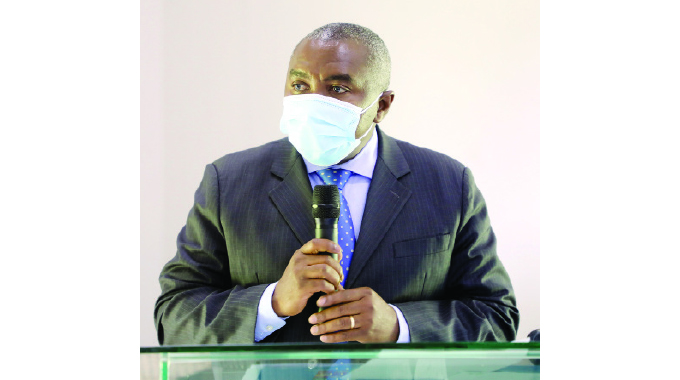
Thandeka Moyo-Ndlovu, Senior Health Reporter
BULAWAYO has received a major boost in the fight against resistant infections in both humans and animals following donation of equipment and renovation of laboratories by Food and Agriculture Organisation.
This comes at a time when the country is fighting Antimicrobial Resistance (AMR) in humans and animal whose prevalence keeps rising as members of the public and farmers abuse antimicrobial medicines.
When antimicrobial medicines like antibiotics are misused, abused or overused, bugs become resistant to the medicines used to fight them.
It means antimicrobials become ineffective in fighting the micro-organisms that cause diseases. As a result, these medicines then stop working when needed the most.
The laboratory renovations and equipment are valued at about US$75 000 and will enable the province to detect some animal diseases locally.
In the past, specimens had to be sent to Harare before diseases could be detected.
The poultry industry is one of the affected sectors as farmers tend to abuse these medicines which in turn affects consumers.
FAO and its implementing partners renovated the National TB Reference Laboratory at Mpilo Central Hospital and the one at the Bulawayo Veterinary Services Department.
Speaking after handing over the equipment yesterday, FAO Southern Africa representative Dr Patrice Talla said the donation will go a long way in addressing AMR in Bulawayo and Zimbabwe.
The laboratories renovation costs a total of US$40 210 while the reagents and equipment cost US$35 989.
“Completion of the renovation of laboratories, which we witnessed today, is one of the achievements of the Fleming Fund country grant for Zimbabwe.
This achievement was made possible as result of strong collaboration between the Government of Zimbabwe and FAO together with its implementing partners,” said Dr Talla.
“The implementation of the remaining planned interventions under this grant will continue and once those are achieved, they will improve the country’s capacity to address AMR.
Dr Talla said AMR is a global crisis, a silent pandemic and there is no time to wait.
The Chief Director for Public Health in the Ministry of Health and Child Care Dr Munyaradzi Dobbie said tackling AMR will help Zimbabwe achieve Sustainable Development Goals.
“Laboratory diagnosis is an essential element of disease surveillance, both for routine confirmation of infections and for rapid identification of causes of outbreaks and epidemics.
“We thank FAO and its implementing partners World Health Organisation and the Biomedical Research and Training Institute in facilitating the use of the Fleming grant to build the country’s capacity to monitor AMR in the different sectors using the integrated One Health Approach,” said Dr Dobbie.
The provincial veterinary officer Dr Polex Moyo said abuse of antibiotics was prevalent in poultry farming.
“A situational report shows that there is a great need to address abuse of antibiotics in both animal and human health.
‘We also had inadequate diagnostic equipment as we had to send samples to Harare which compromised the quality of the results due to transportation challenges,” said Dr Moyo.
“We are excited because this renovated lab and equipment will improve our AMR diagnosis and research which will be upgraded to international standards,” he said.
— @thamamoe



 Online Reporter