admin
admin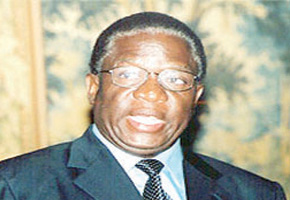
It is no exaggeration that the void in point in the history of the revolution is dangerous, to say the least. For it is a decidedly dark chasm into which this whole nation, including Trojan Horses, could be sucked sooner or later.
In fact, it can be said with equanimity that in 50 years or fewer from now, when all those who liberated this country are gone for good, Zimbabwe will be up for grabs by salivating imperialists if the history of the armed struggle that gave birth to a free country is not written in the blood of the young men and women who sacrificed their lives so that all of us might be liberated from the shackles of white racist rule.
Even now, when distant echoes of the AK 47s at work in the bush can be heard, some of those who slept through the war are busy selling out the country to the enemy for dirty money and dirty political support.
This is because for them the independence and freedom that fill Zimbabwe, like air, just happened on all of us, manna-like.
And so they wish for a new Zimbabwe choking with the intoxicating smell of political and economic roses to happen on them so they can be drunk on the aroma and be merry ever after.
Some might dismiss the desires of the present-day sellouts as mere delusions of grandeur. But wait, youth, the majority of the country’s born-frees with no inkling of where the freedom they enjoy came about, are wont to be lured into supporting those seeking to upset the present political order for their own selfish benefits, in the absence of evidence of the armed struggle by other youths immortalised in black and white.
That history will make the youth of tomorrow in particular aware that a certain youth was once condemned during the armed struggle to face the gallows for his gallant role in trying to remove an oppressive regime and bring freedom for all.
Actually, the youth in point then, Emmerson Mnangagwa, now Defence Minister, might wish to pen the history of his own involvement with the liberation struggle on account in which he should make us all feel perhaps with some blood curdling, what it felt like standing before a racist court and being sentenced to death and then being reprieved thanks to his young age.
A history of the armed revolution in addition to saturating people with politicisation can serve as a bulwark against foreign intrusion and exploitation of a people’s natural resources, not to mention political enslavement again.
The tiny island state of Cuba demonstrated this very clearly with her invincibility against the United States Goliath next door which tried every dirty trick in the book, but failed to overrun former President Fidel Castro’s socialist state and replace it with capitalism.
Cubans were resilient in their confrontation with imperialism because they knew where they were coming from and where they were going.
Similarly, a history of Zimbabwe’s armed struggle, especially if underpinned by pervasive political education among the youth who happen to be so impressionable, will make future generations know their past and then hedge it for continuity with an impregnable solidarity with one another and with other, progressive forces abroad as their all-weather friends.
Of greater significance, the history in question has to tell that Zimbabweans came from a dark end where nearly everything in the country, even their own lives to some extent, was owned by foreign ruling centre.
But the advent of independence on 18 April, 1980 marked a point of departure from that unhappy past.
However, in spite of that break with the colonial past, foreigners have for 32 years continued to enjoy the cream of the wealth of this country, while we, the owners, settled for the whey and one might say further, the latter by our own choice in so far as we failed to take decisive action in order to repossess what rightly belongs to us.
For instance, mining corporations have all along done business in this country as though minerals underground were in another country over which the Zimbabwe government had no control whatsoever but begged for royalties from the companies.
The armed struggle was waged to free the soil and everything under it for the people of this country to own them totally.
Therefore, the total ownership of mines by Zimbabweans and ownership of industries are acts of the fulfilment of the spirit and objectives of the armed revolution. Indeed, nothing could pass as a better justification of the war of liberation than that.
Thus, the liberation history that remains to be written should include the indigenisation and economic empowerment process that constitutes a wind of change blowing across the country and also touching our neighbours as it proceeds on its way.
It is therefore possible and feasible, too that if current and new generations are equipped and re-equipped with knowledge, verbal and written, about the making of Zimbabwe — so that in schools, everywhere, people live the history of their liberation as their second nature — a future that is secure and one replicating itself like truth which is infallible, will have been guaranteed for all.



 Online Reporter