Patrick Chitumba, [email protected]
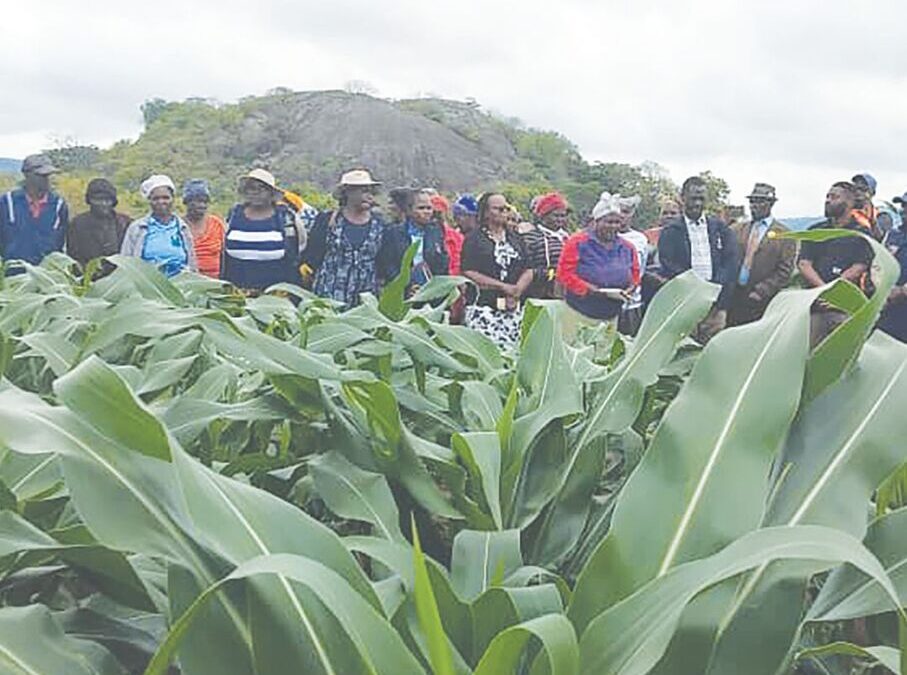
FOR villagers benefiting from the Makuva Irrigation Scheme in Mberengwa District, farming has become more than a source of food, offering a reliable pathway to improved household incomes, better nutrition and greater financial independence.
The 7-hectare scheme in Ward 28, under Chief Mposi area, enables farmers to produce crops throughout the year, reducing their dependence on increasingly unpredictable rainfall while generating income from the sale of surplus produce.
Established in 1991, the scheme has become an important source of livelihood for participating households, allowing farmers to meet family needs, pay school fees and improve their homes while contributing to local food production.
Plot holder, Mr Samson Phiri said the irrigation project had opened up economic opportunities for villagers who previously faced the limitations of rain-fed agriculture.
“This project has unlocked other economic avenues for us in Mberengwa. We are managing to fend for our families from the proceeds we get here,” he said.
Mr Phiri said income from crop sales was helping farmers pay school fees for their children, improve their homes and meet other household expenses.
“This irrigation scheme is a clear demonstration that farming can be a business,” he said.
Another plot holder, Ms Vaida Sibanda, said year-round production was helping households improve both their food security and their ability to afford other essential commodities.
“Unlike rain-fed farming, which is largely dependent on seasonal rainfall, this scheme allows us to maintain production throughout the year, providing a more dependable source of food and income,” she said.
The scheme has 54 registered beneficiaries, comprising 42 women and 12 men. Nine beneficiaries are young people, including five females and four males.
Ms Sibanda said the participation of women and young people demonstrated the scheme’s role in widening access to agricultural opportunities and supporting rural livelihoods.
The scheme’s contribution comes as Zimbabwe seeks to strengthen agricultural production and build resilience against climate-related shocks, including prolonged dry spells that threaten rain-fed farming.
Agricultural and Rural Development Advisory Services (ARDAS) Midlands provincial director Ms Busiso Olga Mavankeni said irrigation schemes were essential in helping farmers adapt to climate change and sustain production amid increasingly unpredictable weather patterns.
She said the Government was supporting farmers through production planning, training and technical advice aimed at improving yields and reducing crop losses.
“Government is assisting farmers through planning the cropping calendar, group buying of inputs, training on crop production and providing timely technical advisory services, including pest and disease management, irrigation scheduling and general crop management,” said Ms Mavankeni.
She said the support enabled farmers to coordinate input procurement, plan production cycles and adopt sound farming practices.
Timely advice on pest and disease management also helps farmers protect their crops, while appropriate irrigation scheduling promotes the efficient use of water resources.
Ms Mavankeni commended farmers at Makuva for working collectively, saying the scheme demonstrated how organised irrigation farming could support food production and rural development.
“The collective efforts of farmers at Makuva were commendable, with the scheme serving as an example of how organised irrigation farming could contribute to food production and rural development.
“The initiative is among the flagship irrigation schemes in the Midlands province, supporting national efforts to strengthen the grain value chain and ensure adequate food supplies,” she said.
Chief Mposi said the scheme was contributing to local agricultural production while enabling farmers to improve their livelihoods through the sale of surplus crops.
He said the ability to produce crops throughout the year was particularly important as Zimbabwe prepared for the risk of an El Niño-induced drought, which could disrupt rain-fed agriculture and threaten household food security.
Chief Mposi said irrigation offered farmers a measure of protection against prolonged dry spells by helping them maintain production and reducing their dependence on seasonal rainfall.