dyton mupawaenda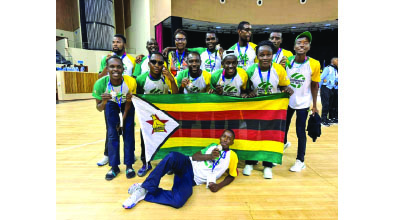
Tadious Manyepo-Sports Reporter
TALENT Mandaza is dejected. She feels rejected. Indeed she is.
Her unreserved affinity for football has made her an outcast.
Not only in her neighborhood in Mufakose but also in her own family. She is between a rock and a hard surface.
Her mother is a teacher and naturally has a high standing in the society.
She can’t compromise her dignity for her daughter’s “pettiness”.
Talent has only one option. She has to divorce herself from soccer, a game she mostly plays with boys because most girls shun it for fear of societal retribution.
But football is one game the budding star wants to keep no matter the cost.
For her, it doesn’t even matter even if it means crossing the family line to preserve the game.
Her mother digs deeper to find the ultimate solution. Everything else, including regular thorough beatings have failed.
She decides to whisky her daughter far away from the boys who she hangs around with and plays football with, to Howard High School in Chiweshe.
Her (Talent’s mother) sister is also a teacher at this highly-regarded institution and Talent’s chances of playing football would be nearer to zero.
What she all wants is for her daughter to pursue academics and she prays as well that she engages in “feminine sports”.
She thinks her sister would be more stricter than she is.
She even tells her to be more tougher on Talent especially on her football playing “shenanigans”.
“But that was already around 2000 and women’s football was just being introduced in rural schools,” said Mandaza.
“Despite my mother’s orders, my aunt never attempted to stop me from playing the game. She never revealed the reason up to now. As I became popular, my mother never got wind of it. The rest is history”.
A few years down the line, Mandaza begins to make inroads.
She gets signed by Mufakose Queens before Black Rhinos Queens latch onto her.
The army team gives her a job as a soldier.
Her stocks rise and she doesn’t only make the grade in the national women’s national team, the Mighty Warriors but she is also appointed the captain.
On top of getting a job because of football, Mandaza also wins the Women’s Super League title 10 times with Black Rhinos Queens.
Her proudest moment however remains 2016 when she co-skippered the Mighty Warriors in the Olympic Games in Brazil.
The Mufakose neighbourhood and her family, who once castigated her are the proudest.
At 38, Mandaza is still playing football for the army outfit. The game has totally transformed her life and that of her family.
Her mother can only wonder what could have been had she succeeded in her determined efforts to stifle her daughter’s football dream.
Of course, female footballers are still stigmatized significantly but it is looking positive with equal pay between female and male footballers being proposed (and even implemented) across the globe.
Back in Mufakose, only two roads separate where Talent grew up from a house which shelters one poor 25-year-old boy, Leopold Nyamidzi.
He is exactly in the same predicament the former Mighty Warriors skipper was in almost two decades ago. He knows Mandaza’s story like the back of his hand and the inspiration behind it drives him
Nyamidzi has decided to play men’s netball.
It can’t get any stranger, at least as the community sees it.
In this hood, they have given him names.
Amainini (young aunt), chisikana (ugly girl), ngito (gay), slay queen.He turns a deaf ear to all that.But he is hurting.
He is madly in love with netball with the affair having started way back in 2007 when he was a scholar at Tsiva Primary School in Magunje.
“I was staying with my maternal grandmother back then. She was a teacher at Tsiva Primary and she also coached netball,” said Nyamidzi.
“So I was always at the netball courts watching. Only girls were my friends. So one day my grandmother asked me to join her netball training session. That marked the start of this journey”.
His mother Pedzisayi Chibaya was in Mufakose earning her keep and looking after the family through vending.
When news reached her that Nyamidzi was playing netball, she was taken aback. Distraught.
She decided to retrieve her son back to Harare. She hoped to change his mindset.
But she couldn’t.
“I saw someone who was very determined to succeed in this game. I wanted to beat him but on second thoughts, I decided otherwise.
“You know what society does. Neighbours would always tell me to stop him from playing netball. But I never took their advice. I just said to myself, that’s what he has chosen and I can’t stop him,” said Chibaya.
“He was called names, some still call him those names up to now. But I fully support him”.
Just like Mandaza who endured a lot in her bid to become a female footballer, Nyamidzi has grown to become the Zimbabwe senior men’s netball team, the Golden Gems captain.
While his neighbours are starting to appreciate him, he and his peers are still to win many other wars. They remain dug in, in the battle trenches.
He led the Golden Gems to a silver medal in the inaugural Men’s Netball African Championships which ran concurrently with the women’s competition in Gaborone, Botswana early this month.
It was their first ever international tournament.
The Zimbabwe women’s team, the Gems finished third at the tournament.
Though significantly meagre, the Gems were given some cash tokens by the Zimbabwe Netball Association.
The Golden Gems got nothing.
Even the trip to Botswana was almost aborted due to lack of funds but the determined boys decided to pay from their own pockets.
They camped less than two weeks while the girls had over four weeks of camp in preparation for the continental jamboree.
They are not only viewed with a second eye in the communities they come from but they are treated as second-class in their personal life and in their chosen profession.
“It is very difficult for us as male netballers. It’s hurting to see that we are rarely recognised.
“We are also stigmatized a lot to say the least. But I think with time society will begin to accept us as who we are,” said Nyamidzi.
“Sometimes you think well, people just decide to hate us for playing netball. But there are females who play football. Sport is for everyone”.
There is power in numbers and they are each other’s keeper.
For Prince Kyle Ncube, also known as Mahuku, who started playing netball while growing up in Zvishavane, not listening to negativity is the greatest weapon that carries one over the line.
“I started as a footballer then I tried handball and volleyball. Our girls handball team at Zvishavane High School was composed of netball players,” Ncube recalls.
“So during their netball training sessions, I would go and watch them. I started developing interest and I decided to join them in 2015.
“There was no men’s netball team at the school though. Worse some girls didn’t feel comfortable training with me…
“So as male netballers, we have all faced and always face discouragements but we tell each other to remain focused. Negativity is part of the game, we ignore and move forward”.
Golden Gems stalwart Carren Tongwe (22) developed an interest well after finishing high school.
“But I was shy to be seen playing this game. So I would hide from my peers. Although everyone now knows that I play for the national team, they still ask awkward questions,” said Tongwe.
“Someone just asked me that so you guys wear skirts. Those kind of questions.
“But the remedy is ignoring no matter how hard the questions and the mocking inquiries come.
“Before we went to Botswana, I had never travelled outside the country. Those are cherishable opportunities that come with the sacrifices.
“Youngsters out there who want to play netball should not be ashamed of themselves. They should just come and enjoy themselves. Eventually people will start embracing us”.
ZINA president Leticia Chipandu who is also the Confederation of Southern African Netball Associations said there is nothing queer about men playing netball.
“Sport is universal and we encourage everyone to play regardless of gender,” she said.
“Men’s netball is here to stay and prospective players should consider it as a career path”.
Veteran netball journalist and analyst Shelly Guni said people should not concentrate on the negatives but rather the positives given the boys especially the national team will be representing the country.
“Netball, has traditionally been seen as a female-dominated sport and has long been associated with gender stereotypes.
“However, it is time for our nation to challenge these preconceived notions and change our perspective on male netball players,” said Guni.
“Yes, the Gems have done so well, but behind that success has the men’s teams’ contribution.
“The Golden Gems have been for many years, used to help the Gems during training. Let’s embrace them and stop discouraging by giving them all sorts of names. After all they are representing and fighting for the badge”.



 Online Reporter