Vusumuzi Dube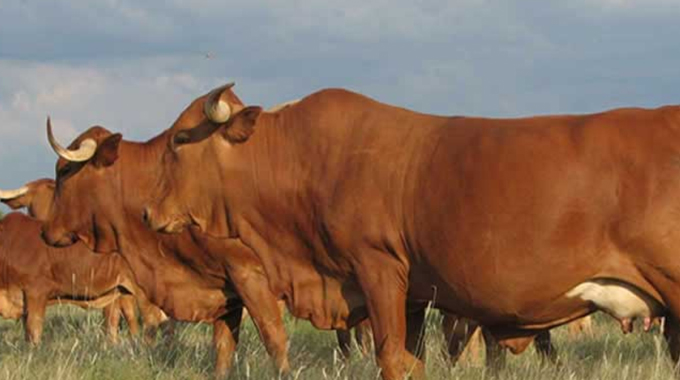
MY heavily pregnant and evidently due cow went missing in the paddocks. It had strayed from its own herd and isolated itself, a clear sign that it was about to calve down.
Those who have herded animals somewhere in their lives know that, when you see your heavily in calf cow isolating itself from the rest, it is looking for a maternity ward and it’s about to drop a bundle of joy anytime! Now the cow went missing for five days, and it doesn’t get more stressful than that for a farmer.
All kinds of negative scenarios begin to theatre in your head. Could it be that it had a dystocia case and both the mother, and the calf died? Did it give birth and the calf fell prey to predators and the mother is wandering around in stress? You will not have closure until either the dead cadaver or a very live dam and its calf are found.
It was found alive and well with a male calf, after six days of frantically searching the rangeland. The male calf is the subject of this week’s instalment! I was happy my cow and its calf were found but I was a bit disappointed it brought home a male calf.
I have had plenty of them in the past two calving seasons and I long for female ones coming out of the maternity ward.
This got me thinking, as to whether, short of use of sexed semen in artificially inseminated cows, is there something that a farmer can do to influence the sex of the offspring from in calf cows? I will read some more on this and perhaps bring a research contribution around this subject.
However, a scanning of the literature indicates that there is some suspicion that there is a relationship between body condition scores of the cow and the sex of the calf to be born.
There seems to be an indication that cows in better body condition scores tend to produce male calves while those in poorer condition give female calves.
I will explore this further and give properly informed conclusions, I will caution my readers not to take this as fact for now.
This week I will not so much discuss the science behind influencing the ration of male to female calves in your herd, but I will look at the frustrations of getting more of what you don’t need at that moment.
As a rule of the thumb, if you want your herd to grow organically you need to make sure females make up more than 80 percent of your herd composition all the time.
Your herd will grow as these cows will drop a calf every year if properly managed. If you have more of male animals, if you have more of male animals it means you are carrying a lot of passengers and free loaders in your herd.
These will not give you calves except for the bull among the many males you have.
However, for medium to well established ranchers, they need a significant number of male calves which will then be sold as steers.
These ranchers are no longer looking to grow their herds, but they need to find animals which will form part of the offtake lot.
Yes, heifers will contribute to herd replacement, where cull cows are sold and replaced by heifers. So, I found myself disappointed with my male calf because I still need more female calves which will graduate into the breeders of the herd.
I am still building my herd to try and reach the number I want therefore an excess of male calves will slow me down!
While some may argue that you can sell the steers and buy heifers, those who have tried it will tell you that it will never work out on a one-to-one ratio because bulling heifers will cost more than the steers.
Just this week one farmer quoted me at US$850 for each of his beautiful heifers. I won’t be able to sell my steer for that, in fact I will need to dispose one and half to two of my steers to afford that heifer!
Hence, the preoccupation with thoughts of how to influence sex of my calves.
Is there a management practice that one can adopt short of voodoo science that will tilt the scales towards the kind of sex the farmer is looking for? If you know something that you have proved to work in your herd, please drop me a hint on my inbox and I can share with the wider livestock farming community.
Uyabonga umntaka MaKhumalo. Mhlupheki Dube is a livestock specialist and farmer. He writes in his own capacity. Feedback [email protected]/ cell 0772851275


 Online Reporter