admin
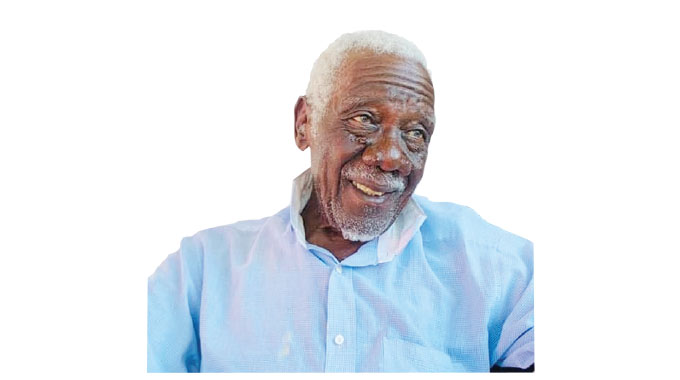
admin1991, rising through the ranks to become its editor. Mambo is no more but he surely leaves a rich legacy.
My first encounter with Mambo was in August 1994 when I joined the Sunday News newsroom crew as an intern. The team then was a compact, closely-knit unit that consisted of Mambo, the late Sifanele Ndlovu and Dumisani Sibanda and the then secretary Martha Chirawu who doubled up as an assignments editor of sorts at weekends, and several correspondents.
It was more like family than a workplace, with the secretary playing agony aunt role, the correspondents largely comic with us the students struggling to fit into this colourful family. Then came my first political assignment. Mambo took me under his wing to cover a political meeting addressed by Forum Party of Zimbabwe president Dr Enock Dumbutshena at the Presbyterian Church along Jason Moyo Street in Bulawayo.
I remember as we waited for the meeting to start we chatted and he gave me tips on how to cover meetings and what to look out for in the meeting. Also waiting to cover the meeting was Ziana’s Sharon Njobo (now Mlambo),who peppered our conversation with so much humour the initial apprehension dissipated.
Unlike other work environments that I have been exposed to, the Sunday News during the era of Mambo as a reporter was one where there was so much unity between the reporters that they would easily cover up for each other. Tuesday, the first day of the working week for the Sunday paper, was quite interesting since it was largely story telling day immediately after diary presentation. No prizes await you for guessing what kind of accounts came from the two bachelors in the newsroom though the stories would taper off into requests for soft loans from the beer drinkers, sometimes the weekend just after pay day. Mambo was neither a drinker nor smoker though he easily engaged the drinkers in discussion since he was such a gifted speaker. All that one needed was to start a conversation on any topic and then an animated discussion would ensue. You needed to have a bit of time on your hands to dare engage Mambo on any issue.
A traditionalist of note, Mambo’s discussions would usually be punctuated with examples of how things were handled traditionally and being the disciplinarian that he was he could even offer practical examples from his own family, and these were the days when he used to stay with his younger sisters.
Having been born and bred in the dry Matabeleland South, Mambo’s favourite beat for much of his reporting years at the Sunday News was the districts coverage where he would endeavour to give the rural communities a voice through his reporting. His passion never waned as the Sunday News took upon that character when he took over as editor with extensive rural coverage categorised according to districts. That was Mambo, the man who was so proud of his mother tongue and would readily offer advice on cattle farming and fret at the slightest sign of drought due to his investments in livestock. Having been based in Bulawayo for much of our years in journalism, as editors we would from time to time attend management meetings in Harare or Kwekwe with managers from other Zimpapers units. These are the times that some of us will miss the most I guess, since one had the privilege of travelling with Mambo by road sharing a car to cut on costs and then sharing stories all the way though you would largely do more of listening than talking.
“Abantu laba uyazi…” he would start his talk about senior management . . . or the conversation would turn to the calibre of students coming for attachment and their writing skills and how they could be helped.
Paul was very protective of his staff.
While he would chastise them in private, he would close ranks with them and come to their defence in public especially when it related to conditions of service and other operational issues where he felt administrators were giving his staff a raw deal.
It was interesting how he would tell you in private how reporters messed up and how their continued slip-ups were unbearable but when confronted by someone from outside his newsroom he would resent the interference, preferring to deal with his staff his own way. He would always caution reporters on the importance of holding fast to ethics and share stories of some aggrieved individuals who came to him after being lied to by unscrupulous correspondents in a bid to obtain favours, and how he dealt with these amicably by counselling the wayward individuals.
The Sunday News was so close to his heart that even when his health was failing, he would seek to have a say in who would run the newspaper during his stay in hospital. He grudgingly accepted the new designs of Zimpapers titles, I believe since he felt he was losing a part of himself since the old look of the newspaper was not just that, it was imbued with memories, character and a reputation he was ever keen to maintain. Such was his commitment to duty and maintaining the character of his newspaper intact. As gender activism took its toll, Mambo was the first editor to have a gender page in the Sunday News, though at first he wittingly quipped; “So who will champion the boy rights?’’
Most people who worked with Paul will testify that he was principled and was prepared to create enemies than to compromise at the expense of standing for what is right. I had the privilege of having worked with him as an intern, later as a reporter across the building at The Chronicle from 1995, and later as an assistant editor under his leadership when he was deputy and later acting editor of The Chronicle, and later on when he became editor of Sunday News after his stint at Manica Post in Mutare as editor. Our lives somehow were linked as one day our fathers met in the Chronicle building in Bulawayo, and Paul told me that his father told him that they went to primary school together.
When I moved to Harare last year I remember him telling me of the joys and hazards of relocation, how the long drives between Mutare and Beitbridge took their toll on his car during his days at Manica Post. We would reminisce about the good old days, even the fact that the first day I drove a company allocated vehicle, an old 1992 Mazda 323 that is still in service, it was him who handed it over to me and then drove behind me to watch my driving since it was at night and I had very little experience. This was the kind of man he was, a true brother, a man so proud of his Venda roots he always challenged me when he greeted my son in SeSotho and the boy mumbled a few words. Go well my brother, the profession has lost one of its leading lights.
Rest in Peace Linonifulu.


 Online Reporter