Online Reporter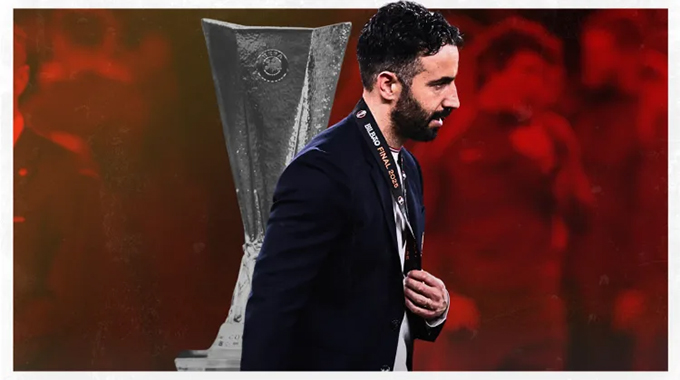
MANCHESTER United were putting on the bravest of brave faces as they headed out of Bilbao at lunchtime on Thursday.
Yes, the English Premiership football club remain solidly behind head coach Ruben Amorim – who had said after the match that if the ownership or the fans did not want him, he would leave “the next day”, without talking about compensation. Yes, the club have a Plan B when it comes to transfers and will be in a position to reshape Amorim’s squad this summer.
And yes, the club still believe they will return towards the upper end of the English game in the not-too-distant future.
But there are some basic realities words alone will not solve. After losing 1-0 to Tottenham in Bilbao, knowing there will be no European football of any kind next season and with losses still high despite a second round of redundancies, there are significant questions for United to answer.
Here we assess what the defeat means for their finances, transfer plans, on who might leave and for Amorim. What does it mean for their finances?
At some point between now and the beginning of July, United will announce their third quarter financial results to the New York Stock Exchange.
This will be an opportunity to address any monetary issues for the 2025-26 season that have arisen because of the defeat in Spain.
We know for certain United will experience a £10 million reduction in payments from their £900 million, 10-year sponsorship deal with Adidas because they have missed out on the Champions League. As that penalty is spread over the length of the contract, which runs to 2035, the damage on an annual basis is not onerous. But few would look at this season and be confident of United returning to the Champions League in 2026-27 and therefore avoiding another penalty.
Beyond that, there is the issue of Premier League prize money. Each place in the table is worth £3 million. That means, in their current position of 16th, United would receive £33 million less than for finishing fifth.
The club make about £4,3 million in gate receipts for every home game at Old Trafford and there would have been at least four more of those in the league phase of the Champions League.
Add in the generous prize money on offer in Europe’s elite competition, and that is how we have calculated that Wednesday’s defeat by Tottenham has, at a conservative estimate, cost United £100 million. As has been widely reported, a second round of redundancies is on the way, this time affecting the football department. The reductions are likely to affect the scouting, medical and science teams.
There has been no word on whether that is likely to be the end of the matter. But it is clear, from axing of staff trips, free lunches and other perks, nothing is off limits in Sir Jim Ratcliffe’s determination to make United a leaner organisation. But these cost-cutting initiatives can only do so much. As with any Premier League club, by far the biggest expenditure is on transfer fees and player wages. If this season is any guide, United, who have spent in excess of £900 million on transfers over the past five years and whose last annual wage bill they confirmed at £365 million, have been awful at both of these fundamental elements.
What does it mean for their transfer budget?
United say funds will be available, but what does that mean?
There are a few factors at play. As Ratcliffe outlined in March, they owe £272 million in outstanding transfer fees, a significant percentage of which – £156 million – is due this summer.
Overall losses to June 2024 were £113,2 million. Since then, United spent £14, 5million sacking former manager Erik ten Hag and his staff.
Despite this, no-one at United is rejecting the widespread belief Wolves forward Matheus Cunha is going to join in the summer.
The Brazilian has a release clause of £62, 5 million. Quite how much of that has to be paid immediately is not known. However, it is difficult to see how it cannot at least in part be funded by player sales.
Now for the unquantifiable bit. The better – and faster – United can sell, the more flexibility they will have to buy. The longer it goes, the less easy it becomes to strike deals for the right price and the potential for mistakes grows.
Arguably, United are still paying massively for the summer of 2022 when Ten Hag arrived and demanded the club bring in Frenkie de Jong from Barcelona.
United officials quickly concluded it was an impossible deal to complete. Ten Hag argued otherwise. After the attempt was eventually aborted, the season started with a home defeat by Brighton and a four-goal hammering at Brentford. United were panicked into spending £150m on Casemiro and Antony, neither of whom has come close to providing value for money and remain under contract heading into next season.
What does it mean for who might leave?
There is an ideal and a realistic view of this.
In the past, United have ringfenced players who they regarded as off-limits to other clubs. We doubt there is anyone in that bracket now – and that includes captain Bruno Fernandes, even though the club did say they weren’t interested in selling the 30-year-old Portugal playmaker when recent interest from the Saudi Pro League surfaced. First, the easy bit. The contracts of Victor Lindelof and Christian Eriksen run out in the summer. They will not be renewed. After that, it gets harder.
Marcus Rashford accepts he will not play for United again while Amorim remains in charge. But he is in no rush to decide his future and is not interested in taking a wage cut.
Barcelona have declared their interest but are hardly cash rich. Rashford might be keen on a move to the Nou Camp but it is difficult to imagine a deal could be concluded swiftly.
What happens if Chelsea activate the £5m clause in their deal with United over Jadon Sancho and send him back to Old Trafford?
After controversial social media posts around the final, Alejandro Garnacho and his family appear to have put themselves on a collision course with Amorim. Chelsea were keen on the Argentina forward in January. United are bound to listen if they come back.
There have been murmurings around Andre Onana from the Saudi Pro League but nothing concrete has materialised. Onana’s deputy Altay Bayindir knows he will remain as second choice and is likely to move on. – BBC Sport/Sports Reporter.