


 Online Reporter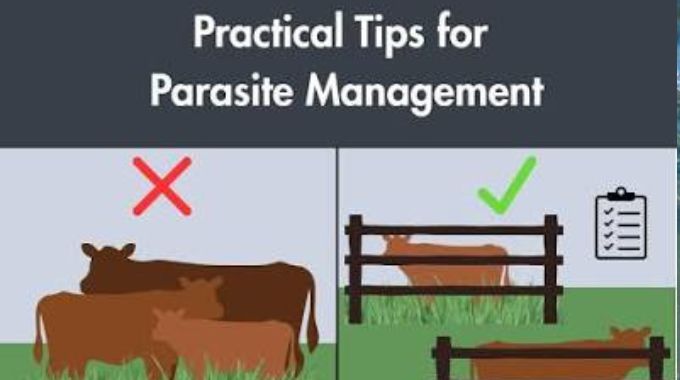
Talking Farming, Dr Busani Moyo
EFFECTIVE parasite management is a balancing act. On one hand, controlling parasites is essential for maintaining cattle health, welfare and productivity. On the other hand, over-use of some treatment methods can lead to parasite resistance, which negatively impacts the long-term health of the herd and can also affect the environment while financial costs incurred should also be considered.
The type of parasites present and the magnitude of the problem will vary based on different factors such as animal health, geography, season and management scenarios. Therefore, it is important to take a multifaceted approach when combating parasites.
Here are some tips to help manage parasites on your livestock herd
1 Meet animal nutritional requirements and maintain cattle in good body condition
Healthy cattle are less susceptible to the impacts of internal parasites. When cattle are thin or have nutritional deficiencies, their ability to cope with parasites is reduced. Routine feed testing (nutritional analysis) should be implemented to ensure rations are properly nutritional balanced and to correct any nutritional deficiencies that may exist.
2 Implement biosecurity protocols on your farm focused on parasite prevention and control
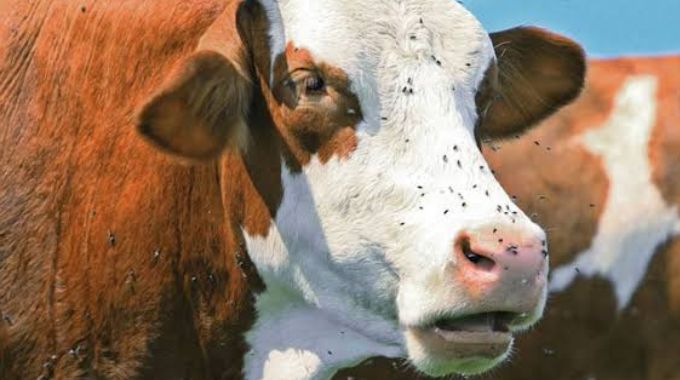
New livestock introduced onto your farm can be a source of internal parasites that can contaminate your livestock and pastures. Have a proactive biosecurity plan in place, which may mean quarantining new entrants.
Isolate and inspect new animals for parasites and treat them 10 to 14 days prior to allowing them to join the rest of the cattle to prevent infesting the main herd. Faecal egg worm load can be done to assess the worm load.
When treating, use a combination of control products from two different dewormer classes, such as Ivermectin plus fenbendazole, to minimize the risk of bringing resistant parasites into your farm. Consult your veterinarian to discuss your parasite biosecurity program.
3 Ensure pasture are rested between grazing periods to help reduce parasite load
Infective larvae cannot survive for a long time after hatching without being ingested by a host animal so providing a pasture rest period helps to break that cycle. The length of rest periods for pastures will vary depending on factors such as forage species, level of utilization and environmental conditions.
4 Monitor parasite burdens by conducting faecal egg counts on your herd
This will allow assessment of internal parasite loads and determine which parasites you need to target. Consult your veterinarian on the most appropriate sampling strategy to use. The results from faecal egg counts must be interpreted in the context of your grazing management, production practices and parasite control regimes.
5 Avoid overstocking and overgrazing
Parasites are more likely to spread when cattle are in close proximity to one another. The more crowded animals are, the greater the risk of spread. Ensure adequate stocking density in all locations where cattle are kept. Overstocked pastures lead to increased larval contamination through the build-up of manure. Similarly, when pastures become overgrazed, the cattle ingest a greater amount of parasite larvae due to grazing closer to the faecal matter and closer to the ground where the number of larvae is the highest.
6 Consider rotational grazing systems strategies
Whenever possible, avoid grazing the same pastures/veld in the fall of one year and the spring of the next. Infective parasite larvae from eggs deposited in manure in the fall may survive the winter and be a source of contamination for cows and calves grazing these pastures/veld in the spring. If rotational grazing is being utilised, consider grazing younger animals first followed by older cows. This will allow the younger, more susceptible animals to graze the cleanest pastures.
7 Avoid harrowing pastures/veld until the weather is hot and dry
Harrowing pastures breaks up manure (cattle dung) and exposes infective larvae and eggs to the elements. When the weather is hot and dry, this can be an effective method of reducing parasite populations. However, harrowing under other conditions will increase the potential exposure of cattle to infective larvae that are scattered from faecal material across the area.
8 Cull chronic parasite carriers
Some livestock (about one to two percent) can be chronic carriers of internal external parasites. These livestock perform poorly and act as a source of reinfection for other livestock. Even after treatment, these cattle will remain infected and should be removed from the herd. It is natural for livestock to have parasites and you will never be able to eliminate them 100 percent from your herd. However, implementing simple and effective strategies can help to keep parasite populations low.
9 Use anthelmintic (dewormers) treatments effectively and responsibly
There is an assortment of products available on the market developed to control specific parasites through a specific mode of action for a specified length of time. Work with your veterinarian to develop a strategic control program that balances best practices with the practical realities of herd management and use the five Cs of parasite control:
n Use the correct product.
n Apply to the correct class of animal.
n Apply at the correct time.
n Use the correct dose.
n Check for efficacy.
It is natural for cattle to have parasites and you will never be able to eliminate those 100 percent from your herd. However, implementing simple and effective strategies can help to keep parasite populations low. Continuously rotate different anthelmintic (dewormers) with different active ingredient to minimise helminthic (worm) resistance.
n Dr Busani Moyo is Dean in the Faculty of Natural Resources Management and Agriculture at Gwanda State University. He holds a PhD in Animal Science, MSc Agriculture (Animal Science). Bsc Agriculture Management, Diploma in Animal Production and Health, Certicate in Agriculture.




 Blessing Chizhande