

 admin
admin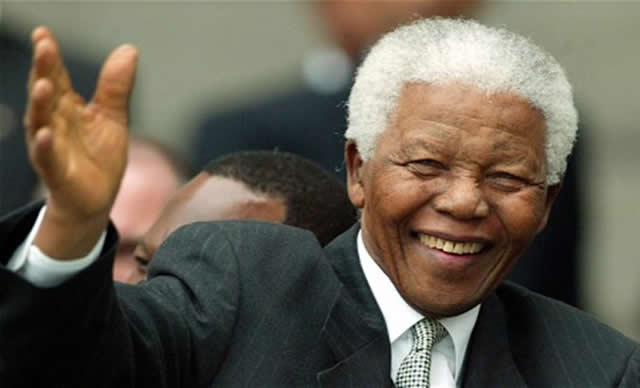
Baffour Ankomah
From whatever angle one looks at him, Nelson Rolihlahla Mandela was a “special” African leader who the continent will never see again (excuse the pun).
With the last bastion of colonialism in Africa liberated, the continent will never again see a leader as idolised as Mandela, a leader whose former enemies found no qualms in elevating him to sainthood against his will, even though he played along nicely.
His former Deputy President who succeeded him when he stepped down in 1999, Thabo Mbeki, says Mandela did not like his elevation above the struggle.
“In 1994,” Mbeki recalls, “he wrote an article for one of our newspapers, in which he asked: ‘why are they trying to separate me from my colleagues; why are they elevating me above the struggle?’ He didn’t like it.”
So who are “they”? That is the 64 million dollar question whose answer defines, and defined, Mandela and what he stood for after his release from 27 years in jail.
There is a general rule observed worldwide that one does not speak ill of the dead, but the subject of Mandela’s “real legacy” stirs up strong debate, and has stirred up strong debate in homes and offices across Africa since his passing on December 5.
However, in the midst of all the disputations about his “real legacy”, there is one thing that everybody agrees on: The Mandela who went to jail in 1962 was not the Mandela who was released on February 11, 1990.
The one who went to jail was a hard-crust nationalist who had done so much already for his people, as a lawyer, freedom fighter, and a revolutionary.
The one who came out of jail was physically aged, naturally; and weak in body. Mentally, he had been broken by a deliberate policy of the apartheid establishment.
If he sold out, as his critics claim, he did so in jail, not after he became President.
Udo Froese, a South African writer, has revealed that “when Mandela was released from jail in February 1990, his persona attracted not only the masses and their leaders. The owners of the country’s economy, the land, the banks and the media developed a new strategy – they hijacked Nelson Mandela for themselves, marginalising the majority, isolating him even further. This had become his new imprisonment.”
Froese continued: “By 1994 (when Mandela became President), the ANC was totally disarmed, negotiated and manipulated to become an organisation of patronage. The Freedom Charter was dropped and replaced by among others, the secret Sunset Clauses.”
By saying that, however, Froese was going ahead of the story. What he describes as “the hijacking” of Mandela, had in fact happened much earlier, in the 1980s, according to other South African writers.
Two of them, Terry Bell and Dumisa Buhle Ntsebeza, revealed in their 2003 book “Unfinished Business: South Africa, Apartheid and Truth” that the white establishment had met Mandela as many as 40 times in prison before they released him.
Alone, long-separated from his colleagues – Mandela had been moved on in 1982 from Robben Island to two other prisons — “Pollsmoor Prison (in Cape Town), where he was given three rooms and the opportunity to receive and entertain people in privacy. A white chef and a wine list were provided. Later, he was moved to the chief warden’s house at Victor Vester Prison, which had a phone, a fax, and a swimming pool”, as John Pilger, the Australian journalist and filmmaker domiciled in the UK has reported, and all this with the obvious intention of softening him up.
Mandela melted during those 40 meetings. Most people would, especially considering the strength of the forces he and the ANC faced.
His sin, however, was not telling even the two or so ANC colleagues who had been moved together with him from Robben Island to Pollsmoor about the secret negotiations.
They would certainly have given him moral and advisory support. He stood alone and got beaten by a determined apartheid establishment bent on securing a firm place for white interests in the new South Africa to come.
Govan Mbeki, the father of future President Thabo Mbeki, an ANC stalwart incarcerated on Robben Island with Mandela, found Mandela’s decision to negotiate alone without telling his colleagues unconscionable, and refused to talk to him ever again.
Thus, when Mandela was released in February 1990, the course of modern South Africa had already been negotiated and fixed in high secrecy, in the last eight years of his imprisonment.
What happened in the open, at the Codesa negotiations, in the lead-up to the first multi-racial elections in 1994, was just for public consumption.
The “real” negotiations had been done out of pubic glare, in prison, and the white establishment had won! Mandela and the ANC-in- exile, perhaps with “pragmatism” ringing in their ears, had capitulated in the face of a superior force.
The ANC-in-exile, as John Pilger shows in his article, had agreed to “a deal put together in high secrecy between November 1987 and May 1990, when ANC officials led by Thabo Mbeki … met 20 prominent members of the Afrikaner elite at a stately house, Mells Park House, near Bath, in England.”
That the adoration brigade does not today talk about Pollsmoor Prison, the warden’s house at Victor Vester Prison, or even Mells Park House, while Mandela’s cell on Robben Island has become a museum visited by the great and good, is an indication of the discomfort they feel about what actually happened at these three places. If the man’s first cell can become the subject of movies and tourism, why not his second, and even more importantly his third cell where he spent his last years in prison?
Interestingly, on December 13, 2013, two days before Mandela’s internment, General Bantu Holomisa, the man who headed the former Transkei Bantustan created under apartheid (now called the Eastern Cape, Mandela’s home province), revealed in an SABC interview that Mandela wanted his private home at Qunu (where he was buried on Sunday 15 December) to be built as an exact replica of the chief warden’s house at Victor Vester where he spent his last years in prison.
General Holomisa was so close to Mandela that the ex-President considered him as a son.
He told SABC: “He called me one day and said ‘Bantu, I want a house at Qunu, and I want you to build it as an exact replica of the chief warden’s house at Victor Vester’. So we built his home at Qunu using the same plan as Victor Vester.”
Asked why he wanted an exact replica of Victor Vester, Holomisa said Mandela did not tell him why.
But it can be deduced that the place had some magic to make Mandela want to replicate it at his permanent resting place at Qunu.
The critical question that therefore arises is why has the original chief warden’s house at Victor Vester not become a museum and a tourist site as Mandela’s cell on Robben Island? Or even talked about as Robben Island?
The answer is simple: The adoration brigade is not too comfortable with what went on there – the secret negotiations – when Mandela was in residence.
Who are ‘they’?
So did Mandala and the ANC-in-exile sell out, as claimed by their critics? One cannot provide an informed answer without looking at the background of South Africa and its politics, and without identifying who are the “they” that Mandela said were separating him from his colleagues by elevating him above the struggle.
On August 23, 2013, talking about why Zimbabwe has become a fixation for the West, Thabo Mbeki made a poignant revelation: “I know why they pay particular attention to us (South Africa) because they explained it.
“They said: ‘You have too many white people in South Africa. We are concerned about their future. They are our kith and kin. We are worried about what you would do to them, so we keep a very close eye on what happens.’
“So we understand, we may not agree with the thinking, but we understand.”
So, without a doubt, the “they” who separated Mandela from his colleagues by elevating him above the struggle, is the Western world, the nations of European stock, who, collectively, are concerned about their kith and kin in South Africa (5.5 million in a national population of 51 million), and as such they “keep a very close eye on what happens” there.
And not only that: They are also concerned about the West’s massive economic interests and assets in South Africa which have to be safeguarded at all costs from the blacks who had threatened, in the ANC’s Freedom Charter of 1955, to nationalise them when they came to power.
This being the background, it would have been criminal if the West did nothing to stop Mandela and the ANC from carrying out the threat of nationalisation, by first, supporting South Africa’s white establishment to fix the course of the “rainbow nation”, and second, to “separate” Mandela from his colleagues so that he and ANC did not change their mind. The apartheid establishment had made the fatal mistake of putting all the ANC stalwarts on Robben Island where they found strength in numbers. When they moved Mandela and a few of them to Pollsmoor Prison in 1982, it was partly to diffuse their strength.
The same tactic was used to “separate” Mandela from his colleagues after he came out of jail by elevating him to sainthood, well above the struggle.
In effect, Mandela did not need to do anything extraordinary as President of South Africa to become a saint. The West had deliberately chosen that status for him.
They are concerned, as Mbeki says, about the future of their “many” kith and kin in South Africa, and, therefore, they calculated that by foisting sainthood on Mandela whether he liked it or not, they would achieve their goal of safeguarding the future of White South Africa.
In doing so, they also wanted to achieve two subsidiary goals: One, by humouring Mandela and plying him with adoration, they hoped, it would stop him and the ANC from embarking on any radical transformation of the status quo in the country, a status quo that favours both themselves and their kith and kin.
This tactic had succeeded to a large extent in Zimbabwe where, in the first 16 years after independence, President Robert Mugabe had been made a “darling of the West” and the “best African President” to distract him from the goal of land reform which would affect the economic interests of the “kith and kin” in Zimbabwe.
Two, by foisting sainthood on Mandela, they were in fact holding up his “example” as a carrot to any African leader who would in future desire to be “a darling of the West” – a kind of “you do as Mandela did, and you would be fine”.
In fact, President Barack Obama said it in so many words, when on December 6, he recommended Mandela as “an example that all humanity should aspire to”.
The thread becomes seamless when you add Verne Harris take. He is a project leader at the Nelson Mandela Centre of Memory, a unit of the Nelson Mandela Foundation.
He says: “The myth (built around Mandela) had a price. In the process, all the complexities of this human being, all the flaws and elements of his character and his life which don’t fit just get left out.”
Which forced Robyn Dixon of the LA Times to say, “even though he rebelled against his status as an icon, Mandela was complicit in the narrative that was stripped of the warts and all . . .”
The contradictions
Unfortunately, the pursuit of the above goals throws up a lot of embarrassing contradictions.
The first one is the pretension that Mandela invented forgiveness of, and reconciliation with, political enemies. This had been done by several African presidents before him, but none became a saint for doing so!
President Jomo Kenyatta forgave and reconciled with the white population in Kenya at independence in 1963, despite a bitter war in which thousands and thousands of Kenyans were slaughtered by the whites.
President Kenneth Kaunda repeated the gesture in 1964 at Zambia’s independence. President Mugabe did it on a grand scale at Zimbabwe’s independence in 1980, and President Sam Nujoma did the same at Namibia’s independence in 1990.
For being rewarded with sainthood as a latecomer who forgave his political enemies and reconciled with them in 1994, Mandela was in effect sold a fake by the adoration brigade.
The day after Mandela died, Robyn Dixon, confirmed in her blog that: “Reconciliation was not a spontaneous miracle, as some like to imagine, emanating from the magnificence of Mandela’s soul. Rather, the seduction of the Afrikaners was carefully plotted in Mandela’s cell, as a way to win and then retain power.”
The second embarrassing contradiction is the credit given to Mandela for staying in power for only one term of five years.
Since his death, Aljazeera has run a documentary in which Mandela himself was heard expressing regret that there was too much to do to improve the lives of the people, especially the lives of the previously disadvantaged black people, and that his release from jail had increased expectations that by some magic wand everything would be fine.
“But it was not humanly possible to do that, and I regret that very much,” Mandela said.
This throws up the scenario of an army general deciding to go home from the warfront when the battle is still raging and handing over power to his deputy.
Would that general be given any credit for going home? He may even be court-martialed!
The lives of black South Africans had to be improved, and the best president the country ever had, who had a magic wand to bring speedy transformation, decided to pack it in after 5 years, leaving the job still undone, and yet gets so much credit for leaving the job undone!
Yet Lee Kuan Yew, when faced with the same burdens in Singapore, stayed for more than 30 years and stuck with the job. Today everybody wants their country to become a Singapore.
General Park Chung Hee did not build South Korea in one term of office. He got on with the job for longer than one term, and today South Korea is an economic miracle.
So too did Mahathir Mohammed in Malaysia, he stayed for more than one term to build Malaysia. So did Chiang Kai Shek and the early leaders of Taiwan who built the country into an economic miracle from the 1950s to the 1970s; they stayed for more than one term.
Even Barack Obama who was praising Mandela’s one-term at the fallen hero’s memorial on December 9 is in his second term of office!
All over Europe, presidents and prime ministers go for more than one term of office. Margaret Thatcher went for three terms. Tony Blair went for three terms. David Cameron will want more than one term. Angela Merkel has just won another term in Germany, her third.
Every American president wants a second term unless defeated at the end of the first one. One American president, Roosevelt, even went for four terms.
So where is the virtue in a one-term presidency that they are so lulling the Africans to emulate, by “Mandela’s example”?
The realities
So, back to our earlier question: Did Mandela and the ANC sell out, as claimed by their critics? Again, one cannot answer this question fairly without looking at the whole picture of South African politics, under apartheid and after.
Before Mandela’s release in 1990, South Africa, under apartheid, had developed nuclear weapons or nuclear capability. It had the strongest armed forces in the whole of Black Africa. The economy was completely in the hands of the whites, as was the political life of the country.
The ANC had an armed wing, uMkhonto weSizwe (MK), but it was not even in the class of ZANLA and ZAPU in Zimbabwe, FRELIMO in Mozambique, SWAPO in Namibia, or the MPLA in Angola which all fought bush wars to liberate their countries.
The MK was the weakest of all the sister-liberation movements in Southern Africa – “weakest” because of the enormous strength of the enemy it was fighting.
Yet, after all that strength, it dawned on the apartheid establishment back in 1980 after Zimbabwe’s independence that it could not hold on forever to the last bastion of colonialism in Africa and rule it as an exclusive white-owned colony.
It was inevitable that one day the natural owners of South Africa, the marginalised blacks, would seize power and ran the place as they pleased.
To survive, as a transplanted community from Europe, the white establishment had to fix a place for whites in the new South Africa to come, by seeking accommodation with the black leadership bound to take over the reins of power.
This is where the Afrikaner Broederbond, the secret society of Afrikanerdom described as the “nerve centre” or “collective brain” of apartheid that planned and ran the apartheid regime, came into its own.
In fact, truth be told, even with nearly 6 000 members in 409 cells countrywide at the time, the realisation to seek accommodation with the blacks did not come naturally to the Broederbond; it was forced.
A South African writer has revealed, in a book published in 2012, that soon after Zimbabwe’s independence in 1980, a Rhodesian army officer then studying at a South African staff college was asked by the head of the college why the Rhodesians had lost out in Zimbabwe.
“Our leaders waited too long to seek accommodation with the blacks,” the Rhodesian officer replied.
Stunned, the South African head of the staff college asked the Rhodesian to expand his answer in a written form, which he took to the apartheid government.
By the modus operandi of the Afrikaner Broederbond, the Rhodesian officer’s paper must have certainly been discussed by the group and its recommendations adopted, which became government policy thereafter.
In their 2003 book, Terry Bell and Dumisa Ntsebeza, revealed that: “The Afrikaner Broederbond made the nature of the apartheid administration unique. Most of the country’s leading government members, the generals, judges, and senior police officers, along with many church and education officials operated on the deeply secret level of the Broederbond.
“This multi-layered web of patronage, manipulation and deceit covered the entire country, ensnaring, rewarding or repressing. In all the years of National Party government, few, if any, policy decisions taken by any cabinet were not first approved by the executive of the Broederbond – if they were not Broederbond policies in the first place…
“For, the Broederbond was central to the development, maintenance, and eventual revision of the apartheid system.”
In 1968, just how much power the Broederbond wielded was summed up by one of its three founding members, Henning Klopper, at the group’s 50th anniversary.
“Since the Afrikaner Broederbond got into its stride,” Klopper said proudly, “it has given the country its governments. It has given the country every prime minister since 1948… Our nation depends on the Broederbond. Show me a greater force on the whole continent of Africa.
“Show me a greater force on Earth, even in your so-called civilised nations. We support the state, we support the church, we support every big movement born of the nation. We make our contribution unobtrusively. We carry it through and so we have brought our nation to where it is today.”
Hendrik Verwoerd, the father of apartheid, was Broeder No1596.
Balthazar Johannes Vorster, prime minister from 1966 to 1978, was Broeder No 3737.
His successor, PW Botha, the Great Crocodile, the president who started the secret negotiations with Mandela in prison, was a Broeder too.
Bell and Ntsebeza were not being hyperbolic when they wrote: “Throughout the apartheid era, this tightly knit and secretive cabal remained the collective brain of apartheid, the source of many of the ideological twists and turns that the system engendered.
“Members of the brotherhood – politicians in some cases, academics in others – were the first to open secret talks with the imprisoned and exiled leadership of the ANC.
“And it was Broeders who also encouraged, almost simultaneously, the ‘Iron Fist’ crackdown on the anti-apartheid opposition that triggered waves of secret slaughter.”
Thus, having convinced themselves of the greater good of fixing the system to get an assured place for whites in a new South Africa ruled by blacks, the Broeders pushed for negotiations with the ANC leadership even though officially the group had been banned by the apartheid establishment.
This is when they found it necessary to separate Mandela from the collective strength of his colleagues on Robben Island and moved him to Pollsmore and later to Victor Vester.
Meanwhile, the white establishment was also working on the ANC-in-exile.
At the meetings held in Mells Park House, the Afrikaner elite and the ANC-in-exile agreed on the economic system that would underpin the “Rainbow Nation” to come.
Having so sorted out both Mandela and the ANC-in-exile, the Broeders could sit back, release Mandela, and let him and the ANC do the rest. Which is what they did, and have been doing since.
According to one political commentator: “South Africa today is a reflection of Mandela’s Presidency and the grand strategy that preceded it. It is impossible to understand South Africa today without appreciating the effects of Mandela’s complex answer (to the realities that faced him and the ANC).”
In 1992, two years before assuming power, Mandela went to address the World Economic Forum in Davos, and it was there that, according to him, he “realised, as never before, that if we wanted investments … we had to remove the fear of business”.
Years later, George Soros stood at the same podium at the World Economic Forum in Davos and smugly declared that “South Africa is in the hands of international capital”.
Case closed? Not quite.
While South Africa was being left in the hands of international capital, Mandela’s sainthood status was being burnished by the adoration brigade.
His birthdays would be lavishly celebrated in New York and London, more than in Johanesburg or Cape Town, with concerts attended by thousands in the Western capitals.
Yet, as another political analyst asserts: “South Africa is hardly an unqualified success story. The unemployment rate hovers just under 30 percent, and nearly a quarter of South Africans live at or near the poverty line.
“A United Nations report recently revealed that 1,4 million South African children live in homes that rely on dirty streams for drinking water, 1,5 million do not have access to flushing toilets, and 1,7 million live in shacks with neither washing nor cooking facilities.”
The political analyst continues: “Outside observers often try to separate Mandela’s past from South Africa’s present. If things have fallen apart, the argument goes, it is only because Mandela’s political party, the ANC, failed to follow him to the Promised Land.
“Even in his mid-90s, Mandela was aloof yet omnipresent: a constant reminder of the nobility of South Africa’s anti-apartheid past and a yardstick that implicitly measured the shortcomings of today’s ANC leaders.”
Today, the analyst goes on, “Mandela is remembered mostly for his symbolic acts, gestures that ‘made South Africans feel good about ourselves,’ in the activist Desmond Tutu’s words, such as embracing the country’s national rugby team, the Springboks, during the 1995 Rugby World Cup.
“…These efforts, however, cultivated unusually high expectations among the supporters who embraced the ANC for reasons as diverse as South Africa itself. The resulting dissonance has made South Africa a paradox: imbued with a rich vocabulary of civil, political, economic, social, and human rights, the country remains plagued by pervasive income inequality, structural unemployment, and widespread poverty.”
Conclusion
So did Mandela and the ANC sell out, as the critics claim? Not when one looks at the whole picture, I think.
They were faced by a hard reality they could do little about. They faced a superior force in the shape of a white establishment bent on safeguarding the future of the largest concentration of whites in Africa, a white establishment which had nuclear weapons, a formidable army, and an economic system dominant in all its facets.
Without an equivalent or appropriate counter force to defeat the enemy, pragmatism dictated that Mandela and the ANC should fold in and play ball, until such time that the black people would be strong enough to launch another attack.
When Mandela became President, the army was in white hands, the air force was in white hands, the navy was in the white hands, the police force was in white hands, the intelligence services were in white hands, the economy was in white hands, the judiciary was in white hands, everything was in white hands.
Even he himself was in white hands – his personal assistants and bodyguards were almost all white (and Indian)!
It would have been a total massacre to throw the MK or black civilians against such a force.
In effect, Mandela and the ANC had very little room to manoeuvre, not much than to accept accommodation with the Afrikaner establishment and work to change the system from within, which Mandela could not do in one term of office.
It is now the job of future generations of black South Africans to work to change the status quo, each generation doing its bit as the years go by. Mandela’s generation did its bit, and is still doing its bit.
That is how wars have been won in the past and civilisations defeated.
There is no virtue in squaring up to a superior force you cannot defeat. Military tactics demand that you retreat, regroup, build up your strength, attack the enemy from the franks, wear him down, and only when you are strong enough to launch a frontal attack, you do so.
You don’t stand in front of a superior force to be shot down. A live dog is more useful than a dead lion.
That, to me, was the philosophy Mandela and the ANC adopted in accepting accommodation with the white establishment in the secret talks prior to his release.
That is not selling out. It is facing reality. They call it realpolitik.


 Bongani Ndlovu
 Online Reporter