admin
adminHundreds of animals have succumbed to drought in the region and cattle buyers have descended on villages, buying starving cattle for as little as $60 per beast, fattening the animals at feedlots and selling them for up to $450 each.
The scheme was officially launched at Hobodo yesterday, with three feedlots being set up in Hobodo, Sanzukwi and Smith Block.
Already, about 300 head of cattle have been fattened since the scheme became operational last month.
Farmers who are beneficiaries of the scheme said the greatest challenge lay in changing mindsets that feeding cattle is a “white man’s” thing.
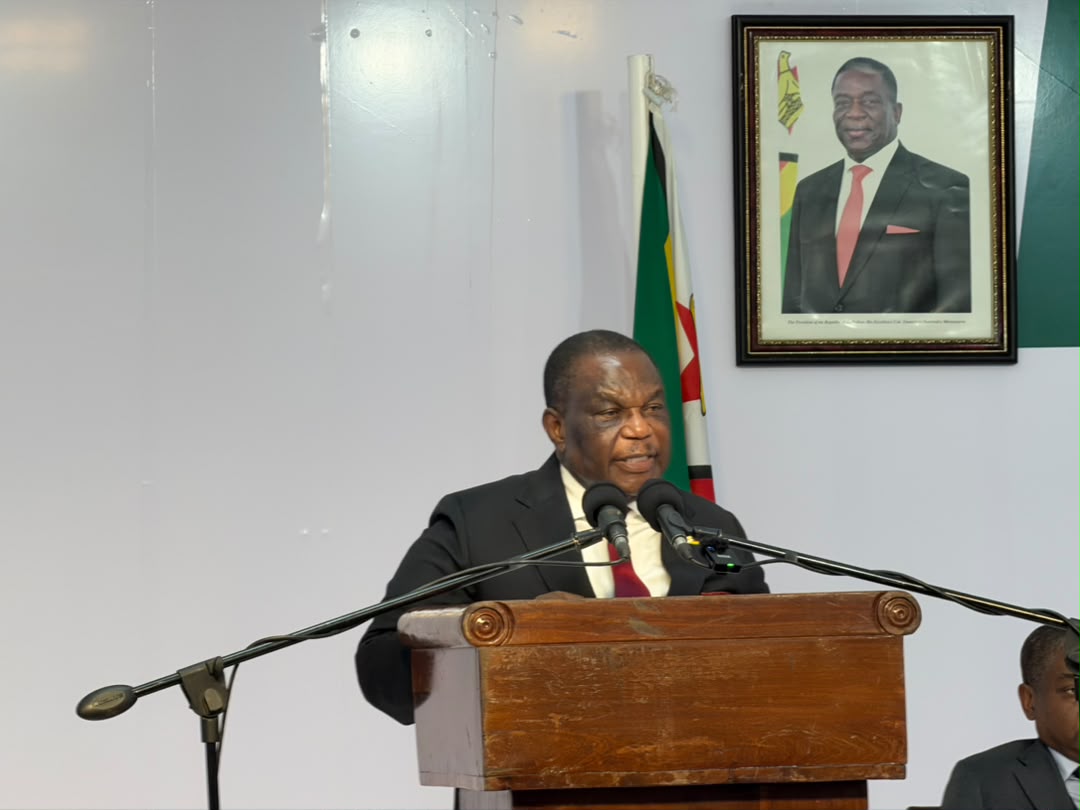
Speaking during the launch, the Governor and Resident Minister of Matabeleland South, Angeline Masuku, said the project was an emphatic homegrown solution to the problem of drought that kills hundreds of cattle in Matabeleland South every year.
“There is no going back. This scheme should grow to cover the whole province. It might be what is needed to save the national herd. We are now calling for Government participation to rapidly expand it,” said Governor Masuku.
Zanu-PF National Chairman, Cde Simon Khaya Moyo, said the scheme was a brilliant concept that should be spread throughout the country.
“We have been watching our livestock dying in large numbers, when such a simple solution existed. This should be a model for all farmers who do not have resources to establish individual feedlots,” said Cde Khaya Moyo.
Reading a speech on behalf of the Minister of Agriculture, Mechanisation and Irrigation Development, Dr Joseph Made, the principal director in the livestock department, Dr William Shereni, said the feedlot concept was a fundamental input to livestock production and development.
“Zimbabwe has 5,2 million cattle of which 80 percent is in the smallholder farming areas. There has been an improvement in the quality of slaughter due to interventions such as the feedlots projects. Farmers now appreciate the value of finishing off their animals before selling, to get better prices,” said Dr Shereni.
He said long-term development was based on realising the potential of smallholder agriculture, as the most effective way of transforming rural areas.
“It should be noted that in Zimbabwe women constitute a greater percentage of farmers in small stock production. Hence commercialisation of smallholder farmers is a priority, since it will provide a solid and broad base for industrial growth through increased purchasing power of the rural majority and better back and forward economic linkages between agriculture and other sectors of the economy,” he said.
Mr Themba Nyathi, the chairperson of the Sanzukwi feedlot scheme, said there were only 14 active members, as villagers did not believe in budgeting for special feed for cattle.
“They believe it is a white man’s thing. They do not know that money is in the cattle kraal, not the bank. Every year they till vast acres of land to get a few buckets of grain, not realising that there is infinitely more profit in concentrating on livestock,” said Mr Nyathi.
He said vigorous campaigns should be carried out to show villagers the drought-prone region 5 of Matabeleland South was better suited for animal rearing.
The chairperson of the Hobodo feedlot, Mr Billy Johannes Dube, said about 51 cattle were at the lot.
“More benefits, besides fattening of cattle to get top prices, accrue from being a member.
“If you send an animal, its value, after being fattened, is assessed and you are given stockfeed equal to the value, that you can use to feed other animals at home,” he said.
Mr Dube said jackals that came from Botswana were killing livestock in the area and called for Government assistance to solve the problem.
Mr Anderson Sibanda, of Smith Block, said the scheme was an eye-opener for indigenous farmers to the vast wealth that could be realised from livestock farming.
“We welcome all the workshops that have been organised by SNV to increase our knowledge on the subject.
“We also want to thank Bulawayo Abattoirs for teaching us that a beast does not come from the bush to be sold for school fees, but has to be prepared to get maximum prices,” said Mr Sibanda.
He said there were 99 beasts at the lot.
Mr Samuel Brenner, the chief executive officer of Bulawayo Abattoirs, which helped farmers to get livestock feed on credit, said he was proud to be part of the programme.
Stakeholders in the scheme include SNV, a Dutch organisation that specialises in capacity building and developmental programmes, Bulawayo Abattoirs, also known as Grills, and Mangwe Farmers Association.
Among the people who attended the launch, were Deputy President of the Senate, Naison Khutshwekhaya Ndlovu, traditional leaders and villagers.


 Online Reporter