Online Reporter
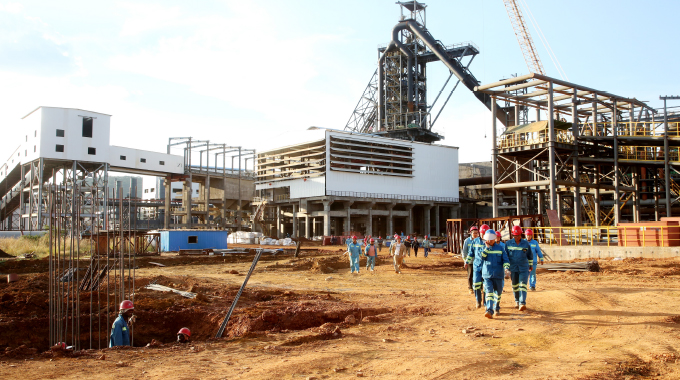
MANHIZE-based Dinson Iron and Steel Company (Disco) has hailed the Second Republic’s ease of doing business reforms, crediting them for the swift establishment of its steel plant and the commencement of production, which is now supplying the local market.
The company is producing about 300 tonnes of steel daily and its annual target is 600 000 tonnes.
The Manhize steel plant, owned by the Tsingshan Group of China, is one of Zimbabwe’s largest private investments, with more than US$1,5 billion poured into the project.
Tsingshan also operates Afrochine Smelting (Pvt) Ltd in Selous, Mashonaland West, which produces ferrochrome and Dinson Colliery (Pvt) Ltd in Hwange, Matabeleland North, which produces coke, both key inputs for steel manufacturing.
Dinson Industrial Group chief executive officer, Mr Benson Xu, said the Government’s investor-friendly policies had fast-tracked the project’s progress.
“We appreciate the Government’s ease of doing business approach, which has greatly helped us to achieve tremendous results in a short space of time.
“In just two years, we have started to produce steel, which is now being marketed locally,” he said.
Mr Benson said the company’s goal is to meet local demand, especially given that Zimbabwe had stopped steel production many years ago.
“We are proud to be contributing to the country’s economic growth and industrialisation,” he said, commending the plant’s 2 000 workers for their commitment and skill.
He also highlighted the strong bilateral ties between Zimbabwe and China, saying they had been crucial in facilitating transformative investments like Disco.
Mr Benson said the partnership between Tsingshan Group and the Government is a testimony to the mutually beneficial co-operation between China and Zimbabwe.
“This investment also aligns with Zimbabwe’s Local Economic Development (LED) programme, which aims to promote economic growth and development at the local level.
By investing in Zimbabwe and creating employment opportunities, we are contributing to the LED programme’s objectives and supporting the country’s vision of becoming a middle-income economy by 2030,” he said.
Mr Benson said Disco represents far more than a private enterprise, noting that it is a cornerstone of Zimbabwe’s national industrial strategy and a flagship project aligned with the ambitious goals of Vision 2030.
“The Manhize plant, a transformative investment, is poised to become Africa’s largest integrated steelworks, fundamentally reshaping the Zimbabwe’s industrial landscape,” he said.
“The project stands as a direct and powerful answer to the national imperative of import substitution.
With Zimbabwe historically spending an estimated US$300 million annually on steel imports, Disco’s domestic production is set to eliminate this dependency, conserve vital foreign currency, and strengthen the country’s economic sovereignty.”
Mr Benson said the plant is a formidable engine for employment and socio-economic development.
The project has already created between 2 000 and 3 200 direct jobs, with projections of employing more than 10 000 Zimbabweans at full capacity.
Output will scale from 600 000 tonnes a year to five million tonnes, with more than 85 percent destined for export as domestic demand stands at roughly 400 000 tonnes annually.



 Bongani Ndlovu