malvernmugadzikwa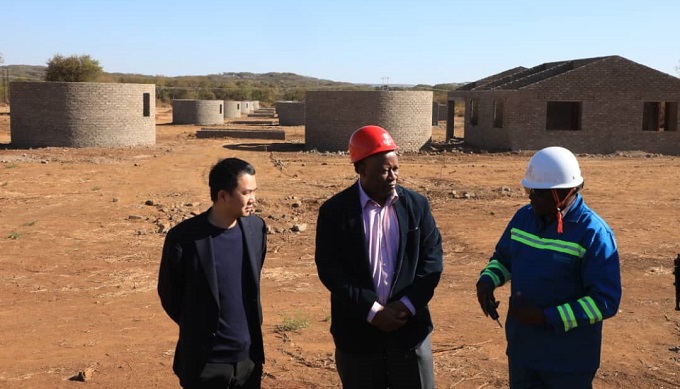
Wilfred Motsi
THE Dinson Iron and Steel Company (Disco) is a subsidiary of the Tsingshan Group, which operates in four continents — North America, South America, Asia (in India, China and Indonesia) and Africa.
As a company, we are among the top stainless steel producers in the world.
We had a 25 percent market share of stainless steel in 2002.
That should have increased by now.
We are also among the top in terms of nickel production in the world, with a share of 20 percent global market.
We were rated 238 in 2002 on the Fortune Group of Companies list.
In 2022, as a group, we realised revenue of US$58 billion.
We are one of the biggest employers in the world, and by 2022, we had over 120 000 employees. Also, by 2025, we are targeting to be in the top 10 in the world in terms of lithium production.
Our first investment in Zimbabwe was Afrochine, where we are producing ferrochrome, which is a value chain investment.
After that, we invested in DISCO, where we are producing the coke, which is then used for the production of the ferrochrome.
Disco uses the coke from our other factories to fire our blast furnaces.
We have also invested in lithium in Gwanda.
The value of our total investment in Zimbabwe is about US$2 billion.
Disco is one of the mega projects under the Second Republic.
We are also going to be the largest stainless steel producer in Africa.
We are one of the top employers with over 2 000 employees.
We are a game-changer because steel is one of the products needed in most industries.
Several other industries are going to work with us because they need steel.
The name Manhize Value Addition Industrial Park was coined by Minister Winston Chitando.
It means other industries are going to come and invest at our plant.
We are sitting on the confluence of Mashonaland West, Mashonaland East and the Midlands (provinces), which is an advantage.
Another major advantage is the mineral resource, which is iron ore, which we are proud to say is worth over 4 billion tonnes in terms of reserves.
We have started the mining.
We have many workers who are busy crushing, as well as evaluating the iron ore, which we are proud to say is one of the richest in terms of grade where we are mining currently.
Twenty-four months ago, there was no structure at our site.
It was just the arrival of raw materials and digging taking place.
Eighteen months ago, the structures were now starting to sprout.
Today, we have the blast furnace and sintering plant.
The plant is complete. Our workshop is the biggest in Zimbabwe.
All the components at the plant were fabricated in that workshop by the Chinese engineers, who trained our local Zimbabwean engineers. Now, we are proud to say we have got engineers who can fabricate.
Coded welders are the best in terms of welding.
They have been trained here by the Chinese engineers.
We also have an oxygen plant, which is critical for the combustion processes in the blast furnace.
The sintering plant is now 100 percent functional.
This is where we produce what is called the sinter cake, which is a product of a combination of iron ore, limestone and coke, which is then used to make pig iron.
The heart of the steel plant is the blast furnace, which is now 100 percent functional.
As a company, we believe in environmental sustainability.
After producing the pig iron, we use a by-product for the billet, we have the flue dust.
We do not just throw it in the atmosphere, but we use it for the production of cement.
It’s a good ingredient for the cement itself.
A combination of the slag, which is the waste material, is also used for the cement.
And the top gas, which comes from that blast furnace, is very critical.
We have converted it to produce electricity.
We are proud to say that we are going to produce about 20 megawatts of power coming from the top gas, coming from the furnace.
It is a new technology here in Zimbabwe.
We also have thermal power, of 50 megawatts. It is functional, but it is smokeless. It is new technology which is being used to produce electricity to fire the plant.
Zimbabwe Electricity Supply Authority (Zesa) officials say this power station can power the whole of Harare with no blackouts.
We wish other companies in Zimbabwe can develop their own captive power to relieve pressure on the national grid.
Products from the steel plant
We have started producing pig iron and spot iron. We will also be producing steel billets.
Other industries can come and buy the steel billets to manufacture other products.
In terms of production, the first phase is targeting 600 000 tonnes of steel up to the fourth phase of 5 million tonnes of iron ore.
In terms of employment, direct employment will be 3 000 in the first phase; and then second phase, 6 000 people will be employed; in the third phase, 16 000 will be employed and in the fourth phase, 25 000 people will be employed.
And indirectly, if we just multiply those figures by six, we are looking at over 150 000 people.
In terms of the pig iron, the estimated start of production was June, and we achieved that.
And then we have steel billets and steel bars. We are talking in terms of July and October, respectively.
We are also going to produce rod-to-rod wires, and rod-to-rod bars shortly.
Then, in terms of sales, our minimum orders will be 30 tonnes.
Zesa was excited because they said hot-rod wires that we produce can also be used for making wires for the transmission of electricity.
We are also going to produce hot-rolled round bars.
Corporate social responsibility
We work with the communities, including those who are disadvantaged.
We give food handouts for several people, including a 101-year-old lady. We also have a community football team that we assist every month.
Also, we are building toilets for some of our members in the communities.
We have also adopted a school.
This is the product of our chairperson, who identified this school and assisted with the construction of classroom blocks that are now complete.
We are also building new houses for those who were relocated due to our operations.
Each housing unit has a round kitchen and a four-bedroom house, regardless of what they previously had.
In between, there is a little bit of land for gardening. So far, we are constructing about 22 houses for those who have been disadvantaged, regardless of the type of houses that they previously had.
We have adopted the United Nations standards of houses.
It must be the first-of-its-kind model in Zimbabwe.
Wilfred Motsi is Disco’s project director. He made these remarks during a presentation to Mines and Mining Development Minister Winston Chitando when he toured the steel plant on Thursday.


 Online Reporter