Online Reporter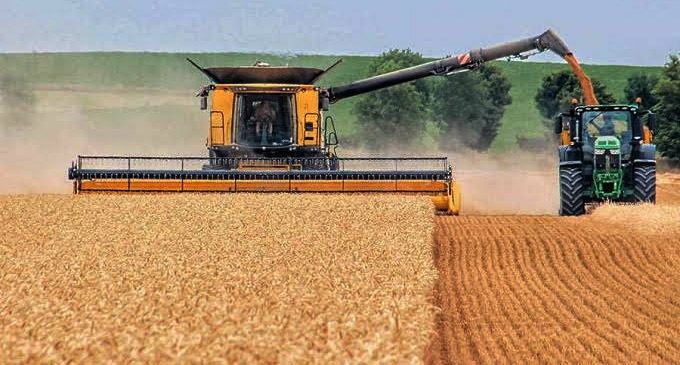
Lovemore Kadzura
Post Reporter
MANICALAND is poised to reap a bumper wheat harvest, with projections pointing to a potential yield of approximately 58 000 metric tonnes from 13 548 hectares planted this season.
Harvesting has commenced in some areas in the province, while the remainder of farmers are expected to begin in October, continuing through November.
To mitigate post-harvest losses, wheat must be removed before the onset of the rainy season.
Nationally, Zimbabwe aims to produce 600 000 metric tonnes, the highest yield since wheat introduction in 1966.
Thanks to sustained support from the Government, banks, private contractors, and other stakeholders, Zimbabwe has achieved self-sufficiency in wheat production, eliminating reliance on imports.
Farmers are optimistic about the high quality of their produce, citing a challenge-free season.
However, farmers have urged the Grain Marketing Board (GMB) to expedite payments for the delivered grain, motivating them to continue cultivating the crop.
The provincial director for the Agriculture and Rural Development Advisory Services (ARDAS), Mr Nhamo Mudada, said small-scale farmers have commenced harvesting.
Mr Mudada said an assessment revealed that the entire crop is in good condition, indicating a high likelihood of producing high-grade wheat.
“Our winter wheat crop is in an excellent state this year. Observations indicate that 65,1 percent of the wheat is in good condition, while 34,5 percent is in a fair condition. We anticipate commencing harvesting in the first week of October, with the process expected to continue into November due to the extended planting deadline of June 15.
“Some small-scale farmers in Chimanimani and Chipinge are already harvesting using sickles, which is a positive indication of our progress. While some wheat will be harvested manually, the majority will be harvested using combine harvesters.
We remain committed to our target of 58 000 metric tonnes from 13 548 hectares, aiming for a yield of five tonnes per hectare,” said Mr Mudada.
Mr Tedious Nyikayaramba, a farmer at Choko Farm, in Headlands, said harvesting will commence in October, and is expected to be completed within four days.
He expressed confidence in beating the rainy season.
“We were contracted by a private player to grow 40 hectares of wheat. The season progressed favourably, with timely receipt of inputs enabling us to prepare accordingly. Adequate water supply from the dams and reliable electricity supply, compared to previous seasons, also contributed to our success. We anticipate harvesting an average of six tonnes of high-quality wheat per hectare.
“Wheatfarming does not require intensive labour, which is advantageous. It is imperative for farmers to harvest ripe wheat promptly, as the impending rainy season poses a significant risk to their investment and efforts,” said Mr Nyikayaramba.
For Zimbabwe, wheat self-sufficiency is crucial for national food security, reduces reliance on imports, enhancing food availability, stability, and affordability, ultimately benefiting the nation’s health and economy.
Wheat is a staple crop, primarily used for bread production, and cereal, which are fundamental breakfast foods.