Online Reporter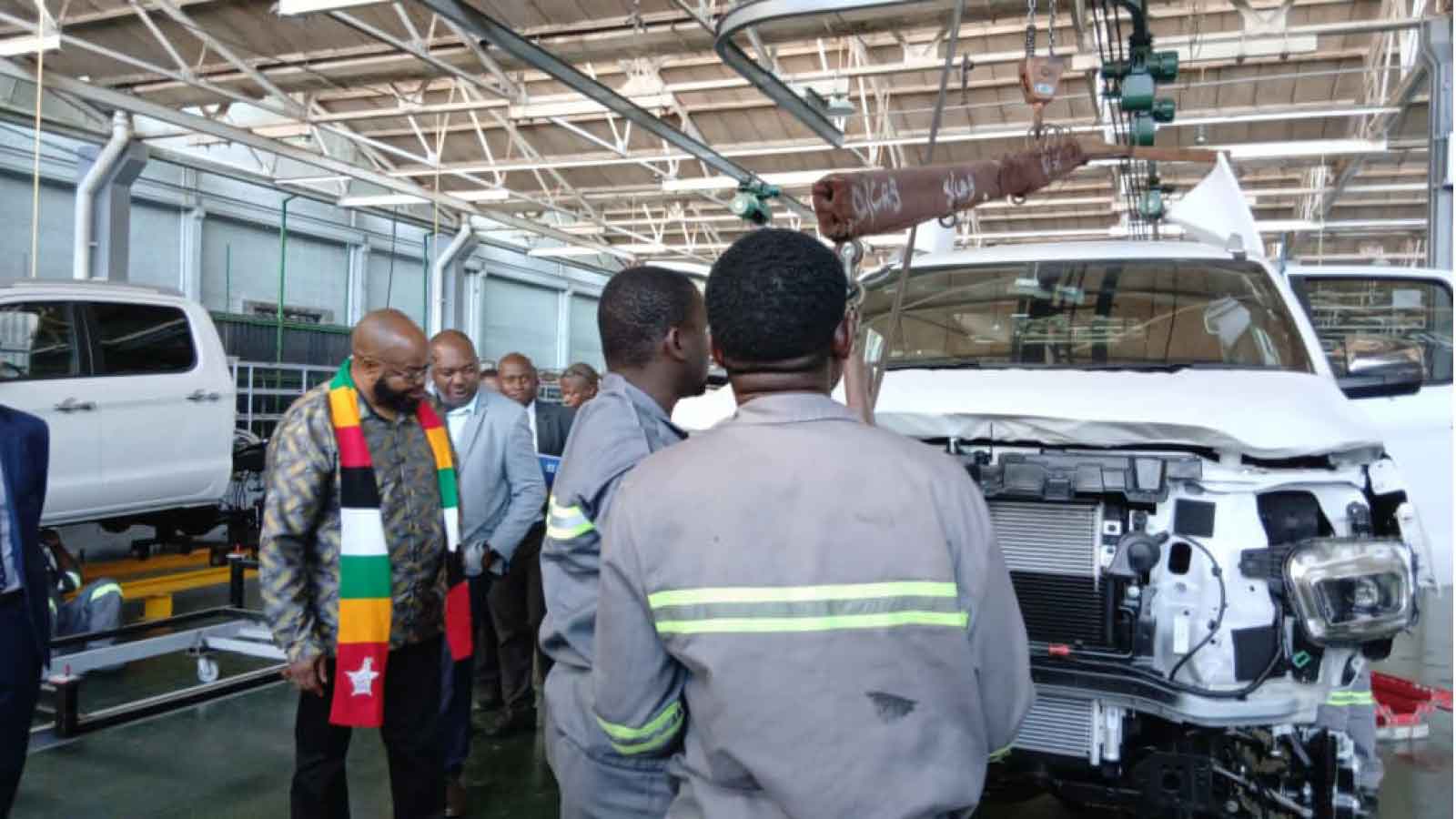
Tendai Gukutikwa
Mutare Bureau
FOR years, trucks laden with timber, minerals and agricultural produce have streamed out of Manicaland carrying the province’s natural wealth to factories and markets elsewhere.
The wealth was always there, but what was largely missing were industries capable of processing it at scale.
That equation is now changing.
Across the province, investments in vehicle assembly, timber beneficiation, mineral processing, logistics infrastructure and small-scale manufacturing are laying the foundations for a more integrated industrial economy.
The emerging landscape is increasingly defined by industries that could feed into and reinforce one another.
Timber residues could become pulp and paper products. Minerals could feed fertiliser and battery-material industries.
Electric vehicle assembly could create opportunities for component manufacturers, while upgraded logistics infrastructure could connect these industries to regional and international markets.
It is a shift that places Manicaland at the centre of Zimbabwe’s drive to becoming an empowered, modern, prosperous and highly industrialised nation in the next four years.
Quest Motors signals industrial revival
In Mutare, the revival of Quest Motor Manufacturing (QMM) has provided one of the clearest signs of the province’s industrial resurgence.
The company has restarted production at its Mutare plant, rolling out its first locally assembled vehicles after years of subdued operations.
QMM general manager Mr Carl Fernandes said production began in May, with the company assembling its first 50 vehicles that month and targeting 1 500 by the end of the year. But the import of the revival spreads beyond the number of vehicles coming off the assembly line.
QMM is also moving into electric and new-energy vehicles, positioning Mutare to participate in one of the fastest-changing segments of the global automotive industry.
The company plans to assemble the BAW mini car, Skyworth SUV and GAC Aion V electric vehicles as part of its strategy to establish itself in new-energy vehicle manufacturing.
Mr Fernandes said the move was part of the company’s broader strategy to modernise its operations and align with Zimbabwe’s industrialisation drive.
The expansion is expected to increase employment by between 300 and 500 percent while creating opportunities for component suppliers and young entrepreneurs.
For Manicaland, the potential impact extends beyond QMM’s factory gates.
A functioning vehicle assembly industry creates demand for logistics, metal fabrication, rubber products, vehicle components and other services, allowing smaller businesses to plug into larger manufacturing supply chains.
“The revival of Quest Motors is expected to stimulate downstream industries such as rubber manufacturing, vehicle component production and logistics, bringing wider economic benefits to Manicaland,” Manicaland Minister of State for Provincial Affairs and Devolution Advocate Misheck Mugadza said in a recent interview.
New US$40 million investment in plant manufacturing
A similar shift is taking place in the timber industry, where investment is beginning to push the province beyond the production of logs and rough timber.
At the Selbourne plantation in Mutasa, The Wattle Company is investing US$40 million in a pulp manufacturing plant, marking Zimbabwe’s first major pulp investment since the closure of Mutare Board and Paper Mills.
Pulp is the fibrous material produced from wood and is a key raw material for manufacturing paper, cardboard and other products.
The significance of the investment, therefore, lies in the additional industrial process it brings into the province.
Instead of timber residues such as sawdust and off-cuts being discarded or burnt, they can become inputs into the manufacture of paper, boards and packaging products.
The plant is expected to employ more than 400 people while reducing Zimbabwe’s dependence on imported paper products.
An official from The Wattle Company, Mr Maxwell Kuhudzai, said the project would fundamentally change the way timber resources are used.
Director of Economic Affairs and Investments in the Office of the President and Cabinet in Manicaland Mr Munyaradzi Rubaya said the project would improve timber utilisation, stimulate downstream industries and contribute to import substitution.
The investment also points to a broader change in the province’s industrial model: Producing raw materials is no longer enough.
The greater prize lies in keeping more stages of the value chain within Manicaland.
Minerals become industrial inputs
Manicaland has long been endowed with significant mineral resources, from diamonds in Chiadzwa and gold in Mutasa and Nyanga to lithium deposits in Buhera.
The challenge has been ensuring that mineral wealth translates into manufacturing industries rather than leaving the province in raw or minimally processed form.
That is beginning to change, particularly following the Government’s push for local mineral beneficiation.
In Buhera, Sabi Star Mine and Dorowa Minerals are investing in value addition and beneficiation infrastructure.
At Dorowa Minerals, plans are underway for the US$1,2 billion Shawa All-in-One Project, which will combine phosphate mining, fertiliser manufacturing and acid production into an integrated industrial complex.
The first phase is estimated to require US$525 million and is expected to position Zimbabwe to produce fertiliser for domestic and regional markets in the Southern African Development Community (SADC) and the Common Market for Eastern and Southern Africa (COMESA).
Dorowa Minerals general manager Mr Hensen Mambo said the integrated project would unlock the province’s phosphate resources while helping reduce fertiliser costs through economies of scale.
At Sabi Star, meanwhile, the focus is on developing downstream lithium industries.
The company has invested US$170 million in mining operations and intends to use its experience in battery-material production to develop value-added industries in Zimbabwe.
Sabi Star chairperson Mr Bill Zou said the company wanted to move beyond mining into downstream industries.
If those ambitions materialise, Manicaland could begin developing linkages between its mineral resources and emerging manufacturing industries.
Lithium beneficiation and battery-material production could, for example, complement QMM’s electric vehicle assembly operations, creating the beginnings of a new-energy manufacturing ecosystem.
The value of the province’s resources will increasingly be measured not simply by what is extracted, but by how much economic activity can be created from those resources before they leave the province.
Infrastructure to connect the industries
Factories, however, cannot operate in isolation.
Manufacturing requires reliable transport links, efficient border systems and access to domestic, regional and international markets.
Here, Manicaland’s geographical position gives it an advantage.
The province shares a border with Mozambique and is Zimbabwe’s closest route to the Port of Beira, making it a natural gateway for imports and exports.
The Government plans to operationalise the Fern Valley Special Economic Zone (SEZ), establish a modern dry port and expand the Forbes Border Post, while upgrading smaller ports of entry including Cashel Valley, Mt Selinda and Katiyo.
These projects are important not merely as infrastructure developments, but as potential enablers of industrialisation.
A factory needs raw materials to reach its production line and finished products to reach customers. The dry port, SEZ and border upgrades could, therefore, provide the logistical backbone for the manufacturing industries emerging across the province.
Mr Rubaya said the province wanted to use its position as the country’s gateway to the sea to attract logistics and manufacturing companies.
“We are the country’s gateway to the sea and we want to attract logistics and manufacturing companies to the province,” he said.
Bringing small industries into the value chain
Industrialisation in Manicaland is also being extended beyond large companies.
In Mutare, the planned US$6 million Sakubva Industrial Hub is expected to modernise informal manufacturing by transforming the ageing Green Market into a structured industrial complex.
The project will provide improved workspaces, organised trading bays, better sanitation and enhanced infrastructure for furniture manufacturers, welders, mechanics, metal fabricators and other small businesses.
The National Social Security Authority has already injected US$1 million towards preparatory works. Once completed, the hub is expected to formalise hundreds of small enterprises and improve their productivity.
More importantly, such businesses could become part of the wider industrial supply chain emerging in Manicaland.
The mechanics, welders, fabricators, furniture manufacturers and other small enterprises operating within organised industrial spaces can potentially supply larger manufacturers, provide services to mining and logistics companies and create products for wider markets.
That creates another layer to the province’s industrialisation story: big factories provide the anchor, but smaller businesses can provide the links.
The industrial ecosystem takes shape
Taken together, the investments point to a different economic model for Manicaland.
Quest Motors brings vehicle assembly and the prospect of new-energy vehicle manufacturing. The Wattle Company is taking timber further into pulp and paper production.
Dorowa Minerals is moving towards integrated phosphate mining and fertiliser manufacturing, while Sabi Star is looking at downstream lithium industries.
The dry port, SEZ and border upgrades are intended to connect producers to markets, while the Sakubva Industrial Hub could bring small manufacturers into formal supply chains.
The projects are at different stages and their full impact will depend on successful implementation. But their significance lies in the potential connections between them.
A province that once watched much of its timber, minerals and agricultural produce leave as raw or minimally processed commodities is beginning to build industries around those resources.
The transformation is ultimately about what happens before the truck leaves Manicaland.
Instead of carrying raw materials for processing elsewhere, the province is seeking to send out more vehicles, paper products, fertiliser, processed minerals and other higher-value goods.
If the current investment momentum is sustained, Manicaland could emerge as more than Zimbabwe’s eastern gateway.
It could become a demonstration to the whole nation of how a resource-rich province can move up the value chain, turning what lies beneath its soil and grows on its land into industries, jobs and exports.