Lovemore Kadzura
Post Reporter
MANICALAND is often celebrated for its misty mountains, fertile soils, tea, timber estates and forests, yet beyond the towering pines, eucalyptus and indigenous plantations lies an equally valuable but underutilised treasure — non-timber forest products (NTFPs).
These natural resources, ranging from wild fruits and medicinal plants to honey and mushrooms, hold immense potential for local livelihoods, industrial development and export growth.
For generations, rural communities have relied on forests, not just for firewood, but for food, medicine, and cultural practices.
Wild fruits like baobab, marula (mapfura), mazhanje (uapaca kirkiana), matamba, tsvubvu and many others are abundant during their seasons, often consumed fresh or dried.
However, much of the produce goes to waste due to limited preservation methods and lack of structured markets.
Value addition offers a transformative pathway.
Many wild fruits can be processed into juices, jams, or dried fruit snacks with extended shelf life. Similarly, some can be turned into nutritious beverages or confectionery products.
By introducing simple processing technologies — solar drying, bottling, and packaging — local entrepreneurs can convert perishable forest goods into market-ready products.
Honey production is another promising sector.
The forests of Manicaland are rich in indigenous flowering plants, providing ideal conditions for beekeeping. Traditional methods have long been practised, but modern apiculture techniques can significantly increase yield and quality. Processed and branded honey, beeswax candles, and propolis-based products have strong demand both locally and internationally.
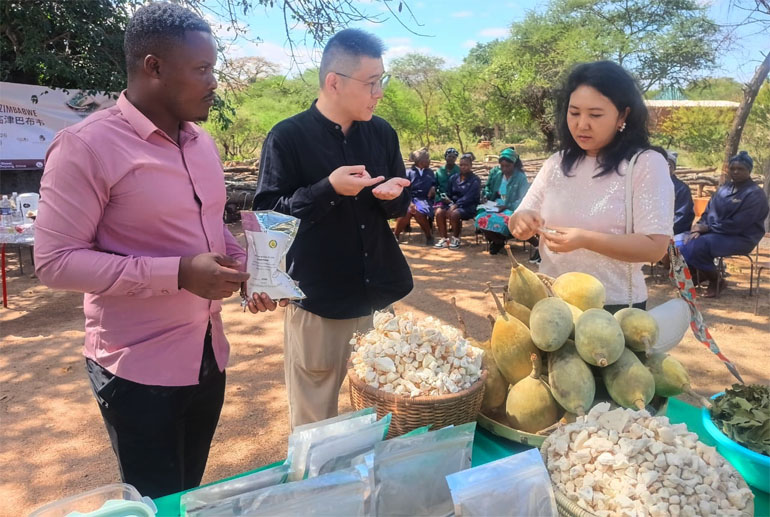
Mr Tendai Muzhingi, who is leading the collection of a variety of wild fruits in the Chapandura area of Buhera, and was linked to potential buyers from China by ZimTrade, said that there is huge appetite for wild fruits from Zimbabwe across the globe, and they are currently selling to middlemen in South Africa who value-add the produce and export to markets such as China and Germany.
“There are abundant wild fruits in Buhera, which thrive well due to the hot weather conditions. We have trees such as baobab, marula, nyii and others which we are not fully exploiting for economic benefits. Baobab fruit can produce quite a number of products from it, such as powder which can be used to produce nutritious drinks. The seed can be pressed to produce oil that is used in the beauty industry for hair and skin. The wild fruits are providing an economic lifeline for communities here as there is rising demand for the fruits. Most of the people involved in collecting and harvesting the fruits are women and this is a form of empowerment for them.
“We are exporting to South Africa without separating the powder and the seed, where it is further shipped to other countries and sold for a premium. From marula, we produce a drink and oil from pressing the seed. In the past these wild fruits were left to rot, yet they can be sold for a huge profit. We are glad for the efforts made by ZimTrade to bring the Chinese buyers to Buhera so that we meet and discuss modalities on how we can supply them directly. The buyers were impressed by the products, and we expect to start exporting to China soon,” said Mr Muzhingi.
ZimTrade Eastern Region manager, Mr Admire Jongwe said the baobab fruit was well received on the Chinese market during a recent expo, leading to the buyers flying into the country to have first-hand appreciation and work on modalities to import directly from communities.
“The sole purpose of bringing these Chinese buyers is to help the nation diversify its export basket. Our exports to China are predominantly minerals, tobacco, macadamia and a few horticultural products. The Chapandura community of Buhera has been collecting wild fruits including baobab, and have been exporting to South Africa for a number of years, but the returns have been low. South Africa is not the final destination of the baobab. We are helping the community to have direct access to the Chinese market, where their product attracted interest from different fairs which the representatives of the community recently attended. The interest that was gained has resulted in one of the buyers from China coming to have a feel and understanding of exactly how much the community is producing, how they are producing and where they gather the fruit from. This will help the buyers to get more insight and understanding of the product, such that when they go back to China to sell the product they will have an in-depth knowledge of the product and be able to explain to the consumers,” said Mr Jongwe.
Chinese buyer, Mrs Li Ayixiemugu, who was in the company of the vice general manager of Ark of Qiantang, Mr Tang Chengxi, said they were impressed by the samples of baobab powder presented to them in China and decided to come down to clinch deals with the producing communities.
“We are pleased to be here to meet with communities who can supply us with baobab fruit. Baobab is a special African tree, as its fruit can be used for many things. It is liked so much in China. The samples we got were so good that is why we decided to come here. We hope to conclude deals and start trading,” she said.
Fruit collector, Ms Enita Muzhingi, said the community has found a commercially viable venture in wild fruits which are in demand from consumers as they are of an organic nature.
“Our area is very hot and arid, which makes agriculture less productive due to limited rainfall. However, we have plenty of indigenous tree species which produce fruits. This is what we have turned to for survival and we are registering modest success through selling wild fruits. These fruits are all organic, as the trees grow naturally without the use of any fertilisers and chemicals. The quality of our lives has improved since we started the collecting of wild fruits for commercial business. We are complementing traditional grains with wild fruits. We also harvest indigenous teas such as mufandichimuka (resurrection tea) and zumbani tea, which we pack and sell in urban areas,” she said.
Unlocking the non-timber forest produce potential requires coordinated effort. Access to finance, training in value addition, and infrastructure such as roads and storage facilities are critical.
Equally important is the establishment of cooperatives that can aggregate produce, ensure quality standards, and negotiate better prices in larger markets to avoid exploitation.
In a world increasingly leaning toward natural, sustainable, and ethically sourced goods, Manicaland’s non-timber forest products represent more than just an economic opportunity — they are a pathway to inclusive growth.
By turning overlooked forest resources into value-added products, the province can empower its communities, preserve its ecosystems, and carve out a unique space in both local and global markets.
Manicaland’s secret economy in the trees