Online Reporter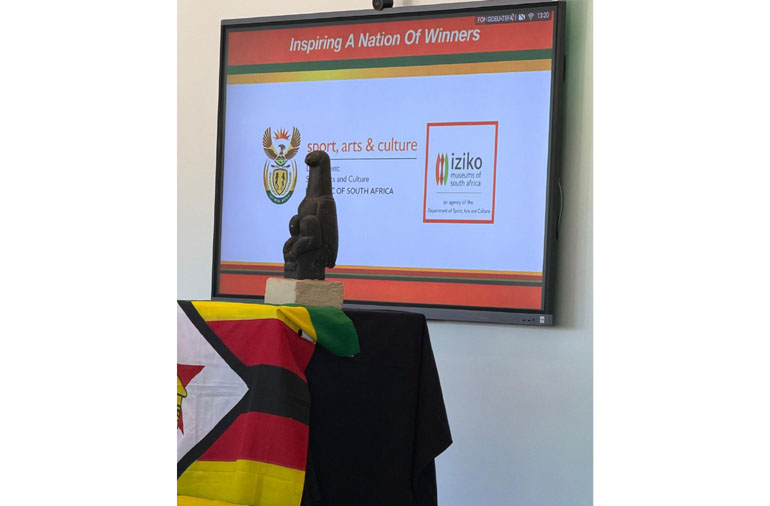
Lloyd Makonya
Correspondent
AS Zimbabwe prepares to commemorate 46 years of Independence tomorrow (Saturday), the return of the sacred Zimbabwe Bird and ancestral human remains from South Africa early this week is far more than a ceremonial gesture.
It is a profound political statement, a moral reckoning and a powerful reminder that the struggle for independence did not end in 1980.
It continues in museums, archives, universities and diplomatic corridors across the world, where the legacy of colonial conquest still lingers in glass cases and storage vaults.
For centuries on end, Zimbabwean artefacts and items of historical significance have been scattered across the globe, displayed in museums or held in private collections as trophies of conquest by colonial powers.
These objects were not exchanged through mutual understanding, but were removed under conditions of force, deception and racial superiority.
They were not borrowed, they were taken.
In many cases, they were seized violently as visible symbols of domination over African knowledge systems, spirituality and identity. The systematic removal of cultural heritage formed part of a broader colonial strategy to undermine African civilisation, to distort its history and to strip communities of the symbols that anchored their cultural pride.
Against this historical backdrop, the handover this week of the Zimbabwe Bird and ancestral human remains by South African authorities to Zimbabwean officials marks the latest victory in Zimbabwe’s sustained push to reclaim its cultural inheritance. The repatriation of this sacred sculpture once taken from the ancient city of Great Zimbabwe in the 1890s, and later acquired by colonial figure, Cecil John Rhodes for display in his private residence in Cape Town represents a decisive moment in the long arc of restitution.
That residence later became a national monument and the artefact fell under the custodianship of the Iziko Museum, where it remained for decades until this historic transfer of ownership to the National Museums and Monuments of Zimbabwe. For more than a century, the bird remained in exile. This week, it finally came home.
The Zimbabwe Bird is not merely a carved object. It is a symbol deeply embedded in the national consciousness.
Carved from soapstone and originally mounted on monolithic pillars at Great Zimbabwe, the bird has become the most recognisable emblem of Zimbabwean nationhood, proudly displayed on the national flag, coat of arms and currency. Its symbolic power extends beyond aesthetics; it represents sovereignty, continuity and the resilience of African civilisation long before colonial intrusion.
That one of these sacred carvings was taken from its original setting and reduced to a collectible item in a colonial household illustrates the deeper violence of cultural dispossession. The act of reclaiming it, therefore, is not simply about returning an artefact it is about restoring dignity.
Equally significant is the return of ancestral human remains that accompanied the Zimbabwe Bird.
These remains, taken during colonial expeditions and retained for decades in foreign institutions as scientific specimens, represent one of the most disturbing aspects of colonial exploitation.
Human beings were removed from their resting places, stripped of identity and catalogued as objects of study in ways that violated African cultural and spiritual traditions.
Their return to Zimbabwe marks an important moment of healing. It restores the dignity of those whose humanity was denied even in death and it allows communities to reconnect spiritually with their ancestors.
Few images from the handover ceremony are as powerful as the sight of coffins draped in Zimbabwean colours, symbolising not only a physical return but a restoration of honour.
That this repatriation occurs in the week of Zimbabwe’s Independence celebrations adds a powerful layer of symbolism. Independence is often understood as a single moment in history, a date on the calendar marking the end of colonial rule. Yet the events unfolding this week remind us that independence is not an isolated milestone, it is a continuing process.
The liberation struggle that culminated in April 1980 secured political sovereignty, but cultural sovereignty remains an ongoing pursuit.
Each repatriated artefact, each returned ancestral remain, represents another victory in the unfinished struggle to reclaim Zimbabwe’s identity from the shadows of colonialism.
The significance of this moment is further underscored by the role of cultural diplomacy in facilitating the return.
The transfer of ownership from South African institutions to Zimbabwe reflects growing cooperation among African nations in addressing shared histories of dispossession.
Scholars such as Professor Njabulo Chipangura, who has written extensively on decoloniality and provenance research, have emphasised the importance of tracing the origins and movement of artefacts to establish rightful ownership. Provenance research has become a critical tool in the global restitution movement, enabling African nations to challenge historical narratives that once justified the removal of cultural property.
There is also a compelling dimension of reciprocity within this process. Cultural diplomacy often unfolds through gestures of solidarity among nations that share liberation histories.
The return of Zimbabwe’s heritage by South Africa reflects the broader spirit of mutual respect that has characterised relations between African states that supported one another during the liberation era. Such acts reinforce the notion that independence was never achieved in isolation; it was a collective struggle that transcended borders.
Zimbabwe’s achievement in securing the return of the Zimbabwe Bird and ancestral remains is not occurring in isolation. Across Africa, nations are increasingly demanding the restitution of cultural property looted during colonial occupation.
One of the most widely recognised examples occurred when Belgium returned the gold-capped tooth of Congolese independence hero, Patrice Lumumba to the Democratic Republic of Congo more than 60 years after his assassination. That single tooth carried immense symbolic weight, enabling a nation to mourn properly and to restore dignity to one of its founding leaders.
Similarly, Nigeria has successfully negotiated the return of Benin Bronzes from European museums, while Ethiopia and Kenya have intensified efforts to reclaim manuscripts, ceremonial artefacts and other cultural treasures taken during colonial campaigns.
These developments demonstrate that restitution is not an act of generosity by former colonial powers, it is a matter of justice.
For decades, African nations have argued that cultural heritage forms an essential component of national identity and that its removal constitutes a historical injustice.
The growing wave of repatriations across the continent reflects a shifting global consciousness, one that increasingly recognises the ethical obligation to return what was taken without consent.
As Zimbabwe prepares to mark 46 years of Independence, the return of the Bird carries profound symbolic meaning. Its return signals restoration not just of heritage, but of spiritual continuity.
It affirms that independence is not merely about controlling territory but about reclaiming memory, restoring narratives and honouring ancestors whose contributions were suppressed under colonial rule.
This moment also serves as a reminder that the liberation struggle did not conclude with the lowering of the union Jack in 1980.
It continues today in diplomatic negotiations, legal arguments and academic research that seek to correct historical injustices.
Many Zimbabwean artefacts remain in foreign institutions, particularly in Britain and Europe, where discussions on restitution are ongoing. The return of one Zimbabwe Bird should not be viewed as the end of the journey but as a catalyst for intensified engagement. It demonstrates that persistence yields results and that cultural sovereignty remains achievable through sustained advocacy.
The broader message to the international community is unmistakable. The era in which museums could hold looted artefacts without accountability is drawing to a close.
Institutions that once defended their collections as legitimate acquisitions now face growing pressure to acknowledge the realities of colonial plunder.
Universities that once stored African human remains as scientific curiosities are increasingly compelled to confront the ethical implications of their practices. Governments that once ignored restitution demands must now respond to mounting calls for justice.
For Zimbabweans, particularly the younger generation, this moment carries an important lesson about the responsibilities that accompany independence. The generation that fought in the liberation struggle secured political freedom through immense sacrifice.
The generations that followed inherited the responsibility of preserving that freedom. Today’s generation must assume a new mandate to reclaim history, to restore dignity and to ensure that the symbols of national identity remain within the communities that created them.
As Zimbabweans gather across the country to celebrate Independence Day, this year’s commemorations carry a renewed sense of purpose. The homecoming of the Zimbabwe Bird stands as a visible reminder that history, though wounded, can be restored.
The bird that once stood silent in foreign halls will soon stand again on Zimbabwean soil, where it belongs.