Chronicle Editor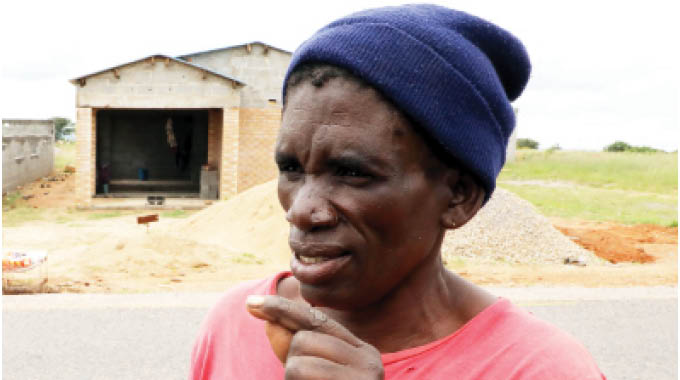
Yoliswa Dube-Moyo
Women are little celebrated creatures whose existence is constantly sacrificial. New mothers sacrifice even the simplest of things, like sleep, to nurse their babies. They sacrifice their bodies, their lives even, to bring forth new life.
Their careers are put on hold and relationships suffer as they embrace their mother role. As wives, some sacrifice their freedom, identity and everything that defines them due to our highly patriarchal society. It never ends.
Even in old age, when they should be resting and enjoying the sweat of their children, most still find themselves continuing to do odd jobs and unpaid work to fend for their grandchildren and other family members.
Twenty-five years following the Beijing Declaration and Platform for Action, which is recognised as the most progressive roadmap for the empowerment of women and girls, true gender equality remains a far-off dream. Women still do unpaid work with patriarchy ravaging various strides made to empower women.
Ms Sithokozile Nkiwane (54) is one such woman who is an epitome of the strength of women, particularly in Zimbabwe where the country suffers unique challenges due to economic challenges.
MaNkiwane, as she preferred to be called, is an ordinary woman who fights everyday to put food on the table for her grandchildren.
She is one of the very women who are spoken of on various platforms seeking to highlight the plight of women and proffer ways of informing them on women rights and empowerment.
MaNkiwane, who lives in Bulawayo’s Luveve suburb, collects empty plastic bottles and cans for recycling purposes to earn a living.
“I pick up empty plastic bottles and cans, which I sell in order to raise my grandchildren’s school fees and take care of other expenses. Once I’ve picked the cans, I crash them and work hard to fill bales so I can get good money for them. There’re people who come to my house to buy these empty bottles and cans for recycling purposes,” she said, anxiously twiddling on her fingers.
She quickly relaxes and finds her voice, “I sell the empty plastic bottles for 80 cents per kilogram and $3 per kilogram for the cans. The money is very little but there’s nothing I can do about it. At least it takes care of my needs and besides, half a loaf is better than nothing.”
MaNkiwane said in recent times, it has been difficult for her to sustain the business as there are now many people doing it.
“I have been doing this for years. I’d get good money from picking up these plastic bottles and cans but now the competition is very stiff. People litter a lot so I walk around picking up after them. It takes me about a month to fill up a bale and I get about $100 at the end of the month for each bale,” she says proudly.
She uses the money to pay her grandchildren’s school fees and utility bills, buys food, as well as other ancillary costs including transport.
“My grandchild’s school fees has been rising steadily. It used to be $45 per term, now it has gone up to $100 per term. I’m 54-years-old but I still have to work like I’m still in my prime. I have one child, a daughter. She went to South Africa years ago. She got married to some guy but they have since broken up. I hardly ever hear from her. She left me with two of her children who have become my responsibility so I can’t sit back and do nothing. One recently completed her ‘O’ Levels while the other one is in Grade Six,” said MaNkiwane.
The emerging global consensus is that despite some progress on women’s rights, real change has been agonisingly slow for the majority of women and girls in the world.
Today, not a single country can claim to have achieved gender equality. Multiple obstacles remain unchanged in law and in culture. Women and girls continue to be undervalued; they work more and earn less, have fewer choices and experience multiple forms of violence at home and in public spaces. Furthermore, there is a significant threat of rollback of hard-won feminist gains.
MaNkiwane is one of the many women we celebrate during women’s month each March, year in, year out.
Marked on March 8 every year, International Women’s Day, this year running under the theme, “I am Generation Equality: Realising Women’s Rights”, seeks to take stock on the progress made for women’s rights.
The theme is aligned with UN Women’s new multigenerational campaign, Generation Equality, which marks the 25th anniversary of the Beijing Declaration and Platform for Action.
Adopted in 1995 at the Fourth World Conference on Women in Beijing, China, the Beijing Platform for Action is recognised as the most progressive roadmap for the empowerment of women and girls, everywhere.
The year 2020 is a pivotal year for advancing gender equality worldwide, as the global community takes stock of progress made for women’s rights since the adoption of the Beijing Platform for Action. It will also mark several other galvanising moments in the gender equality movement: a five-year milestone towards achieving the Sustainable Development Goals; the 20th anniversary of UN Security Council resolution 1325 on women, peace and security; and the 10th anniversary of UN Women’s establishment.
The year 2020 represents an unmissable opportunity to mobilise global action to achieve gender equality and human rights of all women and girls.
MaNkiwane, who was carrying firewood on her head when a Chronicle news crew met her said she had to go looking for firewood twice every week due to load shedding.
“The firewood is not for sale. It’s for me to be able to cook. When my grandchild comes from school, she should find a hot meal to eat and warm water to bath. Firewood is our only option. We look for it twice a week. There’re people who go around chopping down trees, we get our firewood after they have chopped the trees. It’s actually the area a short distance away from Ngozi Mine,” said MaNkiwane who was visibly taking a strain from the heaviness of the firewood.
Like many women in Zimbabwe, MaNkiwane has to do odd chores that are synonymous to rural areas, in an urban setting.
She is excited about life despite the many inconveniences she has to endure daily.
“It’s important that women work hard to sustain their families. It’s also important to engage in honest work. We often hear of theft and prostitution. That’s not right. Just the other day, a woman my age was caught stealing maize cobs from someone else’s field. I don’t understand how an old person like me would steal from another old woman who is also struggling to fend for her family,” said MaNkiwane.
She continued emphatically: “It’s not right. As it is, we didn’t realise anything from our fields due to the erratic rains but we don’t go around stealing from people. We work hard to fend for our families. You’d rather ask for help instead of stealing. God blesses the hands that work. Just the other day, I didn’t have money for transport to go to church in Pumula South but one of the young men in my neighbourhood decided to drive me to church in his car. After church, someone else came to bless me with $20. They said they always saw me picking up empty plastic bottles and cans and I should buy some vegetables with the money so I can rest for the day.”
MaNkiwane has been picking up empty plastic bottles and cans for sale to recyclers for the past three years.
Although she realises little from her hard work, she will stop at nothing as the little income she gets from it has been sustaining her and her grandchildren. — @Yolisswa
– This article is part of a series to celebrate Women’s Month



 Online Reporter