admin
adminsense of selfconfidence, a fresh realisation of one’s own power and satisfactory financial rewards if practised professionally.
Today contemporary art is as healthy as at any given time in the history of art and this has given something invaluable to anyone starting out to paint, sculpt, assemble, mould or carry out pottery, the freedom to develop and imagine what you like.
The decade is a great and fulfilling age for artists the world over, as it is an age where the audiences are more enlightened and sympathetic to art.
The practice of art – be it painting, sculpture, ceramics or photography – is not only the prerogative of a trade, guild or profession, it is also a form of expression which all mankind can use to their own good.
Although it is often said that it takes a lifetime to learn how to paint or sculpt proficiently, it is possible to find a very adequate means of expression in art, if one can only give up, say, a few hours at each weekend devoted to painting, sculpting, pottery, photography or weld art.
One would recommend a regular average of six hours a week practice. This is adequate time to develop and expand one’s innate gifts.
However, to attain a certain degree of ability and proficiency in expressing the view on has of life, it takes at least three months for an adult practising for six hours per week to achieve a reasonable degree of ability in expressing one’s vision of the world seen, experienced or felt.
One must not be in any hurry to become overambitious about results.
In order to become creative in terms of drawing, painting or sculpture, etc, one must develop the impersonal attitude: (i.e) the power to drop all associations to subjects that one sees and to consider and visualise the things one sees with complete detachment.
The ability to see elements such as shape, colour, mass, volume, line and proportion of features, be it people, inanimate objects or nature, detached from the ordinary word is the beginning of one’s development of artistic vision.
This approach will assist one’s inspiration when considering subject matter.
How far does emotion or temperature override the control of technique in art?
One’s feelings are the most important and necessary part of one’s artistic self. For without emotional response to visual things, no painting or sculpture is worthwhile. Of course there has to be a great deal of mental activity governing and directing the feelings and responses to stimulation by the colour, shape, life and form.
Emotions come first and then the mental work and technique follow afterwards.
However, techniques alone will produce nothing worthwhile in artistic terms. Intuition is exercised when mind, heart, feeling and thought gel together. Intuition will guide one to find the right expression.
With visual art one must remember that one is not copying what is seen in the world in the literary sense, but interpreting the world as sensed and felt emotionally in one’s own vocabulary.
As with poetry and novellas (short stories) the greater truth or more forceful point can be made by emphasising certain attributes or features of your work of art and by omitting the superflous.
Consequently, these personal decisions enhance the view of the subject content you wish to express. This element of art is usually referred to as “Poetic Licence” or simply “Style.”
There is much experimentation in present day art.
In the last centuries there were only very limited ways of painting a picture, carving a sculpture, moulding ceramics or shooting a video art, but today one can choose from a wide range of media, techniques and genres.
What the aspiring artist needs today is freshness of vision, having a concrete personal outlook and attitude towards life, objects, civic environment, natural environment, culture and society.
Each individual has a way of seeing which is unique to him or herself, and one must try to find the right type of medium and method to use as a vehicle of expression.
Much experimentation is essential and practical trial is always the best.
Constant practice of looking, seeing and expressing in terms of ones chosen medium is what gives added strength to one’s work.
Art is selfexpression of one’s own viewpoint.
It is ultimately the vision and effect that one must articulate.
The Good Book says:
“Give instruction to a wise man . . . and he will get wiser” Proverbs (9:9)
This writer trusts that this article will inspire many an artist. The fact that there is a wish to paint, draw, assemble or mould art is what matters.
Man’s primary instinct is the will to form.
l Dr Tony Monda holds a PhD in Post Modern Art Theory and a DBA Doctorate in Business Administration in Postcolonial Art and heritage studies. He is also a practising artist, designer critic and Corporate Image Consultant.


Online Reporter
- Herald
- July 31, 2026
- 1 views
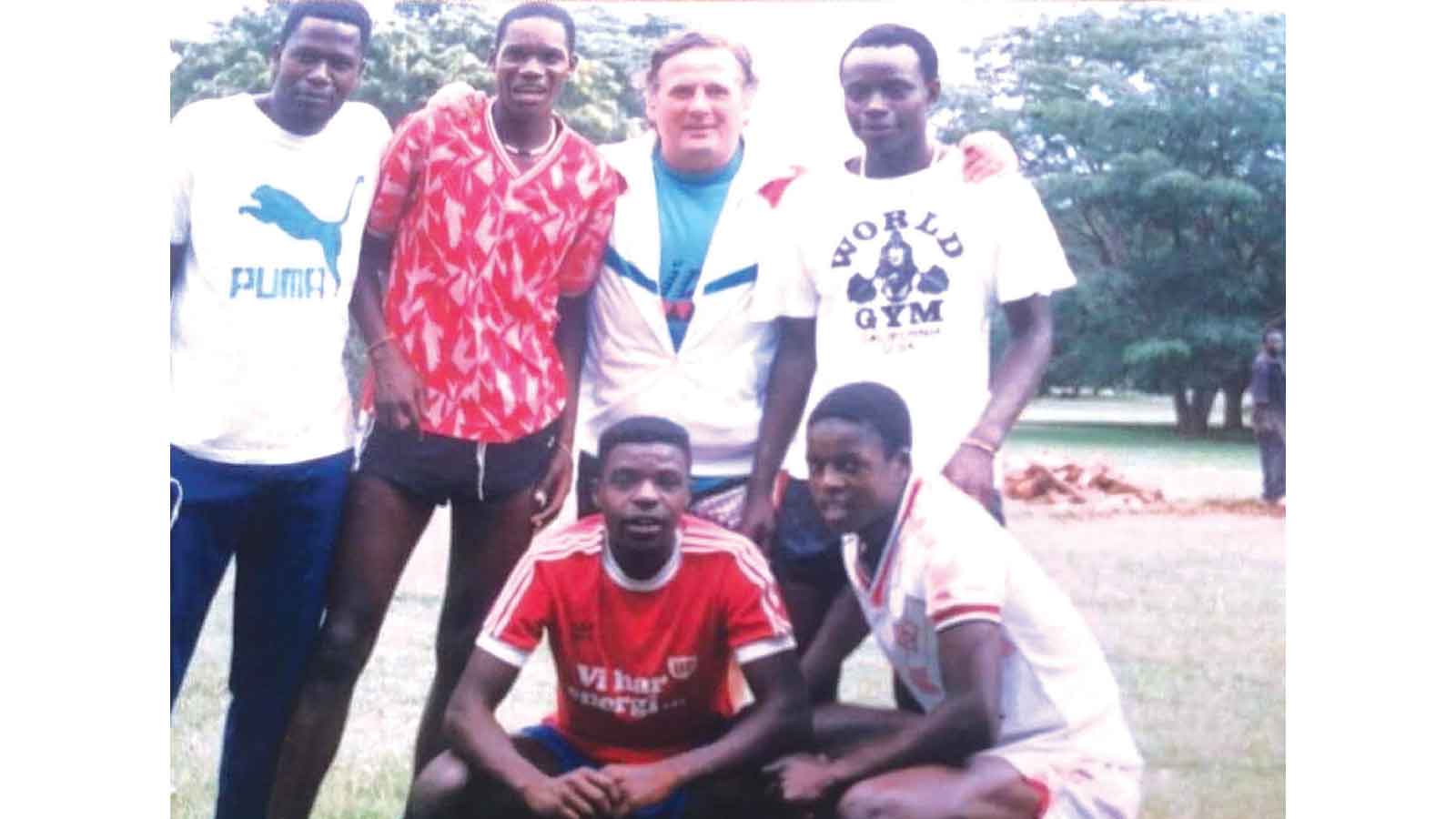
‘We were like his kids’
Eddie Chikamhi Zimpapers Sports Hub FORMER Zimbabwe international Norman Mapeza and a host of players that came through the hands of Wieslaw Grabowski have given moving testimonies of how the…