Online Reporter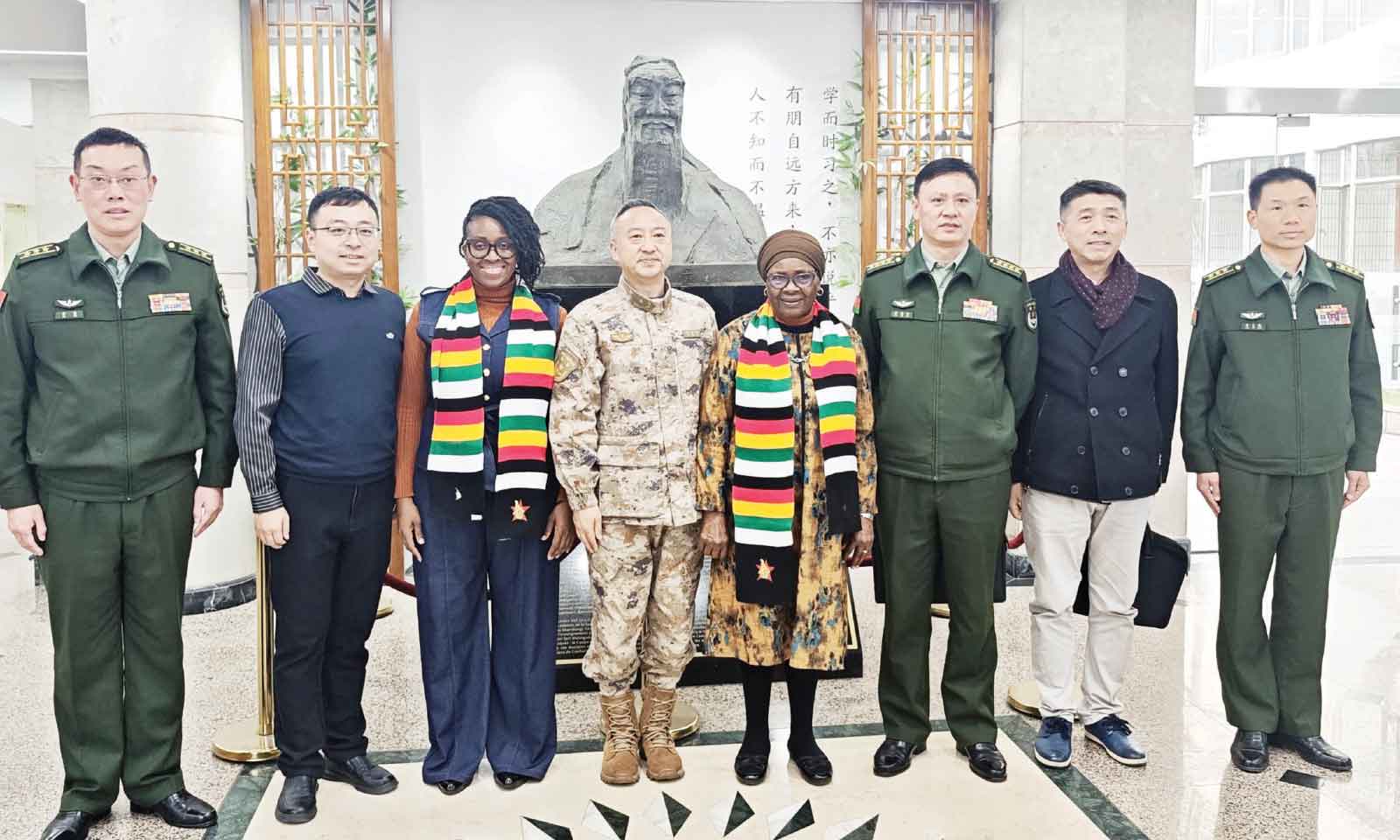
Kuda Bwititi
Zimpapers Politics Hub
THE late ZANLA commander, General Josiah Magama Tongogara, modelled his military and political outlook on the teachings of Chinese revolutionary leader Chairman Mao Zedong, his widow Senator Angeline Tongogara, has said.
According to Sen Tongogara, the revered commander used lessons that he acquired during training in China in the mid-1960s to shape Zimbabwe’s liberation struggle and guerrilla warfare that led to victory against colonial forces.
Sen Tongogara last month embarked on a familiarisation tour of China and visited Nanjing province, where Gen Tongo received training.
In an interview to commemorate the 46th anniversary of Gen Tongo, who died on Boxing Day in 1979, Sen Tongogara said the trip to China provided a deeper understanding of how Chinese revolutionary ideology shaped her husband’s leadership style and strategic thinking during the armed struggle.
Sen Tongogara travelled with her daughter, Nyaradzo, at the invitation of the Chinese Ambassador to Zimbabwe, Zhou Ding.
The visit included stops in Beijing, Nanjing and Shanghai, retracing key sites linked to China’s revolutionary history and General Tongogara’s own training.
“The primary motivation was to see where my late husband was trained,” Sen Tongogara said.
“His training yielded results that led to his leadership skills and spearheaded the armed struggle, which culminated in Zimbabwe’s freedom.”
Gen Tongogara was sent to China in 1965, where he studied political science, military intelligence, mass mobilisation and guerrilla warfare at the Nanjing Higher Military Academy, now the People’s Liberation Army Command College. He returned to Africa in 1966 and began training ZANLA cadres in Tanzania, embedding principles drawn directly from Chinese revolutionary doctrine.
She said retracing her husband’s footsteps in Nanjing reaffirmed his legacy as a disciplined, principled leader shaped by Chinese revolutionary ideals.
According to Sen Tongogara, central to that doctrine was Chairman Mao’s emphasis on discipline, popular support and the inseparable link between guerrilla fighters and the masses.
“The teachings of the Chairman on guerrilla warfare emphasised mobility, surprise, and the masses,” she said. “Just like fish cannot survive without water, guerrillas cannot survive without the support of the people.”
She said these ideas became core to Gen Tongogara’s leadership and were consistently passed on to fighters under his command. Respect for civilians, restraint in conduct and political consciousness were treated as strategic necessities rather than moral add-ons.
“The biggest takeaway from Gen Tongo’s training in China was to have faith and love in the populace. He always used to say, Don’t abuse the masses, treat them as your family. If you are disciplined during the prosecution of an armed struggle, you will be successful.”
She said Gen Tongogara closely studied Chairman Mao’s military writings and consciously emulated the Chinese leader’s integration of political education with military action — an approach that later became a defining feature of ZANLA operations.
Beyond Nanjing and Beijing, the delegation visited the Great Wall, the Forbidden City, the Confucius Temple and the Shanghai Urban Planning Exhibition Hall. They also toured the China Soong Ching Ling Foundation, where children are introduced early to national values, history and technology.
Sen Tongogara said the visit underscored the depth of Zimbabwe–China relations, which began during the liberation struggle and have since evolved into what she described as an “all-weather friendship.”
“From supporting Zimbabwe during the liberation struggle to being our largest direct foreign investor today, China has stood with us. The future of our relationship is bright.”
Asked what words she would say directly to her late husband, she said:
“I am happy that you were a good student and that you put what you learned into practice. You died without betraying, without corruption, always fighting for the good of the people of Zimbabwe.”
She said the people-first ethos Gen Tongogara embraced in China remains visible in independent Zimbabwe’s guiding principle that “Nyika inovakwa nevene vayo” — a nation is built by its own people.