Online Reporter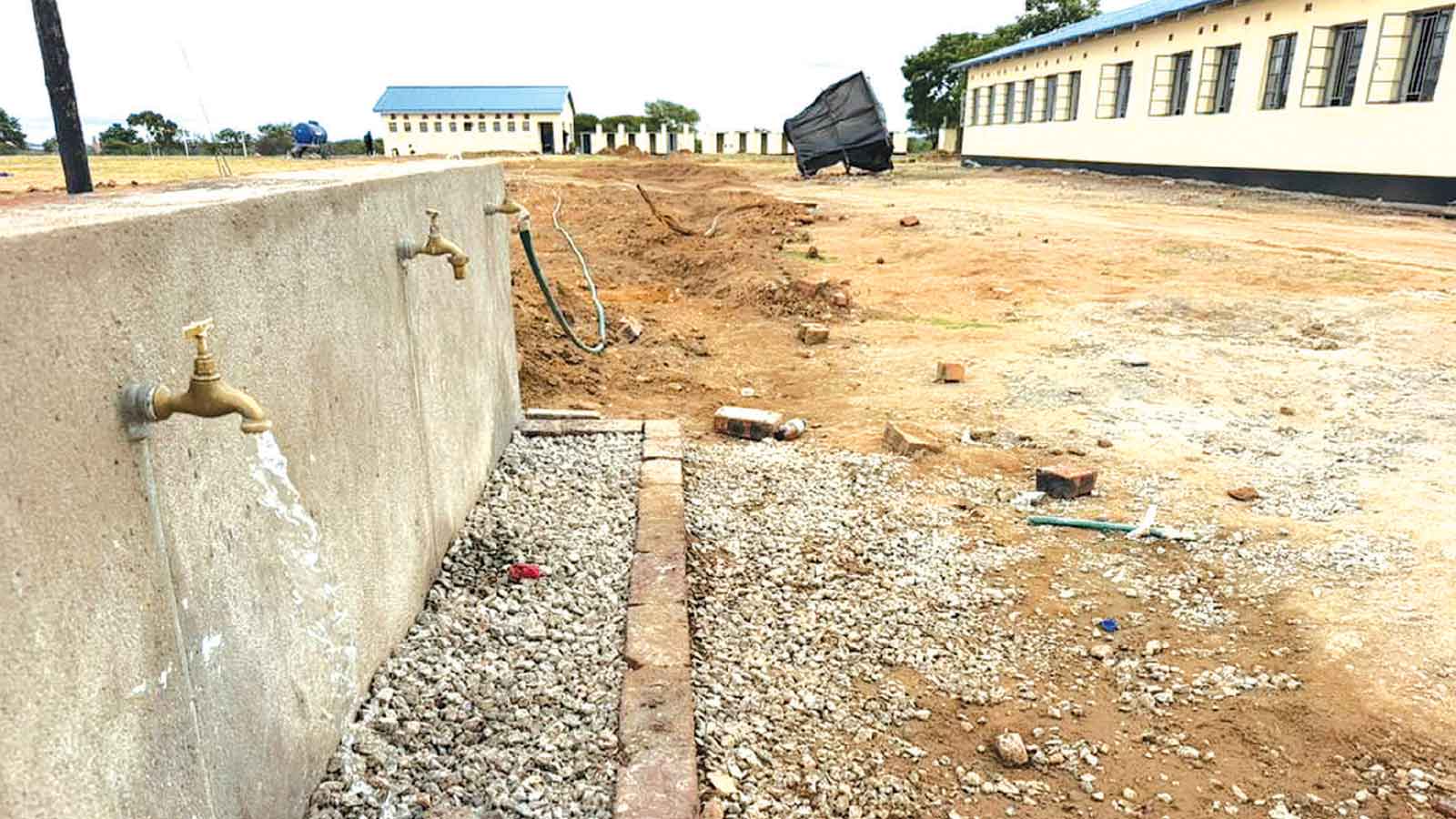
Emmanuel Kafe
THE hum of heavy machinery, the scent of fresh tar and the rhythmic clatter of construction tools have become the new soundtrack of life in Maphisa, Matobo district.
A place once defined by its quiet rural tempo is now pulsing with urgency, pride and expectation.
With six days to go before Zimbabwe marks its 46th Independence Day anniversary, this year’s national celebrations — set for Matabeleland South province — have triggered a sweeping transformation that residents say was long overdue.
From the moment one drives into Maphisa, the change is unmistakable. Freshly graded roads snake through the township.
New classroom blocks stand tall at Mahetshe. The imposing stadium — the centrepiece of the Uhuru festivities — is nearing completion, its terraces already whispering of the historic crowds they will soon host.
The air carries a sense of renewal.
“This is not just about independence,” says Mr Nkululeko Maposa, a local builder who has been part of the construction teams.
“This is about dignity. For years we felt left behind, but today, Maphisa is showing that development can reach every corner of Zimbabwe.”
The Government’s decentralisation thrust, taking national events to different provinces, is now bearing fruit here.
Across the district, schools have been upgraded, clinics refurbished and key road networks rehabilitated, connecting communities that for years battled poor accessibility.
At Mahetshe Primary and Secondary schools, the transformation is perhaps the most symbolic. New classroom blocks, science laboratories, teachers’ houses and modern ablution facilities now define what was once a struggling institution.
Mrs Lavedr Mguni, Mahetshe School Development Committee chairperson, speaks with quiet pride.
“For us, this is a dream realised,” she says, standing beside a freshly painted classroom block.
“Our children were learning in difficult conditions. Today, they have facilities that match any urban school. Independence has come early for Mahetshe.”
Her words are echoed by many in the community, particularly parents who believe the upgrades will change the trajectory of their children’s futures.
A few kilometres away, at the main venue for the Independence Day celebrations, activity is relentless.
Construction crews work day and night under floodlights to ensure the stadium is ready in time.
Engineers have installed modern drainage systems, while seating terraces, ablution blocks and access roads are being finalised.
“This place will make history,” says Mr Thulani Moyo, a transport operator who has been ferrying workers and materials to the site.
“We are expecting thousands of people leaders, dignitaries, ordinary Zimbabweans — all coming here. For us as locals, it is something we never imagined.”
Indeed, officials have indicated that this year’s celebrations will draw massive attendance, with Government ministers, senior officials and international guests expected to converge in Matabeleland South.
The commemorations will run under the theme “Zim@46 — Unity and Development Towards Vision 2030” — a reflection of the Second Republic’s drive to leave no one and no place behind.
Beyond the stadium, the ripple effects of the preparations are being felt across multiple sectors.
Roads linking Maphisa to surrounding areas have been rehabilitated, reducing travel times and opening up economic opportunities.
A newly upgraded airstrip is nearing completion, expected to improve connectivity and unlock tourism potential in a district rich in cultural heritage.
Health facilities have not been left behind either.
Clinics in the district have undergone refurbishment, with improved infrastructure set to enhance service delivery long after the Independence crowds have dispersed.
For local entrepreneur Mr Brian Dube, the transformation is already translating into opportunity.
“My grocery business has grown in the past few months,” he says. “Workers are here, visitors are coming and money is circulating. This is what development looks like on the ground.”
Women, too, are feeling the impact.
At Maphisa Shopping Centre, Ms Nelia Matebeke, who runs a small catering business, says demand has surged.
“I am preparing for Independence week like never before,” she says with a smile. “We are ready to serve our visitors. This is our moment to shine as Matabeleland South.”
Her optimism is shared by many who see the event not just as a celebration, but as a gateway to sustained economic activity.
Authorities have repeatedly emphasised that the infrastructure drive is not a temporary facelift, but part of a broader strategy to uplift communities.
Recent briefings by senior Government officials highlighted that several projects in Maphisa — some of which had stalled for years — have now been fast-tracked to completion.
The result is a district that feels renewed, confident and ready to host the nation.
For Mr Albert Ncube, a retired civil servant, the developments carry deep emotional significance.
“I was born here. I grew up here. And for a long time, we saw little change,” he reflects.
“But today, I can proudly say Maphisa is on the map. Independence is not just being celebrated here — it is being lived.”
As the countdown to Uhuru reaches its final stretch, the sense of anticipation is palpable.
Children gather near construction sites, watching in awe as machinery shapes their future. Vendors prepare their stalls. Community leaders coordinate final touches.
Everywhere, there is movement.
Everywhere, there is hope.
And when the national flag is hoisted this week, and the echoes of celebration fill the Maphisa air, it will not just mark another year of Zimbabwe’s independence.
It will stand as a testament to what targeted development, national unity and shared purpose can achieve.
For Maphisa, this is more than a moment.
It is a turning point.