Sidumisile Mabena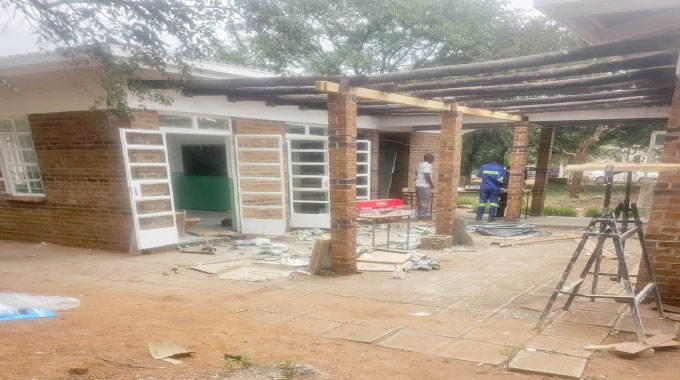
Sukulwenkosi Dube-Matutu
REHABILITATION of the Maphisa District Hospital primary care nurse training school in Matabeleland South, being implemented in the province as part of legacy projects, is expected to create new opportunities for rural communities to enrol for nurse training.
The training centre is anticipated to be completed before Independence, with its first intake expected in May.
Matabeleland South Provincial Public Works Director, Engineer Sijabuliso Ncube, said the target was to finish the renovation works by the end of the month.
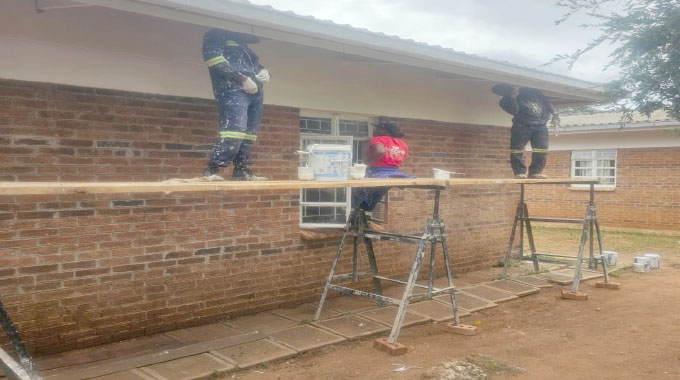
“The Maphisa District Hospital nurse training school building has been lying idle for a long time and the infrastructure has become dilapidated. Works to rehabilitate it are underway, having reached about 70 percent completion.
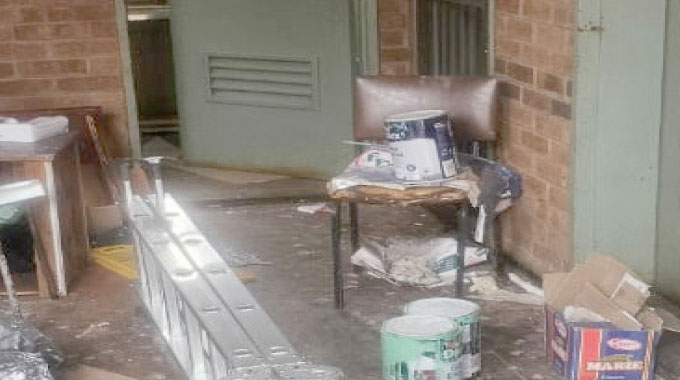
“Works we are doing include patching the roof and re-doing the entire ceiling. We are also doing an overhaul of the plumbing system, tiling and repainting the whole building. We are working day and night to ensure that we meet our target.
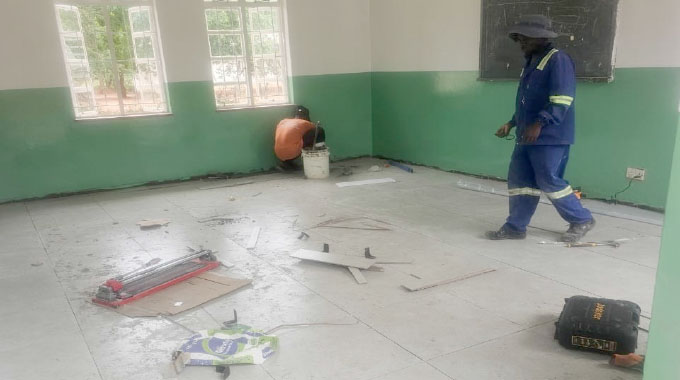
We expect to be done by 20 March; if we delay we will be done by end of the month,” he said.
The country has launched a major nurse training expansion programme aimed at strengthening health worker availability across Zimbabwe, with a particular focus on boosting staffing levels in rural and historically under-served districts.
President Mnangagwa continues to demonstrate resolute leadership in driving Zimbabwe towards a modernised and revitalised health sector.
The scaling up of nurse training is central to the Ministry of Health and Child Care’s plan to double the national health workforce by 2030, in response to rising demand for services and persistent staff shortages in public health institutions.
The long-term goal is to create and sustain at least 32 000 additional public health jobs by 2030, while reducing workforce attrition by 50 percent through targeted interventions.
Speaking during a tour of health facilities in Matabeleland South last week, Health and Child Care Minister Dr Douglas Mombeshora said the country could not meet its health delivery targets without significantly increasing the number of nurses and other frontline professionals trained annually.
“As you know, our target is to double our health workforce by 2030, but we cannot double it at the rate at which we are currently training. That means we must deliberately increase our training capacity, open more training schools and expand intakes so that we produce enough nurses to serve all provinces, particularly rural communities.
“We are working on re-opening the RGN training centre at Maphisa District Hospital and this should be done by Independence.
We also hope to open a nurse training school in Plumtree. The structure is there, but it had been converted to accommodation. By September, the Plumtree training school should have an intake,” said Dr Mombeshora.
He said the two institutions would increase the number of Registered General Nurses produced annually to 240, with each school set to run three intakes per year.
Dr Mombeshora added that there were plans to expand capacity at the Gwanda Provincial Hospital School of Nursing, increasing intake from 25 to 50 per session. He said the institution would also raise its annual intakes from two to three, enabling it to produce an additional 100 RGNs each year.
He said if all training centres improved their intake capacity and new schools were established, the country would be able to meet its workforce expansion targets. Plans are also underway to increase doctors’ training across universities that offer medical programmes.
Zimbabwe has, in recent years, experienced shortages of Registered General Nurses, Primary Care Nurses, laboratory scientists and other critical cadres, with rural provinces suffering higher vacancy rates than the national average.
The health sector is currently operating at below 50 percent of optimal capacity, a situation worsened by sustained outward migration. While the nurse training expansion programme will increase the national pool of health workers, Dr Mombeshora said it would also help correct imbalances in the distribution of personnel.
“In the long-term, we want to increase training to make sure that we train more local people. The previous system was biased towards those in urban areas who had connectivity and easier access to apply. We have now resolved that any district with a training school must recruit at least 50 percent of its students from that district so that we improve retention,” he said.
The decentralisation of student recruitment to district level is expected to ensure more rural youths gain access to training and eventually serve in their home communities.
Another training school at Plumtree District Hospital is also undergoing refurbishment to resume operations.
In Beitbridge, where no nurse training institution currently exists, Government is planning the construction of a new school to cater for the sprawling border district and its surrounding communities.



 Online Reporter