malvernmugadzikwa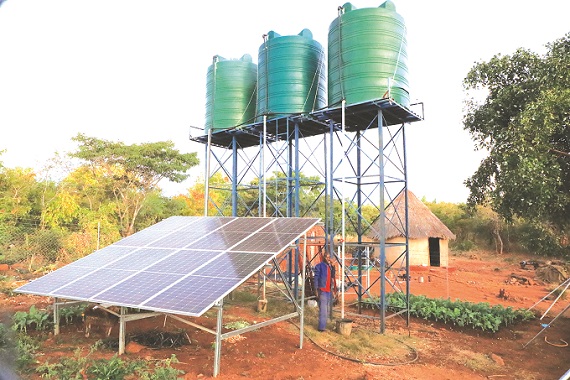
Word From The Market
Cliff Chiduku
IN 2021, the Government launched the Presidential Rural Development Programme, which is part of the Rural Development 8.0 initiative.
The initiative’s other components include Pfumvudza/Intwasa; the Presidential Cotton Input Scheme; the Presidential Goat Scheme; the Presidential Fisheries Scheme; the Presidential Tick Grease Scheme; the Presidential Poultry Scheme; the Presidential Borehole Drilling Scheme; and the Vision 2030 Accelerator Model.
The logic behind the multi-faceted programme, as enunciated by President Mnangagwa, is that Zimbabwe must emerge as a prosperous, empowered and
upper-middle-income economy by 2030.
Agriculture is at the heart of this vision because nearly 70 percent of Zimbabwe’s population lives in rural areas and relies on the sector for livelihood. The programme also includes the rehabilitation of irrigation schemes and setting up of village business units (VBUs), school business units and youth business units.
This initiative looks at water as a right and an economic enabler, especially in the wake of changing rainfall patterns. The target is to establish a VBU in each of the 35 000 villages across the country that will be able to generate income, as well as ensure food and nutrition security. About 9 600 schools will also benefit from the programme.
The model prescribes that each unit should have a solar-powered irrigation system for horticultural production and fishponds for a fisheries project.
An integrated approach to the Presidential Rural Development Programme was adopted by the Ministry of Lands, Agriculture, Fisheries, Water and Rural Development, where agencies under its portfolio play specific roles contributing to the establishment and management of the VBUs.
AFC Commercial Bank provides financing, with the Zimbabwe National Water Authority providing water infrastructure, and the Agricultural and Rural Development Authority managing the units.
The Agricultural Marketing Authority (AMA) assists with identifying markets, which also informs the crops that the VBUs can viably produce. The programme is targeting rural areas, which have been lagging behind in terms of development.
Smallholder farmers play a crucial role in global food supply chains, particularly in developing countries.
These farmers, often operating in impoverished areas, are crucial for rural economies and food security.
However, many smallholder farmers face challenges due to inadequate market linkages. The lack of access to markets hinders their profitability and growth potential.
They often rely on mass markets such as Mbare Musika, Sakubva Market and Jahunda Farmers’ Market for the sale of their produce. They remain vulnerable to middlemen, who often rip them off.
Improving market linkages is essential for supporting smallholder farmers, enhancing investment opportunities, promoting sustainable farming practices and reducing post-harvest losses.
As a contribution to the Presidential Rural Development Programme, AMA has established effective connections between smallholders and markets.
Currently, farmers in VBUs are benefitting from increased productivity, better prices for their produce and improved livelihoods.
The Zunde VBU in Mount Darwin is testimony to the positive interventions by AMA, as it is now supplying Choppies Supermarket, Pachedu Wholesalers and the Chaminuka Training Centre.
The recently launched Makumimavi Primary School Business Unit has already signed an off-take agreement with Spar in Chivhu, whereby the former will supply the latter with 1 500 cabbages per week.
Picasso Fruit and Vegetable Wholesalers has also agreed to buy all produce from the Nhakiwa Youth Business Unit in Uzumba.
The Murambinda B School Business Unit will offload its produce to several boarding schools in Buhera district. As at May 30, 2024, the cumulative sales had reached US$34 633 at the 102 VBUs set up across the country.
Most VBUs are involved in horticulture, producing cabbages, onions, carrots and tomatoes, among other products.
The VBUs rely on such market linkages to expand their reach beyond local markets and are expected to transition from subsistence farming to commercial farming.
Access to such markets provide VBUs with opportunities to grow, diversify incomes and eradicate poverty for its members.
Enhanced coordination between farmers and retailers through market linkages enables better market information flow, leading to improved supply-demand dynamics and quality standards.
By reducing intermediary costs and enhancing efficiency in marketing systems, VBUs can increase their competitiveness and sustainability.
Additionally, market linkages help in reducing post-harvest losses by connecting farmers to reliable markets, where they can sell their produce at fair prices.
Overall, robust market linkages contribute to sustainable agricultural growth, food security, poverty alleviation and economic development in Zimbabwe.
Market linkages, therefore, play a vital role in the development of rural communities by empowering farmers with access to essential resources, markets and information necessary for their economic advancement.
With such life-transforming programmes, Zimbabwe is poised to achieve food and nutrition security, as espoused in the National Development Strategy 1.
Word From The Market is a column produced by AMA to promote market-driven production. Feedback: [email protected] or WhatsApp/Call +263781706212.



 Online Reporter