


 Online Reporter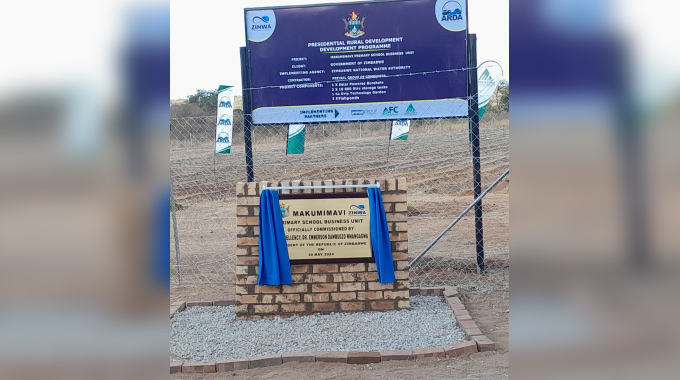
Patience Maturure, Agriculture Reporter
Farmers should conduct market research before planting crops to ensure that Village Business Units (VBUs) meet their intended objectives.
Mr Leonard Munamati, the chief director of Agricultural and Rural Development Advisory Services (Ardas), said this at the 115th edition of the Zimbabwe Agriculture Show (ZAS) in Harare.
“We encourage farmers to look for markets and do a market survey before they plant their crops so that they know where they will sell the various products they produce,” he said. “They should also know the volumes and quality that the markets want.”

By understanding the market, farmers can significantly boost their profits. “As you know, we have a target to set up these business units in each of the country’s 35 000 villages. We, therefore, expect farmers to come through to see and learn what the components of a village business unit look like so that they go back to their farms and communities and practise what they have seen here,” he said.
Mr Munamati said over 400 VBUs are already functional, with more than 1 000 at various stages of development across different wards.
“Here we are showcasing good horticultural agronomic practices that we expect farmers to employ in their VBUs within their communities. Generally, these are established in communal or farming areas, with farmers expected to work as groups,” he said.
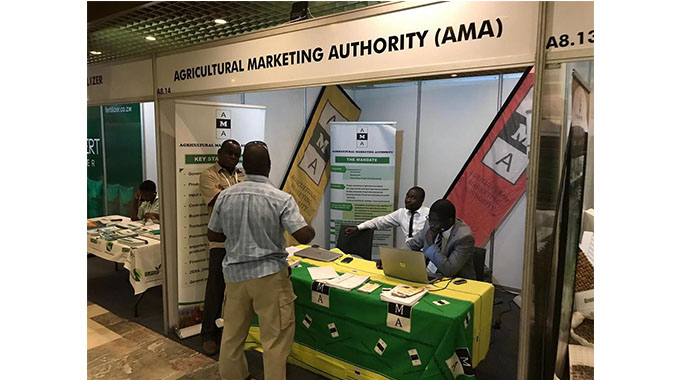
VBUs are receiving collaborative support from the government, the Agricultural and Rural Development Authority (Arda), and the Agricultural Marketing Authority (AMA). The government provides expertise on best agronomic practices, Arda ensures business viability, and AMA connects farmers to markets. This collective support drives the units’ success.
“A village business unit has a perimeter fence and a borehole drilled to supply water. The borehole is solar-powered, hence the installation of solar panels to trap energy from the sun. There is also drip irrigation to ensure plants get adequate water, as they are high-value crops. There are also fish ponds at the VBUs,” he said.
Essentially, VBUs are community-led initiatives that bring farmers together to work on agricultural projects, with support from the government and other stakeholders.
“We include two fish ponds in VBUs and keep other livestock units outside. We put in some livestock handling facilities to ensure that communities can bring their animals for watering and feeding, as well as spraying or vaccinating them if there is a need,” he said.
Mr Munamati explained that VBUs are a way of driving rural development and economic growth. By showcasing how they work at the show, officials hoped many farmers would see the model and be inspired to adopt it.

A horticulture specialist with the Ministry of Lands, Agriculture, Fisheries, Water and Rural Development, Mr Gerald Masikati, said VBUs were transforming farmers’ livelihoods in terms of income generation and employment creation.
“The impact is being felt in most of these business units because all the villages are now able to feed themselves. As a ministry, we also have some partners that we are working with. The UNDP has approached the President and indicated their intentions to work with our ministry in implementing and setting up these business units,” he said.
Mr Masikati said he was expecting extension staff and farmers to leave the show with a clear understanding of the VBU model and its benefits.
“Those who already have VBUs are seeing success by working together as teams — from planning to production and marketing. We want visitors to our stand to learn the importance of market research and shift their approach from the ‘grow-and-sell’ model to ‘growing to sell’,” he said.
The goal is to change farmers’ mindsets to focus on producing for specific markets rather than just hoping to sell after harvesting.



 Bongani Ndlovu