Tanaka Nkala, [email protected]
EVELINE High School in Bulawayo has emerged as a model of youth-led innovation after its Green Cycle Project — an environmental initiative that converts organic waste into liquid fertiliser — earned national and international recognition.
Commissioned by Bulawayo mayor Councillor David Coltart in May last year, the project addresses one of the city’s most persistent challenges of mounting organic waste from markets in the central business district. At the same time, it is nurturing climate consciousness, entrepreneurship and practical science skills among young people.
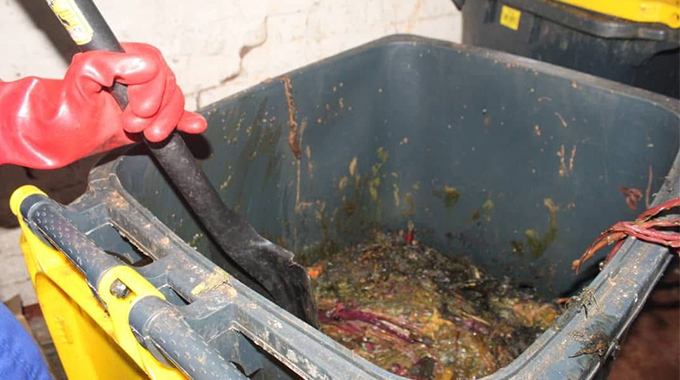
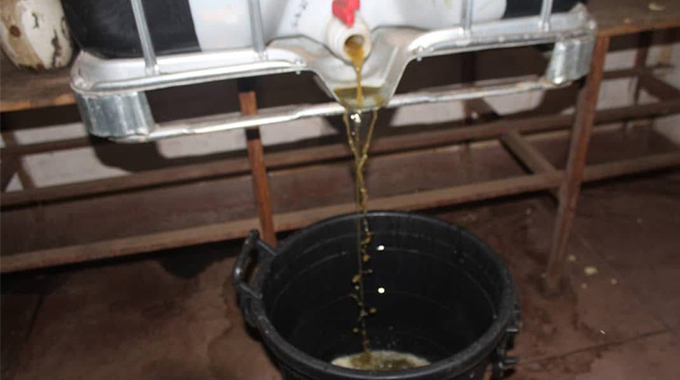
What started as a modest classroom experiment has evolved into a community-wide intervention, transforming tonnes of discarded vegetables, fruit peels and market refuse into a nutrient-rich liquid organic fertiliser branded GreenFed.
The fertiliser has since been donated to hospitals, schools and community gardens across Bulawayo, including United Bulawayo Hospitals (UBH). As part of its broader waste-management contribution, the school also donated metal refuse bins to the Bulawayo City Council (BCC), helping improve cleanliness in the city centre.
The project’s impact attracted the attention of Siena Solutions, a United States-based organisation that supports innovative responses to global challenges. Siena Solutions identified Green Cycle as one of the standout community-driven initiatives, commending its strong emphasis on project-based learning and student leadership.
Project supervisor Mrs Gladmore Busumeni said the initiative was born out of observation and necessity.
“The learners themselves identified a problem around Jason Moyo Street and Fifth Avenue, where waste from fresh produce markets had turned this section of the city into a dumping site as biodegradable waste piled up due to inconsistent refuse collection,” she said.
The learners then mobilised themselves through the school’s Young Entrepreneurs Club and responded to the challenge.
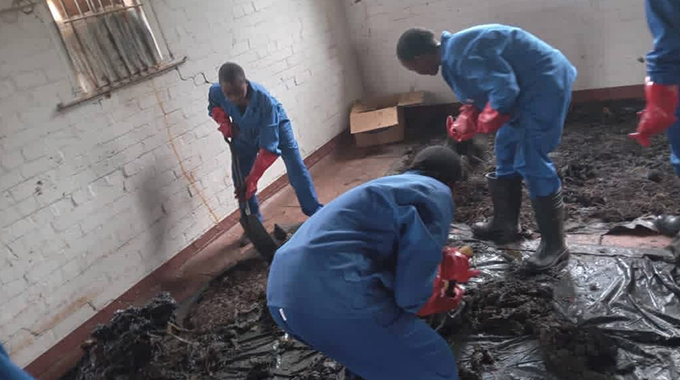
“They started collecting organic waste from the markets and experimenting with composting methods at the school,” said Mrs Busumeni.
Initially, the project involved just eight learners and two 20-litre buckets used for trial testing and research. During the process, the team discovered that the liquid produced during decomposition was richer in nutrients than solid compost, prompting a strategic shift towards liquid fertiliser production.
A major breakthrough came when the project was submitted to the Siena Solutions Challenge through Digital Promise, following a referral by a former teacher. Eveline High School was selected under the Model Schools Programme and awarded seed funding of US$5 000.
The funding enabled the school to scale up operations through the purchase of large composting tanks, personal protective equipment for learners and support for waste collection logistics.
“As the project expanded, participation also grew. We moved from eight learners to 30 girls actively involved, supported by a duty roster for waste collection and processing,” said Mrs Busumeni.
Councillor Coltart later visited the school during a city-wide environmental awareness campaign, an engagement that resulted in Eveline High being invited to apply for the Bulawayo City Council Youth Climate Action Change Fund, supported by Bloomberg Philanthropies.
The school secured a further US$5 000 grant, which supported fertiliser packaging, branding, distribution, awareness campaigns and the establishment of social media platforms.
While the school remains cautious about disclosing full technical details, GreenFed is certified organic and has undergone nutrient testing at the Matopos Research Centre.
Eveline High School headmistress Mrs Doris Ngwenya said the project exemplifies education beyond the classroom.
“Our girls are learning science, entrepreneurship, environmental stewardship and community service all at once. They are solving real problems affecting Bulawayo,” she said.
Mrs Ngwenya added that the Green Cycle Project builds on the school’s long-standing culture of innovation, noting that Eveline High learners were previously recognised for developing cereal products derived from fruit.