

 admin
admin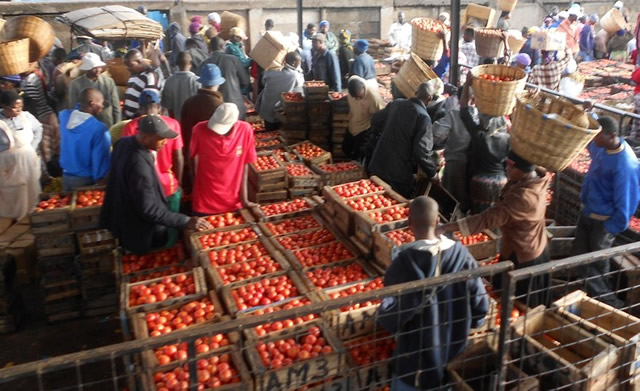
Sharon Shayanewako
DWINDLING tomato supplies at the markets have triggered a hike in prices of the commodity amid revelations that the country has turned to imports from Zambia to meet the ever-increasing demand for the product.
Knowledge Transfer Africa (KTA) chief executive officer Mr Charles Dhewa recently told The Herald that importing tomatoes from Zambia was the only option at the moment, as local supplies were failing to meet demand, leading to the skyrocketing of tomato prices.
“Currently the demand and prices of tomatoes have been rapidly increasing such that traders are going to Zambia to procure cheaper tomatoes.
“From a price perspective, a 30 kg box of local tomatoes has been going for US$20 to US$28 while a box from Zambia has been selling for between US$12 and US$18.
“Importing has become a strategy to reduce the soaring prices of tomatoes so that they are affordable to the majority of consumers,” explained Mr Dhewa.
Mr Dhewa said 200 tonnes of tomatoes were being received at Mbare market daily.
“Mbare market receives at least 200 tonnes of tomatoes daily and major producing areas are Mutoko, Murehwa, Macheke, Beatrice, Chegutu and parts of Marondera as well as Banket.
“However, there has been a lot of peri-urban and greenhouse tomato production around Harare and other cities,” said Mr Dhewa.
He added that tomato pests like Tuta Absoluta were also affecting local production in some areas, leading to lower supplies, which were triggering high prices and inviting imports from Zambia.
Zimbabwe Commercial Farmers Union (ZCFU) president Dr Shadreck Makombe stressed that the major cause for the shortage of tomatoes at the markets was that most farmers had a tendency of producing tomatoes in the rainy season only and ceased production during the winter or dry season.
“When farmers produce tomatoes, they do so during the same period and cause an influx, as they take advantage of rains because most of them do not have irrigation. Naturally most farmers doing rain-fed agriculture go into horticulture during the wet season and tomatoes are among the crops they produce,” observed Dr Makombe.
He added that tomatoes were largely affected by frost during winter season hence farmers did not want to produce them under unconducive weather conditions.
“When there is no water especially in winter season. Crops in many areas are affected by frost and farmers are not comfortable producing them during that time.
“As it stands now there is shortage of tomatoes at the markets because there are few farmers who have gone into producing them as a result of the winter season and there are also a few who have got greenhouses,” he said.
Zimbabwe Integrated Commercial Farmers Union president Mrs Mayiwepi Jiti said tomato shortages on the market could be spearheaded by the volatility in the economy and lack of marketing strategies.
“Even though it is a good crop to grow, it has its own challenges. Tomatoes glut or shortages on the market can be fuelled by volatility and lack of proper marketing strategies.
“Additionally, high costs of production and use of expired or fake chemicals and fertilisers, which are available on the market. These cause huge losses due to amounts used on re-application, as well as an increase in diseases due to infective chemicals used.
“There is need for farmers to have an organised and effective marketing system controlled by the farmers themselves, to cut the use of middleman in the marketing system”, Mrs Jiti suggested.
Most farmers venture into production of tomatoes more than any other cash crop due to the high demand and high price they sometimes fetch on the market.



 Online Reporter