Chronicle Editor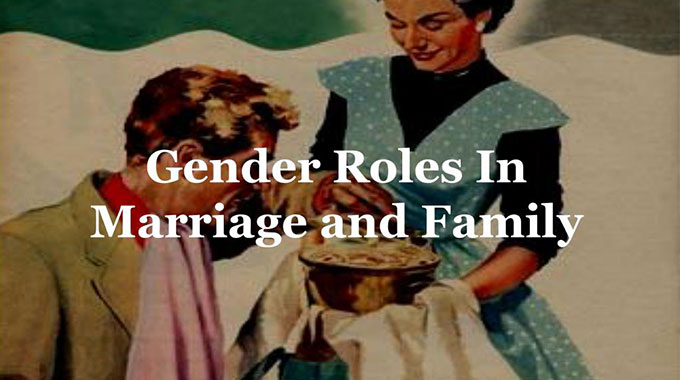
Yoliswa Dube-Moyo
ALISON, the Wife of Bath in Geoffrey Chaucer’s Canterbury Tales is a complex person, both outspoken and sensitive, highly sexual and most definitely anti-establishment. She is in some narratives regarded as the first feminist. The Wife of Bath’s Tale was written around 1386 and what makes this wife special is the fact that she is the only ordinary female in a group of male pilgrims and nuns who are on a pilgrimage that begins at the Tabard Inn in Southwark, London and ends in Canterbury in the county of Kent.
But Alison is not ordinary. At a time when the majority of women were second class citizens, expected to accept the dominance of men with a passive humility, she oozes with rebel passion and self-belief. She is very upfront about her femininity and has, in relations with men, used it to good effect throughout her adult life.
In medieval times, women were supposed to remain virgins until they were married and if marriage wasn’t for them when young, it was off to the nearest nunnery. At least that was the norm. A woman who became “an old maid” or committed adultery was held in low esteem.
Alison is a strangely modern woman who knows her place yet is willing to fight tooth and nail for equal rights in marriage. She wants equality with men, especially within marriage, and is not afraid to say so. The issues she raises are still relevant today — the role of women in society, social injustice and the sexual tensions between men and women.
A lot of modern-day women are like Alison. Unlike back in the day when mothers were raising wives while their husbands made the great trek to their factory jobs in the cities, nowadays mothers are raising doctors, lawyers, academics and politicians. Women and girls are continually being empowered in different realms such that what are now considered olden day ideals are thrown out the window.
The dynamics of marriages for a significant number of present-day young adults has changed. Few still uphold traditional values. This is primarily due to socialisation. Every society is faced with the necessity of making a responsible member out of each child born into it. The child must learn the expectations of the society so that his behaviour can be relied on.
In the process of socialisation, the individual learns the reciprocal responses of the society. In certain sections of society, some boys are socialised to believe certain tasks should be carried out by women. Others are taught not to eat okra, which was meant for women and weaklings because how would a real man be ready for war on an okra-filled stomach?
Some boys become dysfunctional husbands and fathers because they were taught not to turn on the stove as long as there was a woman in the house. Because our fathers would not stand up to switch on the kettle and make themselves a cup of tea as long as their wives were home, some men today expect their wives to always be on their beck and call. Tensions rise over who should do what in the home. Back in the day, gender roles were clearly defined and the man went out to fend for his family.
The economy relatively allowed one breadwinner in the home with the assistance of subsistence farming mostly carried out by the woman. The woman also stayed home to take care of the family and bear the man children. But in most households nowadays, both the husband and wife have to work in order for the family to progress. The only snag is men and women are equal in the boardroom but gender roles in the home remain unadulterated.
The woman has to work up the corporate ladder and still get home to change diapers, cook and take care of her man. Sadly, society frowns upon men who step up and make themselves useful in the home. A man is seen doing laundry and the neighbours say he has been bewitched. He straps his baby on his back and carries his woman’s bag, more scorn comes his way. Boys should be taught that doing household chores is part of being a functional adult. They should know that it’s okay to cry because men are emotional beings too.
Gender roles, also known as a sex roles, are social roles encompassing a range of behaviours and attitudes that are generally considered acceptable, appropriate, or desirable for people based on their biological or perceived sex. Gender roles are usually centred on conceptions of masculinity and femininity, although there are exceptions and variations. A man is considered masculine by his ability to provide for his family while a woman’s femininity is measured against her ability to bear children.
The specifics regarding these gendered expectations may vary substantially among cultures, while other characteristics may be common throughout a range of cultures. There is ongoing debate as to what extent gender roles and their variations are biologically determined, and to what extent they are socially constructed.
Various groups, most notably the feminist movements, have led efforts to change aspects of prevailing gender roles that they believe are oppressive or inaccurate.
In the midst of issues of gender roles, social construction, femininity and masculinity flying around, marital submission complicates the matrix in many marriages. Marital submission is one of the most resisted concepts the Bible teaches, simply because of a faulty understanding of its meaning.
Marital submission is when a wife voluntarily and willingly chooses to submit herself under her husband’s leadership and authority, in their marital relationship.
According to the Bible, the man is the head of a woman, therefore the position of the husband as a leader is biblical.
Some wives fail in the area of marital submission because they feel that it is degrading and unfair. This is a wrong view of what marital submission is.
Submission does not mean a wife is inferior to her husband. Both are created in the image of God and therefore have equal worth. It is wrong for a husband to force his wife to submit to him. The wife is not a maid, an employee or a child, and is not to be abused in the name of submission. She must freely share her ideas and opinions with her husband and must not simply agree with everything her husband says.
At the end of the day, married couples must always thrive towards unity and having a peaceful home. When a wife really loves her husband and pleases him by submitting to him, there will be peace in the marriage. Husbands on the other hand must love their wives wholeheartedly. It is an instruction from God; that men love their wives like Christ loved the church.
Feedback: Twitter handle @Yolisswa or WhatsApp +263774492700



 Online Reporter