Online Reporter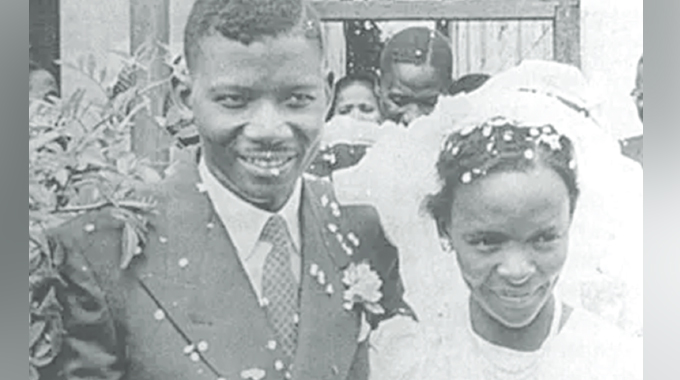
Fatima Bulla-Musakwa, [email protected]
As Zimbabwe marks Heroes’ and Defence Forces Day, the nation pauses to remember the lives lost, the battles won and the sacrifices that secured Independence.
Among the lesser-told stories of the liberation struggle is the sacrifice made by spouses, who placed the cause of freedom above personal comfort, family life and domestic stability.
For many of these couples, love was tested not by ordinary hardship, but by detention, exile, imprisonment and death.
Some were separated by borders and prison walls. Others were forced to raise children alone, while their husbands endured restriction, torture or political persecution. In many cases, the struggle for Zimbabwe’s liberation demanded that marriage itself be redefined — not merely as a union between two people, but as a shared commitment to national freedom.
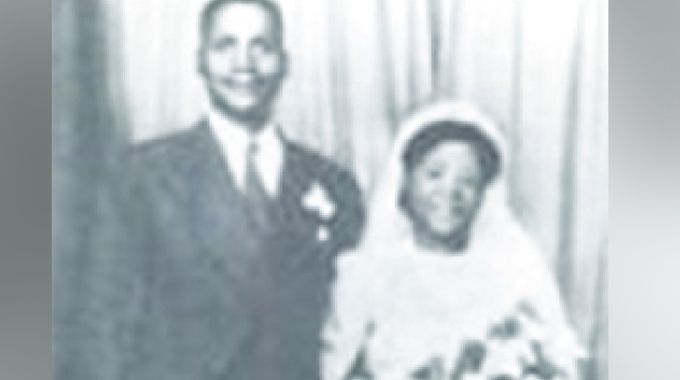
Seven such couples now lie in honour at the National Heroes Acre: Cdes Joshua Mqabuko Nyongolo Nkomo and Johanna “Mama Mafuyana” Nkomo; Joseph and Maria Msika; Simon Vengesai and Maud Muzenda; Josiah and
Ruth Lottie Nomonde Chinamano; Leopold and Sunny Ntombiyelanga Takawira; Herbert and Victoria Chitepo; and Eddison and Julia Zvobgo.
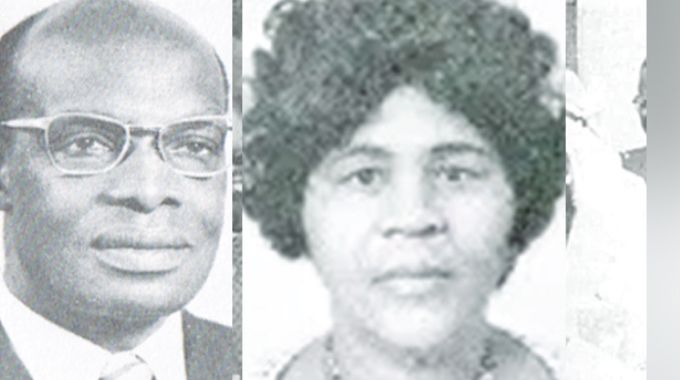
Josiah and Ruth Chinamano
Veteran nationalist and Zanu PF Central Committee member, Cde Ruth Lottie Nomonde Chinamano, affectionately known as Chipembere, met her husband Cde Josiah Chinamano in 1949 while on holiday in Port Elizabeth, South Africa. They married the following year in King William’s Town on September 30.
Originally from South Africa, Cde Ruth moved to then Rhodesia after her husband completed his first degree at Fort Hare University. Cde Josiah, who was born in Epworth, went on to teach at several educational institutions after completing his studies.
In 1955, Cde Ruth accompanied her husband to Birmingham in the United Kingdom, where both pursued further studies while also taking part in political meetings. He obtained a Diploma in Education, while she completed a Diploma in Social Welfare. Later, she remained behind to continue her studies and community development work.
On returning home, Cde Josiah became a headmaster, supervisor of Methodist schools and later a lecturer at Mutare (Umtali) Teacher’s College, while Cde Ruth taught at Waddilove Institute in Marondera. She became deeply involved in community work, particularly among women in rural areas, and used her own car to transport them to meetings and programmes.
She also joined the struggle against racial discrimination while teaching at Mutare Teacher’s College and Waddilove, where she taught future nationalists, including Dr Sydney Sekeramayi and the late Dr Herbert Ushewokunze.
Cde Ruth was among the founding members of the National Democratic Party and even made the back of her shop in Highfield available for use as the party’s office. When the party was banned, she immediately joined Zapu.
On 16 April 1964, Cde Ruth was detained at Gonakudzingwa together with her husband and Dr Joshua Nkomo. As the only woman in the detention centre, she endured one of the harshest environments used to crush nationalist resolve.
Her husband was later declared a restricted person in 1965 after demanding political rights from the Rhodesian government.
Despite their detention, Cde Ruth remained active, participating in the Gonakudzingwa Education Programme for political detainees and in a clinic serving local people. For 10 years, the couple were separated from their five children, who were between the ages of two and 11 at the time.
The couple were later transferred to Whawha Prison, where they remained until their release in 1970, though they were still confined within an eight-kilometre radius. They were arrested again that same year after the people reacted violently to constitutional proposals made by the Ian Smith regime. They were later held at Marondera (Marandellas) Prison before their release in 1974.
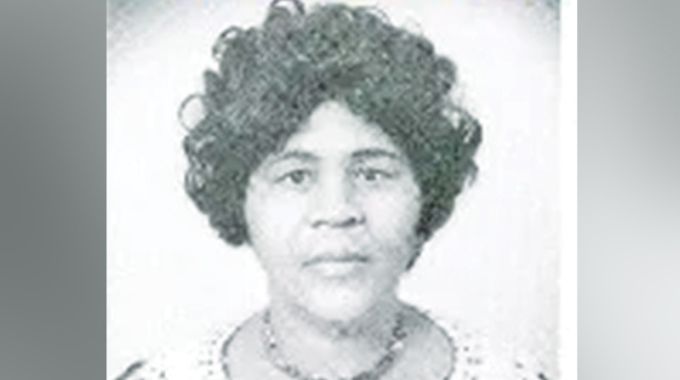
Cde Josiah was buried at the National Heroes Acre in Harare on October 6, 1984, while Cde Ruth was laid to rest there 21 years later.
The late former President Robert Mugabe described Cde Ruth Chinamano as an affable, engaging and unyielding fighter for equality and justice, saying she and her husband had selflessly opened their Highfield home to many comrades in need.
Defence Minister Oppah Muchinguri-Kashiri also praised her sacrifice, saying Cde Chinamano gave up her life, and much of her time with her children, in order to liberate the country.
Leopold and Sunny Ntombiyelanga Takawira
Another remarkable couple was Cde Leopold Takawira and his wife Sunny Ntombiyelanga Takawira.
They married on September 2, 1955 in Gokwe and had three children together. Cde Sunny also became stepmother to her husband’s six children, and one of her stepdaughters later described her as a woman who carried out her maternal role with great love.
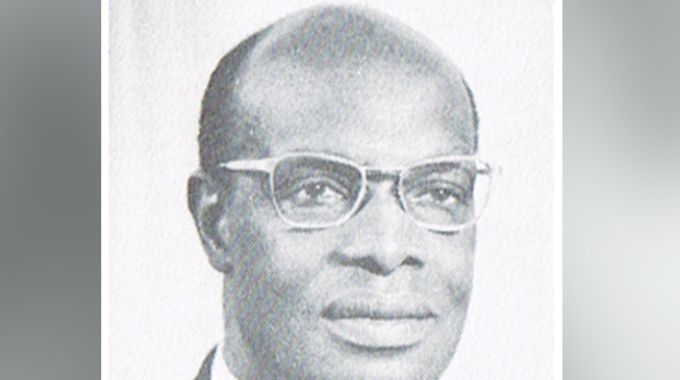
Born in Filabusi, Cde Sunny was educated at Hope Fountain Mission, trained as a nurse at Mnene Mission Hospital in Mberengwa and worked at Gokwe Hospital after graduating. In 1955, she joined Harare Central Hospital, where she was among the pioneer nurses in the casualty and outpatient departments.
Her home at 3851 (Y8) Jabavu Drive in Highfield became a meeting place for early nationalists holding secret discussions. She was later persecuted by the settler regime for assisting political detainees, and she also provided medication and shelter to freedom fighters returning from training.
Her husband, a veteran nationalist and founding vice-president of Zanu, was known as the Lion of Chirumanzu. He worked as a teacher before becoming active in nationalist politics. In 1963, as the Smith regime moved to strengthen
Unilateral Declaration of Independence, Cde Takawira was arrested and imprisoned.
He endured detention at Salisbury Central Prison, Whawha and Sikombela, where he was tortured by the Rhodesian authorities. He was later moved to Salisbury Prison, where his health deteriorated and he spent five years suffering from diabetes without proper medication.
He died in Salisbury Prison on June 15, 1970. His widow said she was never informed that he was ill or that he had died.
Reflecting on the burden carried by women in the liberation struggle, Cde Sunny said it was difficult to explain how she survived with her husband in detention while also struggling to provide for the family.
“It was a terrible time for me. We were only allowed to see him once a week. So, if I had a day off during the week I would visit him. But if I had a day off at the weekend, I couldn’t see him,” she said.
Herbert and Victoria Chitepo
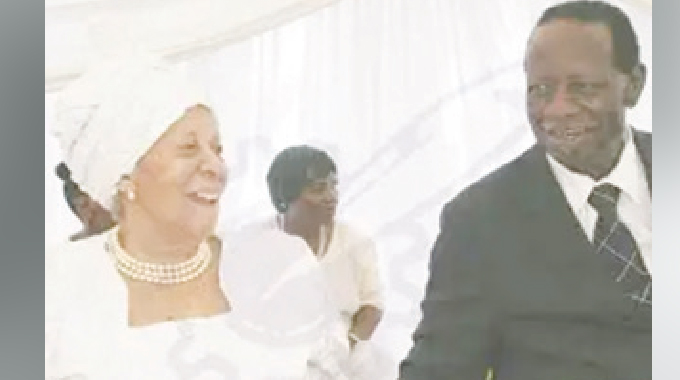
Herbert Chitepo and his wife Victoria also contributed immensely to Zimbabwe’s liberation struggle.
Born in Nyanga, Cde Herbert Chitepo was raised by Anglican priests at St Augustine’s Mission in Penhalonga after his parents died when he was young. A brilliant learner, he attended Adam’s College in Natal, South Africa, before going to Fort Hare University, where he graduated in 1949 with a Bachelor’s degree in English and History.
In the early 1950s, he left for London as a Shona research assistant at the University of London’s School of Oriental and African Studies. He later studied law at the Inns of Court and became an Advocate of the High Court of Rhodesia in 1954.
He married Victoria Fikile, a South African-born teacher, on November 30, 1955 at Sydney Road Presbyterian Church in Durban. Their reception was held at Runyararo in Mbare.
Inspired by her husband’s political work, Cde Victoria helped organise women to march in protest and coordinated support for detainees in places such as Sikombela and Marondera (Marandellas).
The Zanu national chairman was assassinated in a bomb blast in Lusaka, Zambia, on March 18, 1975. His widow died on April 8, 2016 at her home in Mt Pleasant, Harare.
Joshua and Johanna Nkomo
The late Vice President Dr Joshua Mqabuko Nyongolo Nkomo and Johanna “Mama Mafuyana” Nkomo were married on October 1, 1949 and had four children.
Cde Nkomo led several nationalist movements, including the old ANC and later Zapu, and spent long periods under restriction and detention. While he travelled and endured the demands of the struggle, Mama Mafuyana carried the burden of raising the family and ensuring the children were educated.
Known for her warmth, she became a mother figure to many young cadres passing through training camps, refugee centres and educational institutions, earning her the title “mother of the nation”.
Yet she, too, suffered harassment from the colonial regime. Shortly after giving birth to Sehlule in 1964, her home was raided by the Southern Rhodesia Special Branch. In a defiant act, she hurled a can of lactogen at the intruders and was detained at Western Commonage.
Simon Vengesai and Maud Muzenda
The late Vice President Simon Vengesai Muzenda and his wife Maud were also central figures in the struggle for Independence.
Born in Gutu, Dr Muzenda played a guiding role in the formation of the National Democratic Party and later served in Zapu after the banning of the NDP. He endured detention at Whawha, Sikombela and Harare, among other places of incarceration.
His wife was repeatedly harassed by colonial authorities because of her support for his political work. After Independence, Ambuya Muzenda became active in programmes aimed at improving the lives of women, especially in Gutu and the broader Masvingo Province.
She died on August 22, 2003, while her husband passed on the following month.
Joseph and Maria Msika
The late Vice President Joseph Msika and his wife Maria also lived through the pain of political separation.
Cde Msika was repeatedly detained for nationalist politics, including at Gonakudzingwa in 1964, while his wife supported the family and took part in demonstrations against the colonial regime. She was also among the women who helped establish trading sites for women in Bulawayo.
Their son, Maxwell Msika, later said his mother was detained several times to pressure his father to come out of hiding. The late Simon Khaya Moyo described her as a woman of extraordinary determination who held the family together through years of hardship and imprisonment.
Eddison and Julia Zvobgo
Cde Julia Zvobgo met her husband, Cde Eddison Zvobgo, in 1961 at Usher Mission while studying for a Diploma in Domestic Science. Before that, she had worked as a teacher after obtaining a lower teacher’s certificate in 1958.
When her husband left for the United States on an education scholarship, she remained at home because she was expecting their first child. Her first direct experience of racial repression came when she witnessed his arrest after his return from the US. He was sentenced to 18 months in prison.
After joining Zanu at its formation in August 1963, Cde Julia and other young women bore the brunt of colonial repression, which intensified under the Rhodesian Front. When Zanu was banned in 1964, her husband was detained and restricted at Sikombela and other camps across the country.
She was constantly harassed and tortured by Rhodesian security agents, who accused her of smuggling political messages between her husband and fellow detainees. Later, while in exile in England, she raised their children and instilled African values and Zimbabwean identity in them.
When her husband went to Mozambique to join the armed struggle, she went to Notre Dame University, where she obtained a Master of Science degree in Administration in August 1978. After her studies in the United States, she later joined her husband in Mozambique, where she was elected Administrative Secretary for Women’s Affairs.
She retired from active politics in 1990 to focus on family business and encouraged her husband to retire from politics and concentrate on lecturing and mentoring their grandchildren.
Her family described their marriage as difficult but deeply committed, while her daughter said her mother supported her father through years of struggle in and out of prison. Cde Julia was widely regarded as the heart and soul of her husband, an intellectual, legal strategist and maverick politician.
A shared legacy
In the history of Zimbabwe’s liberation, these couples remind the nation that the struggle was carried not only by men on the frontline, but also by women who held families together, endured harassment and sacrificed personal peace for a greater national cause.
Following the death of Ambuya Msipa, Cde Martin Dinha said Zimbabwe can never underestimate the role played by women like her, Ambuya Muzenda and Mama Mafuyana, who stood beside their husbands throughout the liberation struggle.