admin
admin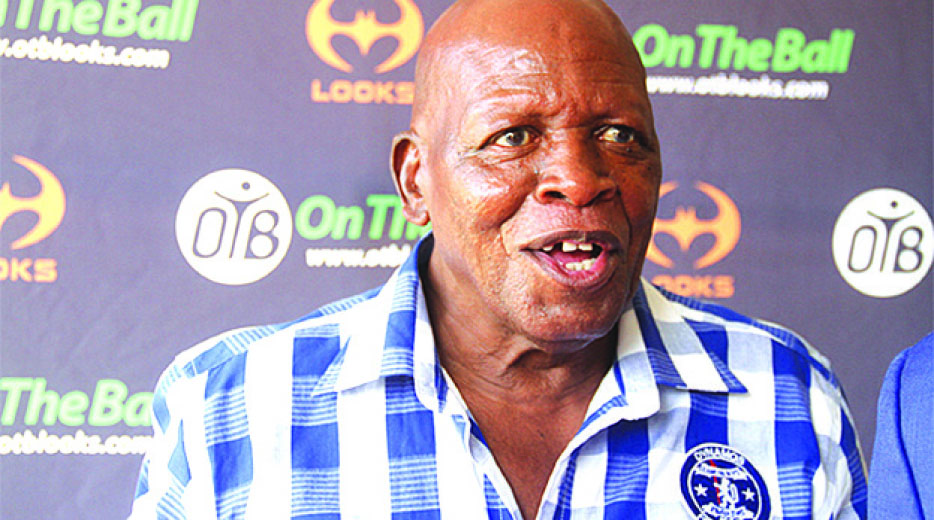
Eddie Chikamhi Senior Sports Reporter
CHAIRMAN of the Dynamos board Bernard Marriot-Lusengo says the founding fathers of the Glamour Boys are not given the credit they deserve for standing up during the difficult days of the extremely racial colonial Rhodesia and establish a strong football force that has become a huge part of the nation’s history.
Dynamos were formed in 1963, after a group of 20 black players from the multi-racial Salisbury United and Salisbury City came together to challenge the white supremacy that prevailed in football.
The idea to establish a blacks-only football club was crystallised with the support of J.K Walker from the Tobacco Sales Company and Sam Dauya assisted the players form the team.
Marriot-Lusengo went down memory lane, chronicling the genesis of the club that has since blossomed to become one of the most decorated in Southern Africa.
The former winger, who was part of that trailblazing class of the early ’60s, said the club owed a lot to their founding fathers, who included the late Obadiah “Wasu” Sarupinda, Patrick “Amato the Devil ” Dzvene, Ephraim Mpariwa, Richard Chiminya, Nathan Maziti, Josiah Akende, Jairos Banda, Danny “Bricks” Thomas and Alois Mesikano.
“In November 1962, it became impossible for multi-racial football to exist because of the racism in the Smith regime. So the two multi-racial clubs — Salisbury City and Salisbury United — disbanded,” he said.
“Some of us were still young then, maybe 14-15 years. We didn’t even know what a constitution was. Even if we were given the franchise of Salisbury City, I didn’t know what it meant.
“So the black players from both teams came together and formed Salisbury City because it was the one that was popular. They gave us an option to adopt their franchise and they gave us their uniforms as well. This is way back in 1962. We used to be paid five pounds for a win and it was heaven that time.
“As time went on this guy called Naricisus Murambiwa crafted the name Dynamos. He was a very big football enthusiast. He read a lot about football and he suggested we call the team Dynamo after Dynamo Kyiv of Russia, which was one of the top teams in Europe in the 1960s.
“So we agreed as a group but then we felt it didn’t sound good to us. (Morison) Sifelani suggested that let’s try and find out what a dynamo is and then we decided ‘why don’t we call ourselves Dynamos’. That’s how the name was crafted through Naricisus Murambiwa Nengare.”
Dynamos, who are set to celebrate their 60th anniversary in 2023, started playing professional football in 1963 and the team won the coveted double of the league championship and the Austen (FA) Cup in their debut season.
The team’s exploits, mostly against the whites only teams, inspired many young black people to believe in their capabilities in all spheres of life.
Over the years, DeMbare have won a record 21 league titles, and several other local trophies.
They have also been the country’s flag bearers on the continent. The Glamour Boys have a CAF Champions League silver medal, from the 1998 final, which they lost in controversial circumstances to Cote d’Ivoire side, Asec Mimosas.
Dynamos also produced arguably the greatest ever player to have graced Zimbabwean football stadiums in the form of George Shaya, a five-time Soccer Star of the Year award winner.
The late Freddy Mkwesha, who played in Portugal for 13 years, was the first Zimbabwean export to Europe while the first player to ply his trade out of Zimbabwe also came from Dynamos in the form of Patrick Dzvene, who in 1964 played for Ndola United in Zambia.
While Mkwesha, who went to play for Portuguese topflight side Sporting Braga in the mid-1960s was a great deal, Marriot-Lusengo reckons Dzvene was miles ahead of Shaya, who is widely regarded as one of the best talents ever produced in this country.
“We called him ‘Amato the Devil’ because when push comes to shove he would lift up his right hand and after that nobody would touch him. He would dribble all the opponents’ defenders and score.
“George Shaya was five times Soccer Star of the Year but he never got anywhere near Patrick Dzvene. What of Freddy Mkwesha, who became the first football export abroad who went to play in Portugal and was the second highest goal scorer to the late ‘Black Panther’ Eusebio?” said Marriot.
He said Dynamos are not given the recognition they deserve for shaping the landscape of Zimbabwean football.
“Such people, in fact Dynamos as a whole, we are not being given the credit that we deserve for having formed Dynamos against a background of the repressive regime.
“I may be lost; but His Excellency (President Mnangagwa) will not forget that there is Dynamos. I am one of the people who visited him in 1966-67 when he was on death row at Khami Prison.
“He along with (former) vice-president Kembo Mohadi, my cousin Harold Ndlovu and the late Boris Nyazika were political prisoners. They were young then and we were disturbed why they got incarcerated.
“But they would often say to us ‘young men do not let a white man join this team because we want the whole world to know that if an African is left alone in Zimbabwe they can do things on their own,” said Marriot-Lusengo.
Marriot said he was discovered while playing for Stodart Hall Boys Club, along with legendary Peter “Thunderboots” Nyama and George Chatyoka.
They were rivals with Mai Musodzi Hall who had players like Clever Hunda, David Madondo, Daniel Chikanda and Webster Marechera, who is now secretary-general of DeMbare.
But when Dynamos was formed, Marechera had skipped the border to join the liberation struggle where he operated from the Eastern Highlands.
Some of the key members in the formative days of Dynamos include Mkwesha, Lovemore Ben, Sydney Dick, Thomas Karungaire, Lovemore Chandiyangana, Jimmy “Daddy” Finch, Lameck Mlambo, Allan Hlatywayo and Simon Machaya.
Most of the founders are now late. But Marriot-Lusengo is planning a grand reunion with the families next year as part of the club’s 60th anniversary celebrations.
“I hope that as my departed peers drift yonder, they don’t remain a distant memory. Their footprints will forever remain printed on the club’s doorstep.
“The children and families of the founding fathers of 1963 are going to be given prominence and publicity during the yearlong anniversary celebrations in 2023,” said Marriot-Lusengo.
However, the 60th anniversary also comes as off-field drama had also taken the centre-stage after the fight for control of the club resurfaced this year when a group of former players ganged up against Marriot-Lusengo and elected a new board of trustees.
The board was initially led by Ernest Kamba before he paved the way for Stanley Chirambadare. The former players also approached the courts to challenge the share-ownership structure and the legitimacy of incumbent chairman, Marriot-Lusengo.
To add to the chaos, Chirambadare’s board of trustees has also appointed a parallel executive committee fronted by Leslie Gwindi. The other members of the executive include Fabion Mahembe, Oliver Manyau, Erick Mvududu and ex-players Alan Mapila and Eddie Mashiri.
Marriot-Lusengo dismissed the overtures by the rival group, who have claimed ownership on the basis of the 1963 constitution, which gives the electoral college, comprising selected former players, the power to make constitutional amendments and to elect new leadership in cycles.
But Marriot-Lusengo has long held that the 1963 constitution has since been abrogated and, in any case, he claims, “when we were founded in 1963, we stressed that whatever happens, the club as it were should remain in the hands of the founder members.”
“We started Dynamos as a group of 20 players. Ernest Kamba who has been making noise these days only came to Dynamos in 1968. In fact, he came in December of 1967 when the game was off-season. So we accommodated him and took him on a pre-season tour of Malawi.
“So, whatever Kamba and his clique are doing; the 1963 constitution they are claiming was crafted by the 20 people that started Dynamos, which constitution reads ‘The Constitution of Dynamos of Salisbury, Rhodesia.
“But, are we still in Rhodesia? We have been independent for 42 years. So it’s surprising some people are taking that old constitution and rushing to PSL and ZIFA. But why bring up Rhodesian things?
“As a matter of fact, that constitution was repealed on the 15th of November 2008. There are records to that effect. In addition to that, there was a register that we made whereupon we agreed that the 1963 constitution had been repealed and that we were adopting a memorandum of articles of association. You don’t need a constitution to run a company. Do you? Dynamos are wholly owned by the Dynamos Football Club Private Limited,” said Marriot-Lusengo.



 Online Reporter