admin
admin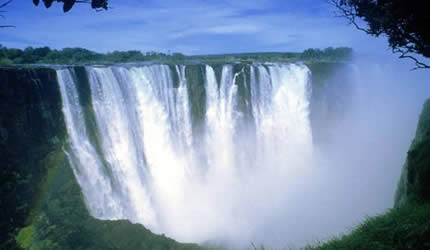
Below are the lyrics to track No. 11 entitled “Zimbabwe”.
Zimbabwe Oh yo yo yo yo yo
Great Zimbabwe Yeah ye ye ye ye ye
From the Zambezi to the Limpopo
There is a mighty land of milk and honey yeah ye ye ye
It is the promised land for I and I
And worthy to behold
Land of hope, Land of Faith and Land of peace, Oh yeah!
Look to the East
And you’ll see the majestic Chimanimani Mountains
Rise to the misty skies
It’s such a wonderful sight
And worthy to behold oh oh oh oh oh
Zimbabwe, Great Zimbabwe.
Right down in Masvingo
I can see the Great Zimbabwe Monuments
Ancient walls built without mortar
It’s such a beautiful sight
Worthy to behold
People of the world come and see
Ancient voices speak from within
House of rock, House of Stone
Great Zimbabwe oh yeah ye ye ye ye
Come and see
Come and see
The mighty Zambezi River
The wonderful Victoria Falls oh oh oh oh oh
My people call it Mosi –oa-Tunya
The Smoke that thunders
A rainbow in the sky oh oh oh oh
The Nyaminyami down there
The Matopos come and see
Such a beautiful sight it is oh oh oh oh oh
Zimbabwe, Great Zimbabwe.
I find the above metrical composition lyrically appropriate for use at the United Nations World Tourism Organisation General Assembly next month. The song, which is on general distribution and was recorded in 2012, is readily available from Metro or from Monolio Studios.
As Zimbabwe counts down to the UNWTO indaba scheduled for Victoria Falls from August 24-29, “Zimbabwe” is one track that aptly captures the beauty of the country, and deserves to be a theme song.
This ditty was penned by Hebron Mashengwe, a talented and accomplished musician, singer and songwriter.
He starts off the song by describing the country Zimbabwe as: “Land that stretches from the Zambezi to the Limpopo; Land which flows with milk and honey; Land filled with hope; Land full of Faith and Land of Peace. It is a beautiful sight and everyone must see it. It’s a pastime paradise . . .’’ etc.
Apart from this offering, Hebron has also shown masterpiece craftworks on other titles like “Africa Unite”, “Blessed Be Zimbabwe”, “Oh Jah” and “Babylon System”.
The album is certainly worth a listen if you enjoy roots rock reggae.
Mashengwe, also known as Hebron Mash, was born in Glendale, Mazowe, in the Mashonaland Central Province of Zimbabwe. He is the eldest in a family of eight children. He went to Pfupajena Government Primary School and Hartley Preparatory School in Chegutu in the 1970s. He attained a Diploma in Education in 1990 and went on to teach at various schools throughout Zimbabwe for more than 10 years after which he left to pursue his artistic carrier as well as farming.
Mashengwe started his music carrier as an eight-year-old in the Salvation Army Church where he was taught to play wind instruments by the late Bramwell Dutiro.
He specialised in playing the tenor and G trombone. After noticing how well Mashengwe could play the instrument, one Salvation Army captain (pastor), who was based in England, bought him a new instrument and sent it to Zimbabwe as a gift for Hebron to use in the Church Brass Band.
He became very popular among the congregants of the Salvation Army Band.
Since then, Mashengwe has never looked back. His ability to read music score comprehensively and play well his favourite instrument has encouraged him to explore other avenues outside the church. This has resulted in the composition of “Zimbabwe” among many others.
Mash began composing reggae songs at the age of 10, forming his first band at high school with Alford Fatoe.
Even after high school, Mashengwe continued writing and performing with Fatoe where he also played drums in the teenage band.
His most influential artiste was Emmanuel Nkomo of the Zig Zag Band who played chigiyo music (a mixture of roots reggae and traditional Zimbabwean music). “Chigiyo Chauya” is Mash’s first album; a conscious roots reggae album combined with chigiyo music.
Hot from Monolio Studios, “Chigiyo Chauya” is an 11-track scorcher consisting of songs such as “Ngaarumbidzwe Mambo”, “Africa Unite”, “Equal Rights & Justice”, “Chigiyo Chauya” (the title track); “Holy Mt. Zion” “Blessed Be Zimbabwe”, “Wauya Mweya”, “Wicked Slave Master”, “Oh Jah”, “A Blessed Dub” and the powerful “Zimbabwe”.
Arguably, no album in the recent past in the roots reggae/chigiyo genre sounds as inspirational as this iconic production. It is rooted in the 70s-80s roots reggae era. The chigiyo sounds on this album bring back fond memories of the golden era of the Emmanuel Nkomo-led Zig Zag Band (Gomo raMasare).
Chigiyo, a cross-breed between heavy roots reggae, underpinned by a hard-hitting drum and bass line then transfused with fiery, ancient, rootical Zimbabwean traditional music such as katekwe (Dande Valley), muchongoyo (Eastern Highlands), chimurenga and various other traditional Zimbabwean beats. It is refreshing to have such a combination of sounds in one album, a monumental feat other musicians have tried and failed to produce.
The best of chigiyo music comes out in “Ngaarumbidzwe Musikavanhu”, the first song on this seminal album. Mashengwe goes back in time to the 13th century at Great Zimbabwe.
Here the singer sings with the traditional folk of that era, a song of thanks and praise in which the residents exalt and extol the Almighty Creator, Musikavanhu.
The song is driven by a biting chigiyo bass line played by multi-instrumentalist producer/guitarist/singer, Mono Mukundu, punctuated with heavy, thumping drums accompanied by the staccato of African congas and the djembe drums played by John Mambira (of Bongo Love fame). At the heart of the song, Hebron croons, “Ngaarumbidzwe Musikavanhu, Chirambakutseketutswa mbiri youtare, Dandemutande gavi rakatandira nyika, Mutsigamombe mbudzi iri hata, Chidzachepo naMutangakugara, Musikavanhu musungo wakasunga mhara hoyere . . . wainamata Munhumutapa, wainamata Nyatsimba Mutota, wainamatwa Chirambakutseketuka mbiri youtare . . .”
In this song the greatness of Great Zimbabwe and Musikavanhu (the Creator) and its inhabitants rule the roost.
In the second song titled “Africa Unite”, Hebron decries the need for the African people to unite. Buried under the deluge of dancehall slackness and vanity, through this song’s traditional one drop roots reggae beat, we are once again reminded of what made roots reggae the outstanding music that it is. This song also brings to the fore the need for peace.
In Zimbabwe with the forthcoming elections, the message is a good reminder for all of us to vote in peace. Mash is at his pan-African-militant best when his powerful mid-octave voice cries out, “They call us the Third World and themselves First and Second . . . they take away our rights and give us their wrongs, Africans oh . . . it’s a Babylon system international apartheid . . . Africa now is the time to unite . . .”
Ably backed by Tafadzwa and Trevor Mhariwa of Solid Praise, arguably the best harmonies to emerge from Zimbabwe in the recent past, Mashengwe evokes the memory of Africa’s founding fathers’ messages of African unity.
He evokes the memory of HIM Emperor Haile Selassie, Kwameh Nkrumah, Jomo Kenyatta, Patrice Lumumba, Marcus Mosiah Garvey and Bob Marley, all proponents of African unity. Mashengwe then argues for the creation of a united single African state: “We want one passport for all African children Cape to Cairo, one government, remove the borders of Berlin . . . one people, one aim, one destiny . . .”
“Chigiyo Chauya” is the title track. Here Hebron traces the historical legacy of Chigiyo music from antiquity to date. So infectious is the beat on this number accompanied by Mash’s raspy chigiyosque vocals led by the reverberating drums and riff raffs of a faithful bass line. Mono Mukundu’s solo on this song needs no introduction. It hits you straight into the lungs as you feel its punch.
One would expect Hebron to don the Jamaican reggae outfit with heavy dreadlocks worn in a red, gold and green-coloured bobble hat, but to everyone’s surprise Mash is different as he wears the conventional gentlemen suits reminiscent of his days as a school teacher.
Hopefully this album will steer Hebron out of the poverty that surrounds the music industry. After all, as Jamaican musician, Beres Hammond puts it, “To be poor is a crime. Man haf’fe know dat inna dis ya time”.
On a different note, anyone out there with vinyl records of local rock music recorded before 1980, please contact me.
Groups like Gypsy Caravan, Eye Q, Eye of Liberty, New Tuttenkhamein, Ebony Sheik, Wells Fargo, Dr Footswitch, Baked Beans and many others are welcome. I would like to do a special feature on this. I will pay you for your discs. You can visit my Facebook page, call me on 04-303271 or send me an e-mail.
l Feedback: [email protected]


 Online Reporter