Online Reporter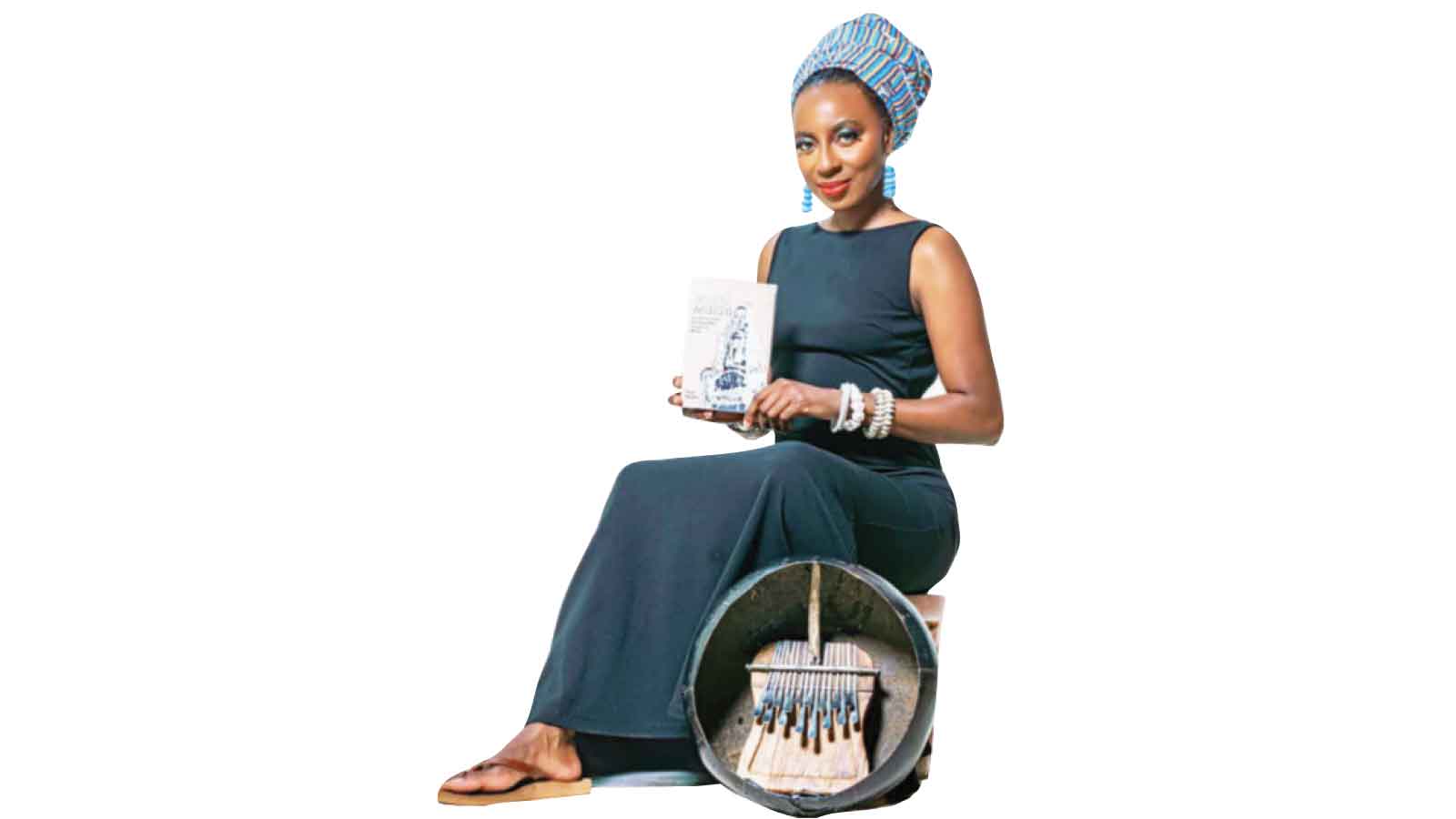
Trust Khosa-Zimpapepers Arts, Entertainment Hub
HOPE MASIKE’S new book, Mbira Mberi, is a must-read and must-purchase for Zimbabweans who cherish their roots.
The mbira, both as an instrument and a cultural symbol, has stood the test of time, thanks in part to dedicated local researchers of Masike’s calibre who continue to take pride in preserving and promoting it.
This time around, Masike spent one and a half years conducting extensive and meticulous research for the book, which enlightens readers about the cultural significance of the mbira and the traditions associated with it.
A researcher, mbira player, arts administrator and mentor, Masike has once again demonstrated her creativity through this publication, which can serve as a valuable resource for music students from kindergarten to the tertiary level.
What further enhances the book’s appeal is that it comes after mbira was inscribed on the UNESCO Representative List of the Intangible Cultural Heritage of Humanity in December 2020.
This recognition has reinforced the mbira’s status as a sacred instrument whose cultural significance should be preserved at all costs.
In an interview, Masike revealed that, despite her many years of experience in the field, she was still enlightened by the research process and learned a great deal more about the mbira.
“It was a wonderful experience,” she told Zimpapers Arts and Entertainment Hub.
“It’s wonderful how much you discover and learn when you start actively looking for knowledge. Research is a lot of hard work, but it is also much fun.”
With most colleges teaching the mbira, Masike firmly believes that her book can be useful to their studies after being recommended by top academic chiefs, researchers, and fellow artistes.
With its depth and ability to cut across generations, Mbira Mberi is well packaged by tackling various types of mbira used in Zimbabwe.
These include Nyunga Nyunga, popularised by the late Chiwoniso Maraire and her father Dumisani; Nhare/Mbira Dzevadzimu, which catalysed Mbira DzeNharia to acclaim; and Mbira DzevaZezuru, popularised by the likes of Sekuru Gora, Cosmas Magaya, and Mbuya Stella Chiweshe, among others.
As such, Masike has captured all this in her book Mbira Mberi, a refreshingly informative tutorial.
“Mbira Mberi covers the history of the mbira, but also a few elements of the history of Zimbabwe itself.
“So it is excellent for music studies, culture and heritage studies, African studies, and other such lines of study.
“It also has poems and short stories on the mbira, which make it a book that can be included in creative writing studies, poetry studies, and such. Obviously, the mbira tutorials make it a good book for the performative study of the mbira itself by universities and even individuals.”
As a researcher, mbira player, and arts administrator, Masike also outlined how critical mbira music is in Zimbabwe and beyond.
“I believe mbira has been contributing immensely to the Creative and culture industries’ contribution to the country’s GDP.
“It may have been poorly documented before, but I believe even a casual perusal of the arts landscape in Zimbabwe supports this.”
Masike also noted that mbira goes beyond the spirituality aspect of it and explored its financial benefits.
“Mbira music is not critical just for its spiritual and entertainment value. It is a heritage that has been and continues to bring economic value directly in the arts, but also in tourism and diplomacy,” asserted Masike.
From her experience, Masike was blunt in her assessment of the current appeal of mbira music and culture in Zimbabwe.
“Mbira music and mbira as a culture are currently in a somewhat renaissance state.
“There is a music insurgency of some sort, with a lot of new mbira outfits, the resurrection of already established ones, the founding of several mbira festivals, and even mbira awards — a fresh appreciation, hunger even, for mbira music on the market. This is a beautiful thing to witness,” she added.
Her book has come at the right time, when Zimbabwe is prepared to host the Mbira Month in September.
This annual global celebration is observed throughout September to honour Zimbabwe’s traditional Shona musical instrument.
It highlights the instrument’s rich 1 000-year history, its spiritual significance as a bridge to ancestors, and its role as a uniquely Zimbabwean cultural export.
With researchers of Masike’s calibre leading the narrative to preserve it, the mbira instrument and culture are destined to stand the test of time for years to come.
This has always been her wish: to preserve it so that it could appeal to future generations.
Masike is one of the female mbira players who has made it internationally, yet she remains grounded.
As a researcher and author, she has penned several books promoting cultural heritage. Besides Mbira Mberi, she also published four other books — Ask Me Again (2020), Dzevabvazera (2022), Die With Me — Horror and Short Story (2023), and Our Sacred Place: Love Poems and Short Stories inspired by the Book of Solomon (2024).